

You’d be sorry if you didn’t really know anything about the Maserati Karif. After all, it is a two-door variant of the BiTurbo architecture that is not the Ghibli or the Shamal. And it’s not like there ever were very many of them. The Karif was intended from the start as a limited edition model. It says something about Maserati’s predicament in the late 1980s that even that goal was not achieved. It is believed that from an original plan of 250 units, only 221 were made…
That is why the Karif is perhaps unknown: very few were built (35 years ago), it resembled an existing model and the numbers of right-hand drive examples were absolutely small. We’re talking less than 20 percent of the production run, with single-digit survivors today. A real old-fashioned Maserati curio, actually named after a wind (the Karif blows over the Gulf of Aden in Somalia), with a look like nothing else and a terrifyingly powerful turbo engine.
This wasn’t just powerful for that period. With 285 hp from the force-fed 2.8 V6 (think of the BiTurbo association), the Karif would reach 100 km/h in less than five seconds. That’s impressive for a two-wheel drive manual car today, so it must have felt extremely lively in 1990. The top speed was in the region of 260 km/h. Measuring just four meters in length and weighing 1,300 kg, the Karif promises to offer a driving experience like no other. Very few BiTurbos (cars such as the later 222 4v and Racing) could compete with the Karif in terms of V6 power.

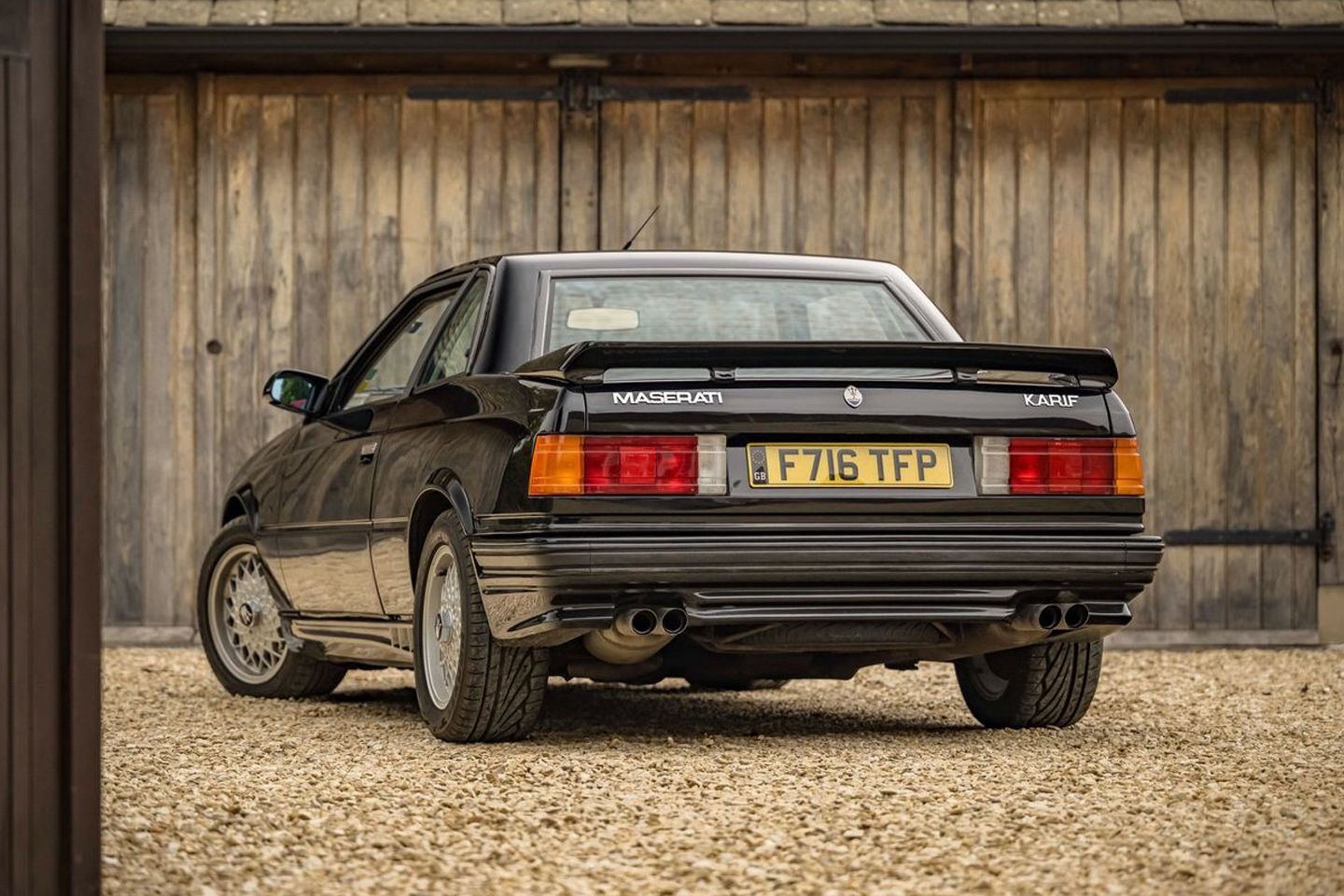
The nature of the Maseratis from this period meant that they attracted a very committed customer base. Nobody ever just became an owner, because in the past you either bought this kind of Maserati or you didn’t. This was even more true later, when the cars were second-hand and required regular maintenance. This Karif seems to be loved as hoped; the current owner owned it for five years before it was auctioned, and the owner before that documented the Maser’s history until 1993. Exactly the kind of dedication you’d want to see in a classic.
There have also been some useful modifications to this Karif during its life, including custom Leda dampers with Eibach springs, Wilwood brakes, a stainless steel exhaust and the Zender body kit that looks… well, very of its time. It works well with the Fondmetal alloys that were available as a factory option when new, meaning this is truly unique. Those who really want to make the most of that twin-turbo power should be encouraged by the Karif’s upgrades; It’s going to be a wild ride, but hopefully a fun one. The tires are new this year and thousands were spent at McGrath Maserati. There’s no way a 1989 Karif could look this good in 2025 without a little expert help.
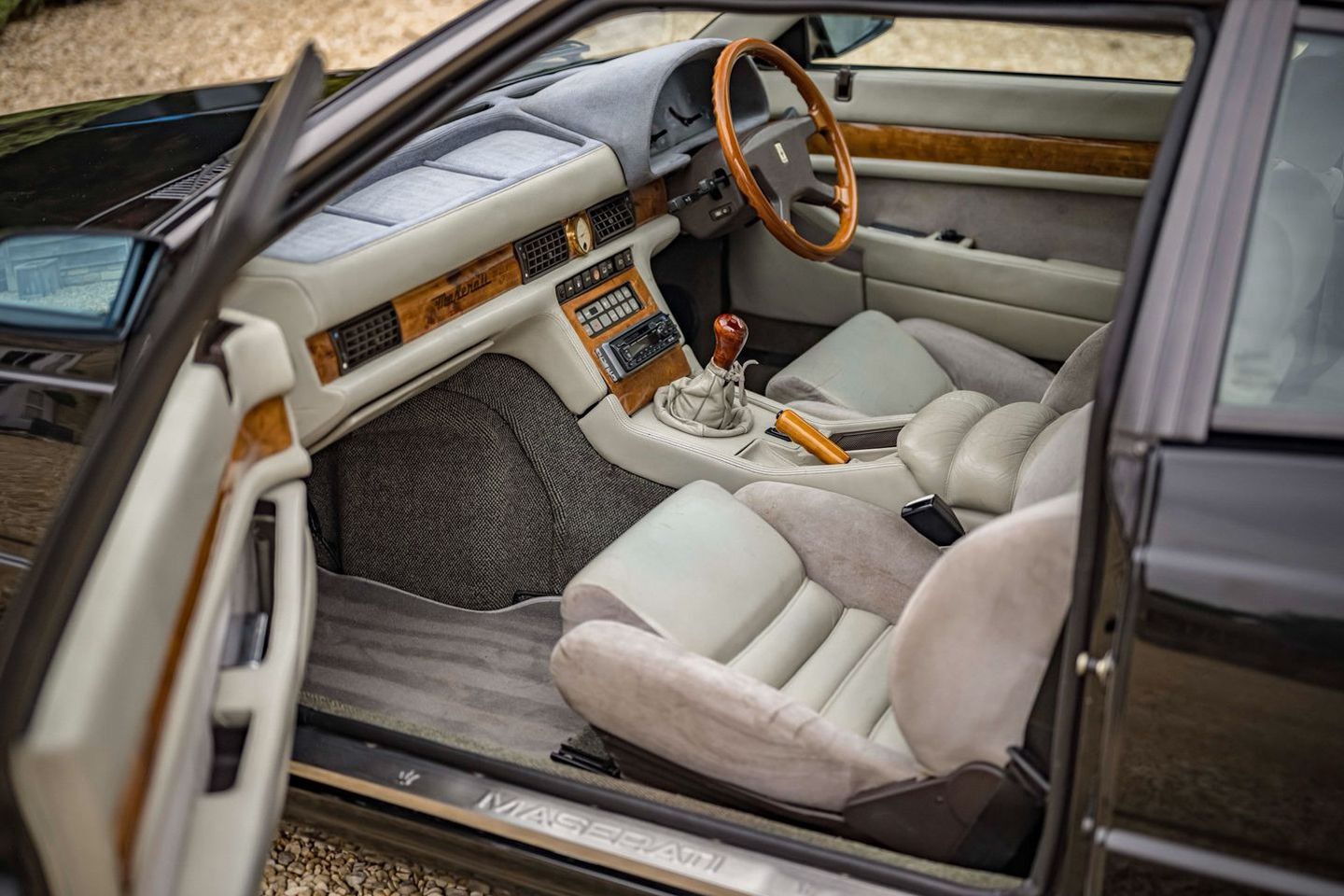
Those who don’t want to drive a Karif anytime soon will definitely find something to like about this one’s interior. It’s easy to forget how luxurious the Maseratis of this era were, with wood, leather and suede all over a Karif. And the golden clock of course. The small number of BiTurbos (and the like) initially made, combined with the fact that so few survived, has increased interest in recent years. Because no one wants the same classic car as everyone else, and the combination of a fierce twin-turbo V6 with a manual gearbox (while so many fast classics are hobbled by cars) is certainly intriguing. A Karif may require some explanation to the uninitiated, but it promises to be exciting to say the least. And if you rarely search, there can be nothing better.
#Maserati #Karif #auction #block