

At the darkest time of the year, Santa Lucia (St Lucy) comes to visit us early in the morning of December 13th. Lucia has candles in her hair and is surrounded by her handmaids and boys, shining light into the dark depths of our minds. And slowly, slowly the day awakens.
It is believed that Santa Lucia was a Sicilian saint who was martyred in Syracuse, Sicily around 310 AD. She sought help for her mother’s long illness at the shrine of Saint Agnes, in her native Sicily, when an angel appeared to her in a dream next to the shrine. As a result, Lucia became a devout Christian and refused to compromise her virginity in marriage.
Officials threatened to drag her to a brothel if she did not renounce her Christian faith, but they could not move her, even with a thousand men and fifty oxen pulling. So they piled materials for a fire around her and lit it, but she didn’t stop talking.
One of the soldiers stuck a spear through her throat to stop her, but to no avail. Shortly afterwards, the Roman consulate responsible was transported to Rome by the state and beheaded on charges of theft. Lucia could not die until she was given the Christian sacrament.
It is said that the tradition of Santa Lucia was brought to Sweden via Italian merchants and the idea of lighting up the dark appealed so much that the tradition continued. The current tradition of the appearance of a woman dressed in white with candles in her hair on the morning of Lucia Day started in the late 18th century in the Lake Vänern area and slowly spread to other parts of the country in the 19th century.
The modern tradition of holding public processions in Swedish cities began in 1927 when a Stockholm newspaper chose an official Lucia for Stockholm that year. The initiative was then followed throughout the country through the local press. Nowadays, most cities in Sweden appoint a Lucia every year. Schools choose Lucia and her maids among the students. The regional Lucias will visit shopping centers, retirement homes and churches, singing and handing out gingerbread.
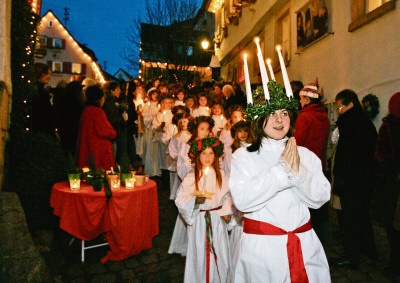
Lucia not only represents tradition, but there is also a symbolic meaning. Never more important than this year, when the world is in turmoil. So remember that it may be cold and dark right now, but after the darkness comes the light.

Published by
I have been watching the Swedes since 1994. Not in a creepy, obsessive way, but like an adventurer in unknown territory who keeps a close eye on his surroundings. Together with my American business partner I run a training company in Stockholm. We hold seminars and workshops in the field of cultural awareness and communication. For more information on this, visit www.keytraining.se View all posts by Neil Shipley’s Watching the Swedes
#Swedish #Lucia #celebration