

If you’ve driven a car long enough, you can relate to our readers’ stories about cars with dead batteries. Since few people sit in the driver’s seat without intending to drive, it is disturbing to just turn the ignition key and hear a click, or nothing at all.
While there are a number of reasons why your vehicle’s battery may be draining, parasitic discharge is one of the most frustrating to diagnose. Parasitic drains are typically low currents in the car’s electrical system that slowly drain the battery over time while the engine is off, often overnight or sometimes for a few days.
The problem with parasitic battery discharge is that you usually only know there is a problem when the car won’t start. However, it is possible to check for any parasitic discharge before it kills your car’s battery. To do this, turn off the car’s ignition and turn off all lights and radios. Then disconnect the negative cable from the battery and secure it so that it cannot contact the battery terminal or other components. Wait about 30 minutes to make sure the car’s computer is turned off. Finally, take your multimeter, set it to the highest amperage setting and test the current draw between the negative battery terminal and the protected negative cable. Ideally we would like to see less than 50 milliamps, while lower readings are even better.
If your amperage is higher than that, your car battery is experiencing a parasitic drain and you need to find it before your battery dies. There are a number of ways to find the drain, but one of the easiest methods is to check individual fuses until you find the circuit in question.
How to find the parasite that drains your car battery
There’s more than one way to pinpoint the source of the parasitic drain that’s killing your car’s battery, but you need to know how to check and replace car fuses before you start. In a YouTube video, Maintenance of classic cars suggests connecting one multimeter cable to the negative battery terminal and the other to the negative cable and placing the meter where it is visible from the car’s fuse block so you can go hands-free.
Your car may have more than one fuse block, so you can check your owner’s manual for their locations. Start with the fuse block you like and pull out the first fuse. If the parasitic pull remains constant, replace that fuse and pull out the next one. Repeat the process until you pull a fuse that reduces or eliminates the parasitic attraction to identify the culprit – it may have more than one source.
Another method, shared on YouTube by Steve Rob Reviewsrequires a multimeter that can measure millivolts, but it doesn’t mean pulling every fuse during an elimination process. Steve’s method uses a multimeter to check for minute voltage differences between the contact points visible on the exposed side of a blade fuse, rather than the current draw between the battery’s negative terminal and the cable.
A reading as low as 1 millivolt across the terminals at the top of the fuse can indicate the movement of current across the contacts of the fuse. Again, a fuse that indicates a current draw when the component should be turned off is a prime suspect for parasitic draw.
How to Prevent Parasitic Battery Drain from Killing Your Car
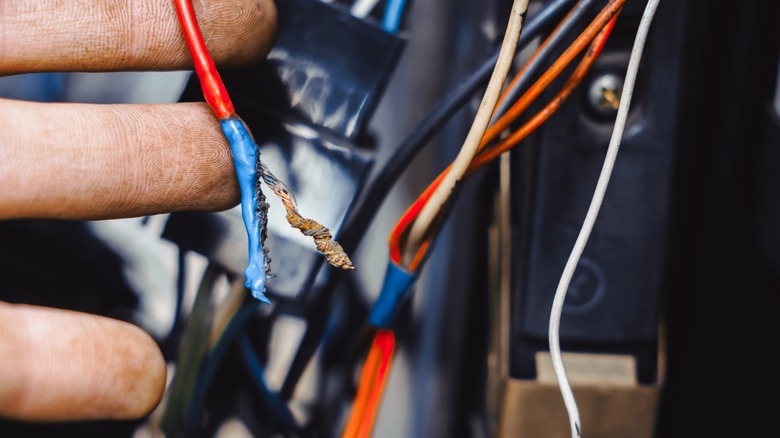
With either method, once you’ve identified the part or parts, it’s just a matter of figuring out why it’s drawing power when it should be off. Often it involves some kind of malfunction, but it can also be something disastrous, like rats eating away at your car’s wiring.
If the source is found to be a faulty non-essential component, such as a courtesy lamp or radio, the fuse may be omitted until repairs are made. In a pinch, any fuse can be left out when the vehicle is not in use and replaced before starting the car, or in some cases you can leave the battery disconnected to maintain charge.
If the wires are damaged, especially by rodents, it is best to disconnect both battery cables until repairs can be made. In addition to causing thousands of dollars in damage, rodent infestations can cause fire and health hazards if left unchecked. Additionally, the wires exposed by rodent chewing can cause short circuits, overheated wires, and sparks.
#find #parasitic #drain #kills #car #battery