

A major difference between Chevrolet’s 3.0L Duramax diesel engine and Ford’s 3.0L Power Stroke is their availability. The 3.0L Power Stroke was discontinued after the 2021 model year, although Ford’s underrated F-150 diesel engine deserved better. The 3.0L Duramax, on the other hand, remains a valid diesel engine option for the 2026 Chevy Silverado 1500.
The 3.0L Duramax is an inline six-cylinder engine, the current version of which is referred to as the LZ0 – the successor to the previous LM2 3.0L Duramax variant. The LZ0 Duramax features an oil pump belt service interval of 200,000 miles, fuel injectors with improved spray patterns and pressure treatment, and steel pistons in the cylinders that can withstand higher compression ratios. It can run on ultra-low sulfur diesel or B20 biodiesel, and the LZ0 Duramax’s output is 305 horsepower and 495 pound-feet of torque.
Ford’s 3.0L Power Stroke diesel had a V6 configuration that produced 250 horsepower and 440 pound-feet of torque. While the power difference from the current LZ0 Duramax is significant, it was smaller in 2018 when the engine first debuted. At the time, GM offered the LM2 3.0L Duramax with 277 horsepower and 460 pound-feet of torque. Other differences include the material used for the engine block; LZ0 Duramax blocks are made of aluminum, while the 3.0L Power Stroke block uses compressed graphite iron. However, both engines use aluminum cylinder heads.
The brief history of the Ford 3.0L Power Stroke diesel
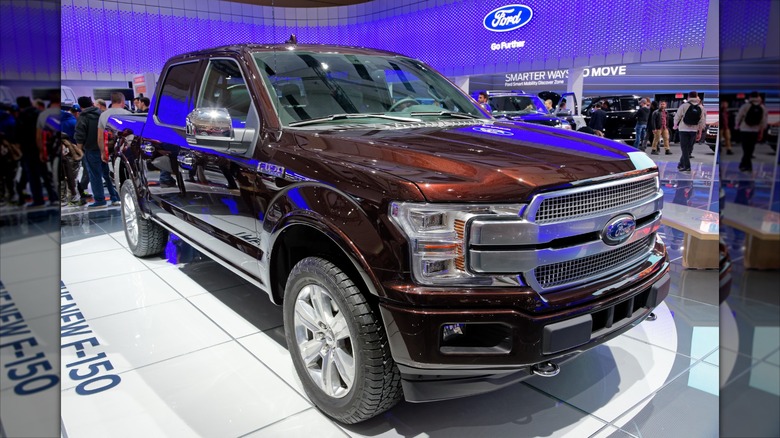
The basis for the design of Ford’s 3.0L Power Stroke diesel engine was developed in a collaboration between Ford and the PSA Group. The PSA Group was based in France and was formed from the merger of Peugeot and Citroën; at the time it was called PSA Peugeot Citroën. However, the collaboration between the two automakers goes back much further than the 3.0L Power Stroke story – and ended, at least for diesel engines larger than 2.0L, before the introduction of the 3.0L.
The first Ford diesel engines, designed in collaboration with the PSA Group, hit the streets in the early 2000s. The V6 Power Stroke only debuted in 2018 in the Ford F-150 and the design is based on the 3.0 liter Lion V6 diesel that has been available in Europe and other parts of the world since 2005. During those thirteen years, Ford abandoned Navistar to bring production of Power Stroke diesel engines in-house and curb its partnership with the PSA Group.
With only four model years under its belt, the 3.0L Power Stroke saw no significant changes before being discontinued for 2021. It continued from start to finish with its 84.07 millimeter diameter cylinders, 89.91 millimeter crankshaft stroke and 16:1 compression ratio. In the F-150, the 3.0-liter diesel enjoyed fuel economy of an estimated 30 mpg on the highway, 22 mpg in the city and 25 mpg combined.
The 3.0 liter Duramax diesel was renewed in 2023
General Motors adopted the 6.6 liter Duramax V8 diesel engine in its Chevrolet Silverado and GMC Sierra pickups for the 2002 model year. The first inline six-cylinder 3.0L Duramax, the LM2, became available for GM half-ton pickups in the latter part of the 2019 model year and returned for its first full year of production for 2020. While the 3.0L Duramax saw improvements for the 2023 model year with the introduction of the second-generation LZ0, it retained the same 84.0 x 90.0 millimeter bore and stroke like the LM2.
Chevrolet paired the LM2 Duramax with the 10-speed Hydra-Matic 10L80 automatic transmission as an option for most of its high-end Silverado trims. Chevy Silverado pickups equipped with the LM2 Duramax had an estimated fuel economy of 33 mpg on the highway, 23 mpg in the city and 27 mpg combined for two-wheel drive models. Choosing the 4×4 powertrain shaved four mpg from the highway rating and two mpg from the combined rating. But it retained its city rating, thanks in part to the engine’s stop/start function, which shuts off the engine when the truck stops.
MotorTrend tested the fuel economy of the LZ0 Duramax-powered 2024 Chevy Silverado by driving 26,000 miles under various conditions. Although the truck was rated at an estimated 20 mpg combined, it averaged 18.8 mpg during testing. However, by subtracting 2,600 miles of maximum towing driving, the average improved to 20.9 mpg.
#Chevys #liter #diesel #compare #Fords #liter #diesel #truck #engine #Jalopnik