

Stainless steel brake lines are shiny. And many of us like shiny things. Still, the desire to use braided stainless steel brake lines must be about more than just their aesthetic appeal. After all, brake lines are located under the car and are almost always hidden from view. For most home mechanics and do-it-yourselfers who do weekend brake jobs on their own, the biggest justification behind installing stainless steel brake lines (also known as stainless steel braided lines) is better brake pedal feel.
The sales pitch goes like this: OEM rubber brake lines are flexible. When you press the brake pedal, move the brake fluid through your brake lines and activate your brake calipers, those rubber lines expand. Stainless steel lines are said to counteract that expansion, making the brake pedal feel better and firmer. Essentially, a stainless steel outer layer prevents the line itself from expanding as much as it would without the braided cover.
Stainless steel lines prevent brake lines from expanding – that’s not just a sales pitch. However, the difference in expansion is quite small, so most drivers won’t notice the difference in most scenarios. Another benefit of stainless steel lines is that they provide better protection, especially in off-road scenarios. If a stainless steel brake line gets caught on a rock, a crack is less likely to occur than if the same problem occurs with an OEM rubber line. But braided stainless steel lines are more difficult to inspect for signs of external damage if you snag them on something.
Other components must be replaced instead
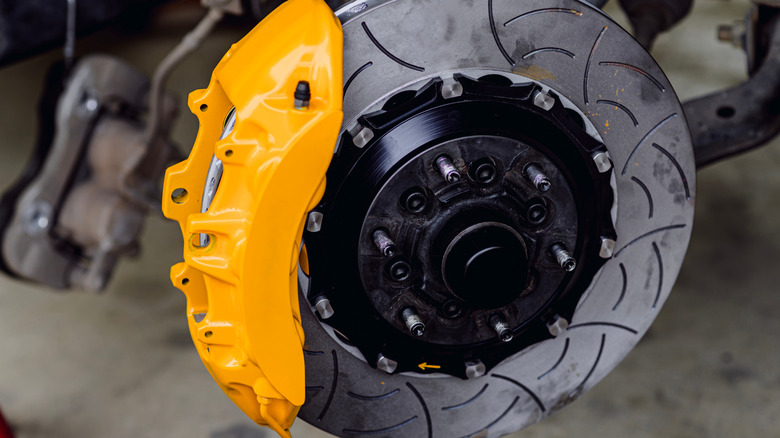
Replacing your brake lines has some advantages, and the disadvantages are minimal. Despite the protection of your brake lines during off-road driving and the powerful brake pedal feel, there are many other changes you can make to your brakes that will have greater impacts on real-world braking performance. Essentially, there are several places where your money is probably a little better spent. Brake calipers, brake rotors, brake pads and fluid are among the most important components of modern disc brake systems. And for the most part, they’re all easily upgradeable. Larger brake calipers, pads and rotors can all contribute to greater braking power and better heat dissipation.
Drilled and slotted rotors can also improve performance, provided you use them in the right scenarios, and they add even more heat dissipation to the equation. The longer your brakes stay cool, the longer you can fight the dreaded brake fade. Replacing your brake pads with a different compound can also extend the life of the brakes, especially if you spend a lot of time on the track. Last but not least, braking performance is also affected by brake fluid. Brake fluids with higher boiling points can help maintain braking performance after repeated stops, which is especially useful during high-speed driving and frequent braking.
#dont #upgrade #stainless #steel #brake #lines #heres #Jalopnik