

The rise of artificial intelligence plays a major role: AI technology is powered by data centers and the electricity consumption of a medium-sized data center is equivalent to that of 100,000 households. According to the International Energy Agency, demand for data centers will increase by more than three-quarters between 2023 and 2024 and is expected to account for more than 20 percent of electricity demand growth in advanced economies by 2030.
In the United States, where many of the leading AI companies are based, the energy consumption of AI-driven data processing is predicted to exceed the combined electricity consumption of aluminum, steel, cement and chemical production combined by the end of this decade.
In December last year, policymakers, technology companies and nuclear industry leaders from around the world gathered at the International Atomic Energy Agency (IAEA) headquartered in Vienna to explore the potential for nuclear energy to enable the expansion of AI and, conversely, how AI could drive innovation in the nuclear industry.
Training advanced AI models requires tens of thousands of central processing units (CPUs) to run continuously for weeks or even months. At the same time, the daily application of artificial intelligence is expanding to almost all sectors, such as hospitals, public administration, transportation, agriculture, logistics and education.
Every question, every simulation, every recommendation consumes power. “We need clean, stable, carbon-free electricity available 24 hours a day,” said Manuel Greisinger, a senior manager at Google who focuses on AI. “This is undoubtedly an extremely high threshold, and it is not achievable with wind and solar energy alone. AI is the engine of the future, but an engine without fuel is virtually useless. Nuclear energy is not only an option, but also an indispensable core part of the future energy structure.”
A data center in Ireland.
Bullish nuclear industry
Mr Greisinger’s views are shared by IAEA Director General Manuel Grossi, who believes the nuclear industry is destined to be the energy partner of the AI revolution. “Only nuclear power can meet the five needs of low-carbon power generation, 24-hour reliability, ultra-high energy density, network stability and true scalability,” he stated.
The nuclear industry appears to be in a bullish mood. There are 71 new reactors under construction, in addition to the 441 currently operating worldwide. Ten will be built in the US, which already has 94 factories, the most of any country.
The tech giants using the data centers have pledged to support the goal of at least tripling global nuclear energy capacity by 2050. For example, Microsoft signed a 20-year power purchase agreement that allowed Unit One of the Three Mile Island nuclear power plant in Pennsylvania, US, to be restarted.
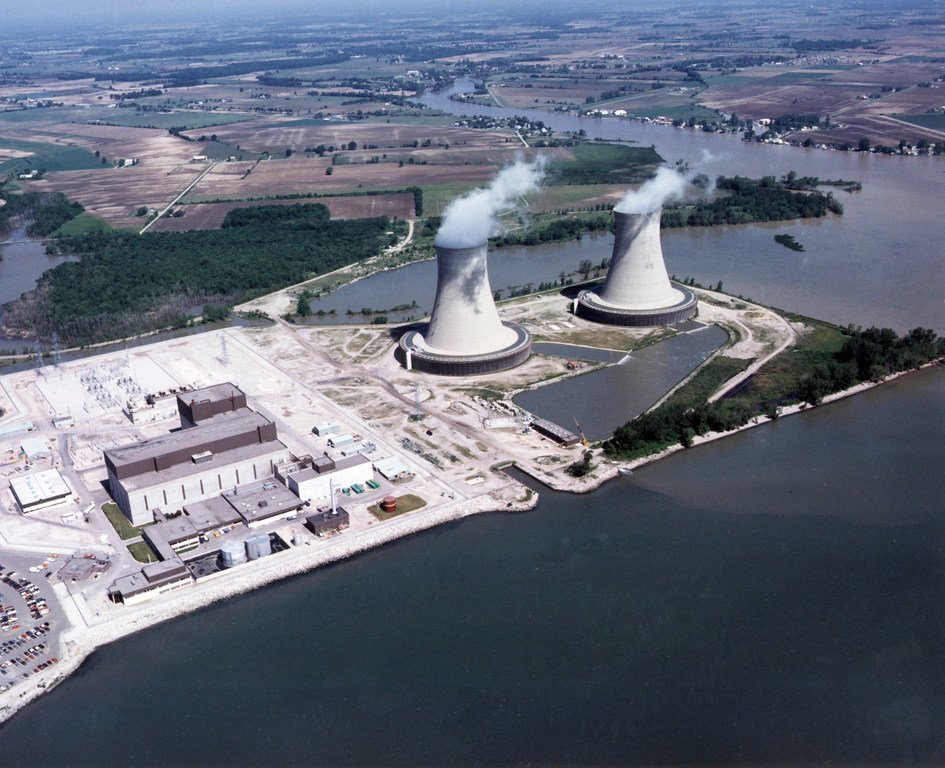
NOAA/OAR/Great Lakes Environmental Research Laboratory
Enrico Fermi nuclear power plant near Monroe, Michigan, USA.
The rest of the world is also actively investing in nuclear energy, driven by the growth of AI. “Europe has the densest digital corridors in the world, with Frankfurt, Amsterdam and London as hubs,” Mr Grossi explains.
“Traditional nuclear powers such as France and the United Kingdom are doubling down on nuclear energy, and emerging countries such as Poland are also accelerating their participation.”
Russia, with a research base adept in mathematics and computer science, remains the world’s largest nuclear energy exporter and is a leading operator and developer of advanced reactor technology, while China is achieving great success in both AI and nuclear energy.
“AI technology and the construction of artificial intelligence data centers are advancing simultaneously, and the number of new nuclear reactors in the world also ranks first in the world during the same period,” said the head of the UN nuclear agency.
Japan is investing heavily in building and upgrading data centers to meet growing demand, while in the Middle East, the United Arab Emirates has established a nuclear power program and developed into a regional AI hub.
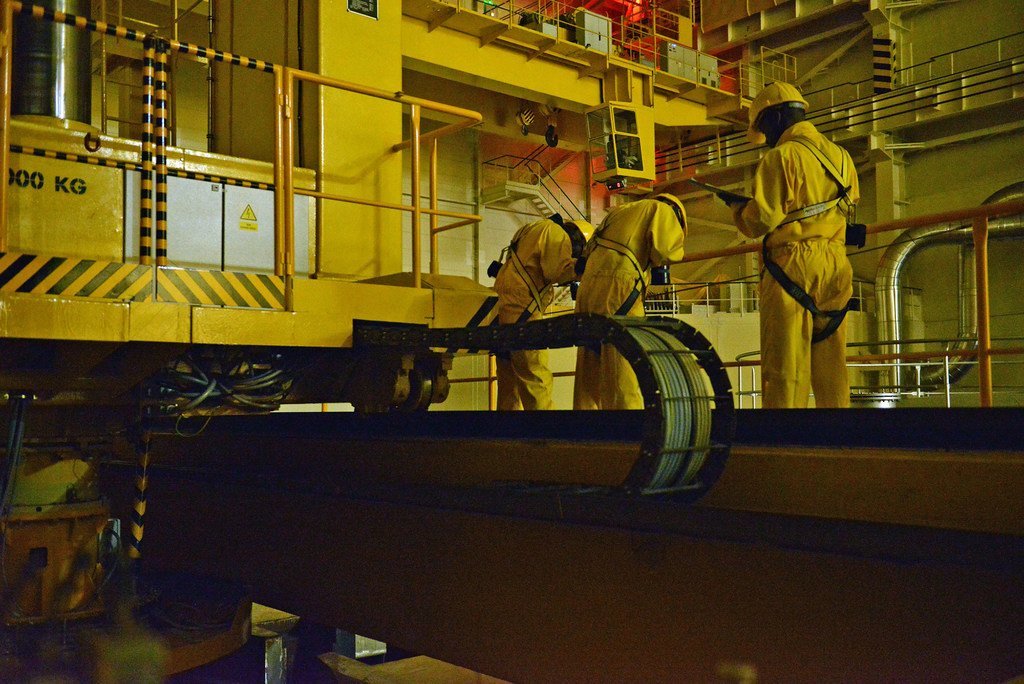
IAEA/Dean Calma
The IAEA supports training to ensure the safety of nuclear power plants such as the one in the Czech Republic.
Are small reactors the solution?
The need for much more energy, and soon, is also driving the construction of small modular reactors, which are very different from the traditional large power plants that require huge investments, and a lead time of about 10 years.
“These types of reactors have a small footprint and improved safety systems, and can be deployed in nearby industrial areas, including data center campuses,” Mr Grossi said.
Technology companies that use them do not have to worry about regional grid supply limitations or transmission losses. This will be a decisive advantage in areas where electricity grid upgrades are slow and interconnection queues are long.”
While this form of reactor still needs to move beyond the R&D phase, the IAEA is working closely with regulators and industry to make it a viable proposal and we could soon see large numbers of small reactors deployed to meet demand.
For example, Google has signed an agreement with an energy company to purchase nuclear energy from multiple small modular reactors, a global first. If all goes well, they could be operational in 2030.
Google is also turning its attention to space travel, exploring space-based solar networks to enable large-scale machine learning in orbit, making the most of unfiltered solar energy. Two prototype satellites will be launched in early 2027 to test radiation tolerance and data processing capabilities in the space environment.
Whether it is harnessing solar energy in space, restarting old reactors, investing in a new generation of small modular reactors or building large reactors, all actions point in the same direction: building an energy system largely based on nuclear energy that can support the needs of future civilizations.
#usher #era #nuclear #energy