

This article provides a professional guide on What is multimodal AI. If you are curious about how AI can understand this text, images, audio and video togetherRead on for detailed insights, examples, and practical applications.
Artificial intelligence has evolved from just understanding text to interpreting images, audio, video and even sensory data – all at the same time. This is what we call the ability to process multiple types of information together Multimodal AI.
In today’s world of connected devices and rich media, multimodal systems are the driving force behind chatbots that see and talk, search engines that understand both image and text queries, and cars that process visual and sensor data to make instant decisions.
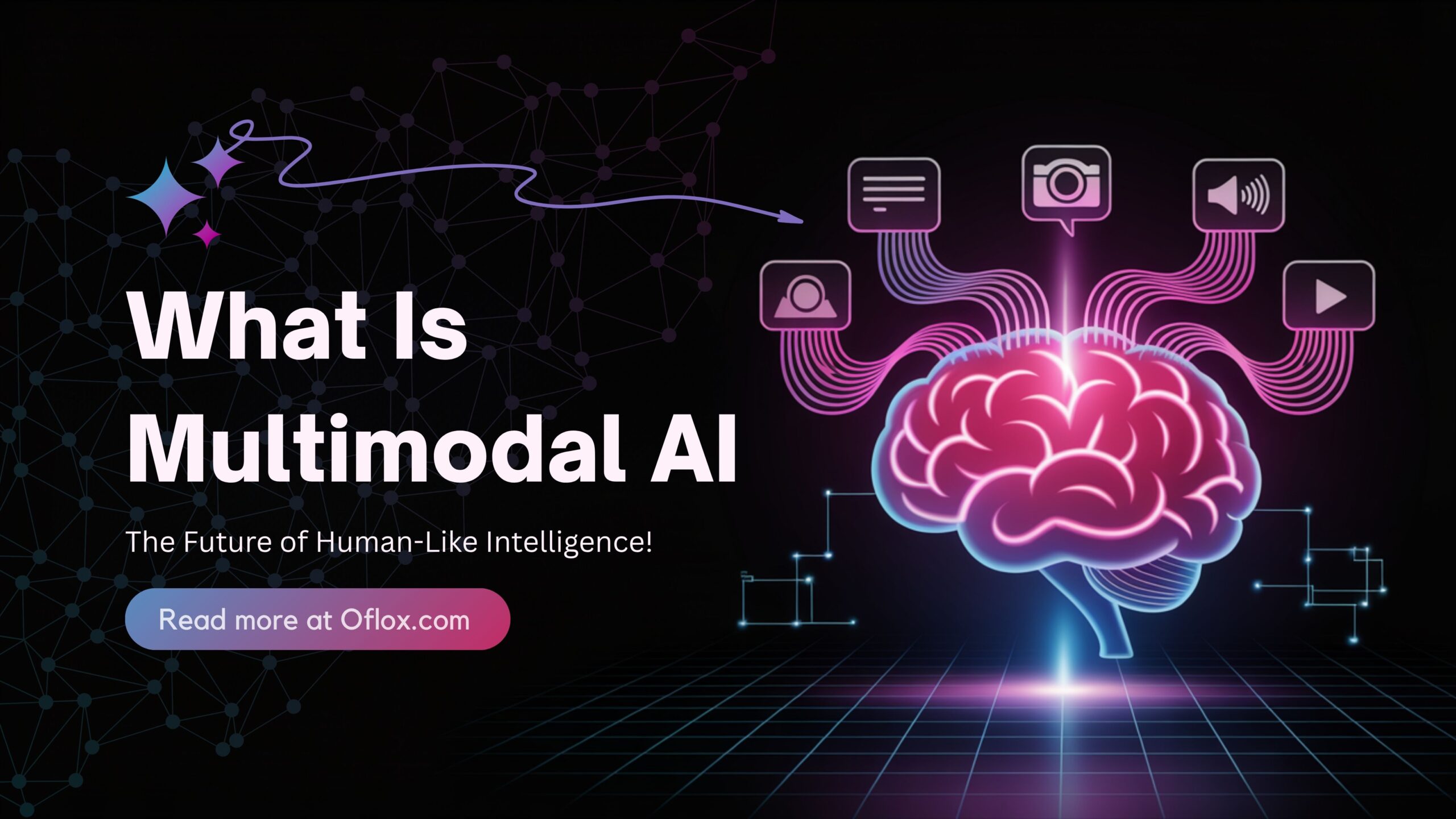
Let’s explore all about it: how it works, why it matters, real-world examples, and how companies can prepare for this next AI revolution.
Let’s explore it together!
What does multimodal AI mean?
Multimodal AI refers to artificial intelligence systems that can do that understand, process and generate information from multiple data types (modalities). such as text, image, audio, video and sensor data.
For example:
- A vision-language model like GPT-4o can analyze an image while answering a text question about it.
- A voice-activated assistant understands your speech (audio) and context (text).
- A self-driving car simultaneously interprets data from multiple sources, including cameras, radar and GPS.
Unimodal versus multimodal AI
| Type | Import | Example |
|---|---|---|
| Unimodal AI | One data type (e.g. text only) | ChatGPT text responses |
| Multimodal AI | Multiple data types combined | GPT-4o (text + image + audio) |
Multimodal AI mimics how humans perceive the world – through Multiple senses work together.
How does multimodal AI work?
Behind the scenes, multimodal systems integrate several encoders and a shared representation layer in which information from different modalities is combined.
1. Core components:
- Modality specific encoders: Convert any input (text, image, sound) into a numerical representation called an embedding.
- Fusion Layer: Aligns this embedding and combines it into a uniform concept.
- Decoder / Output generator: Produces comments, captions, decisions, or predictions.
2. Example workflow:
A user uploads an image of food and asks:
“How many calories does this plate contain?”
The AI:
- Processes the image → identifies food products
- Analyzes text query → understands the context of “calories”.
- Combines both → provides an accurate calorie estimate.
This seamless combination is what makes multimodal AI so powerful.
Real-World Applications of Multimodal AI
Let’s explore some real-world applications of multimodal AI that are shaping the way humans and machines interact.
1. Visual question answering
Models can analyze an image and answer questions such as, “What animal is in the photo?” → Used in education, accessibility and research.
2. Search engines (image + voice + text)
You can search using a photo and a sentence (e.g. “Buy shoes like that”) – powered by multimodal systems → Google Lens and Bing Visual Search are good examples.
3. Content creation
Generate AI tools video, image and story from a single text prompt — ideal for marketing and storytelling.
4. Autonomous vehicles
Cars use cameras, radar, LiDAR and GPS together to interpret the environment in real time.
5. Healthcare
Analyses medical images + patient files + genetic data for an accurate diagnosis.
6. Digital marketing
Multimodal AI can predict consumer behavior by analyzing visual content, text feedback and engagement metrics.
Why multimodal AI is important
In business and marketing, multimodal AI is one game changer because:
- Customers communicate via images, videos and speechnot just text.
- It makes it possible personalized and intuitive experiences.
- Search engines are shifting to multimodal discovery – which means SEO must evolve too.
Benefits for marketers and brands
- Improved product recommendations: Combine visual recognition with user history.
- Smarter ad targeting: Understand audience preferences that go beyond text.
- Content diversity: AI can generate cross-format campaigns (video + blog + voice).
“Multimodal AI not only teaches machines to think, but also teaches them to see, hear and understand the world like humans.” — Mr. Rahman, CEO Oflox®
Key benefits of multimodal AI
- Improved accuracy: Combines information sources to reduce errors.
- Context awareness: Understands complex questions (for example: “Show products like this image”).
- Accessibility: Helps visually impaired users with audio and text integration.
- Cross-learning: Learns from different modalities simultaneously.
- Human-like interaction: Mimics natural human understanding: sight, hearing and language.
Challenges and limitations
| Challenge | Description |
|---|---|
| Data alignment | Difficult to perfectly match images, text and audio. |
| Computational costs | Requires powerful GPUs and large data sets. |
| Bias and fairness | Unequal data distribution across modalities can cause bias. |
| Privacy issues | More data types mean more sensitive information. |
| Explainability | It is complex to understand how multimodal decisions are made. |
Future of multimodal AI
The next generation of AI models – such as GPT-5 and Gemini – are completely multimodalunderstanding and generating all data types.
Upcoming trends:
- Multimodal conversation agents – Voice and vision chatbots.
- AI-powered SEO – Search results based on visual + audio + text relevance.
- Healthcare AI – Imaging, genomics and clinical data combined.
- Education – Interactive learning through mixed media lessons.
- Creative Industries – Collaboration in the field of music, art and design with AI.
As multimodal AI becomes mainstream, here’s what to expect new content formats, multisensory advertisingAnd cross-platform engagement strategies.
How companies can get started
Any organization – large or small – can harness the power of multimodal AI to improve efficiency, engagement and innovation. Let’s look at the key steps companies can take to start their multimodal transformation.
1. Check your content
Check if your website supports text, video, images and audio.
2. Optimize for multimodal search
Use alt text, transcripts, and metadata for all content types.
3. Experiment with tools
Use multimodal AI platforms such as:
- OpenAI GPT-4o
- Google Gemini
- Hugging Face CLIP
- Job ML
4. Train your team
Educate your marketing or development teams about multimodal options.
5. Track results
Track performance metrics such as engagement rate, dwell time, and multimodal conversions.
Frequently asked questions 🙂
A. It depends on the data processing practices. Good anonymization and ethical use are essential.
A. Search engines are moving toward multimodal discovery; optimizing all media (text, images, audio, video) increases visibility.
A. Yes. Many cloud-based APIs and tools make it accessible without a large infrastructure.
A. ChatGPT-4o, Google Gemini, Runway ML and Meta’s ImageBind.
A. It combines multiple input types (such as text + image + sound) for richer understanding.
Conclusion 🙂
Multimodal AI isn’t just an upgrade, it’s the the next era of artificial intelligence.
It enables machines to think and react more like humans by combining sight, sound and language.
This means for companies smarter automation, better personalization and deeper engagement. To future-proof your digital strategy, start integrating multimodal content and tools today.
“The future of AI is not limited to text – it is a symphony of data, where every pixel and every sound tells a story.” — Mr. Rahman, CEO Oflox®
Also read:)
Have you tried multimodal AI for your business or marketing strategy? Share your experiences or ask your questions in the comments below. We’d love to hear from you!
#Multimodal #Future #HumanLike #Intelligence