

We may receive a commission from purchases made through links.
For much of the US, the concept of an engine block heater is foreign. Even areas like the mile-high city (Denver), which experiences its fair share of winter cold, are considered mild compared to states bordering Canada. For example, in Grand Forks, Minnesota, the average temperature is below freezing for as many as five months a year. This kind of extreme cold is hard on an engine. Fluids can become thick at low temperatures, making starting a car difficult.
Fortunately, there are several ways to beat the cold, including some of your favorite cold weather car mods like an engine block heater. The engine heater was originally invented in 1947 by a North Dakota man named Andrew Freeman. Freeman added an electrically powered heater under the hood to heat vital engine fluids. Today there are a few variations of these heaters: some heat the oil, while others heat the coolant.
Whether or not you need an engine block heater depends on your location and the severity of winters in your region. For example, if your local temperatures often dip below 10 degrees Fahrenheit, you may benefit from an engine block heater. On the other hand, if it rarely gets that cold, and if it does, it only lasts a few days, then you shouldn’t bother.
The different types of engine block heating
Some of the more basic options, such as an engine block heating blanket, can be found for just over $300 and simply rest on top of an engine. Engine dipstick heaters are cheaper by about $50 and have a heating element that goes into the block to warm the oil. Finally, you can find adhesive or magnetic heating pads, which can be installed on the oil pan or on the outside of the engine block and start at about $14 (for the adhesive pads) and around $40 (for the magnetic).
Some of the more complicated versions of these products, such as a frost plug heater, require you to replace standard components with ones equipped with small heating elements. Frostplug heaters heat the coolant and come in a wide range of prices depending on the make and model of your vehicle. There are also inline coolant heaters, which go into a coolant hose and gradually warm and circulate the fluid. You can find these starting around $60, but you need to make sure the product will fit properly in your vehicle.
Why idling your modern car is usually not a viable solution in cold climates
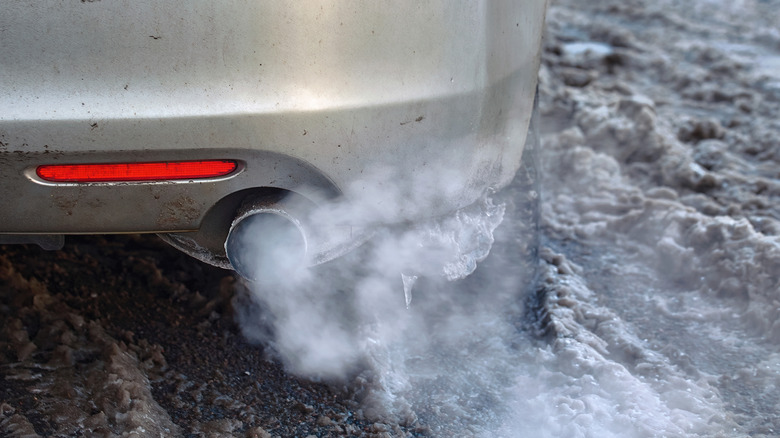
Here’s the problem: idling your modern engine and running it rich for extended periods can cause unburned fuel to strip oil from vital places like the cylinder walls. Without the protection of oil, friction between metal parts increases, and so does engine wear. In addition, today’s engines are often fully lubricated in less than a minute. So there is no need (in most cases) to idle a modern car to warm it up, as it takes much longer to warm up while idling than just driving it gently.
That means that if you simply turn on the ignition as soon as you get into the car, the vehicle should be ready to drive by the time you put on the seat belt and get comfortable. That said, you still shouldn’t hit the gas right out of the gate as this can put too much strain on the engine. For those in cold climates, choosing an engine heater is much healthier for your vehicle as it can warm the fluids for a few hours before driving, without idling for long periods of time.
#engine #block #heater #Jalopnik