

She spent ten years researching a way to permanently change her eye color before discovering kerato pigmentation this year. The procedure, which changes the color of the iris permanently, involves using a laser to deliver a colored dye through a microtunnel in the cornea.
“All my contact lenses have always been green; people wouldn’t be able to tell this eye color apart from my old contact lenses,” she said.
Samantha Fleck was never comfortable with brown eyes. Source: Delivered
And now, after the procedure, Samantha said she finally feels like herself.
“Now when I look in the mirror, all I see is myself.”
‘People can go blind’
TikTok and Instagram videos documenting eye color transformations have been viewed millions of times, pushing the procedure into mainstream conversations. But these videos are often littered with comments asking about the costs and risks.
“People can go blind, and this is not a reversible procedure.”
People can go blind. And this is not a reversible procedure.
Chameen Samarawickrama, ophthalmologist and eye surgeon
“We don’t know if [the dye] is toxic in the long term, we don’t know if it will fade, if scarring will occur. The cornea is responsible for 70 to 80 percent of focusing. So any irregularity that may be caused by the dye will cause vision loss.”

Sydney professor Chameen Samarawickrama is warning Australians to reconsider going abroad to have their eye color changed. Source: SBS / Matt Gazie
A 2018 study published in the British Journal of Ophthalmology suggested a 10-12 percent risk of complications, according to Samarawickrama.
“I did as much research as I could and looking at the results of people who did it before me, there are people who did the procedure two, three or four years before me and they always updated their process, and it put my mind at ease.”
A growing global trend
“I actually saw this procedure [Ferrari’s] hands and then I brought it to America, and I was the first in America,” Movshovich said.
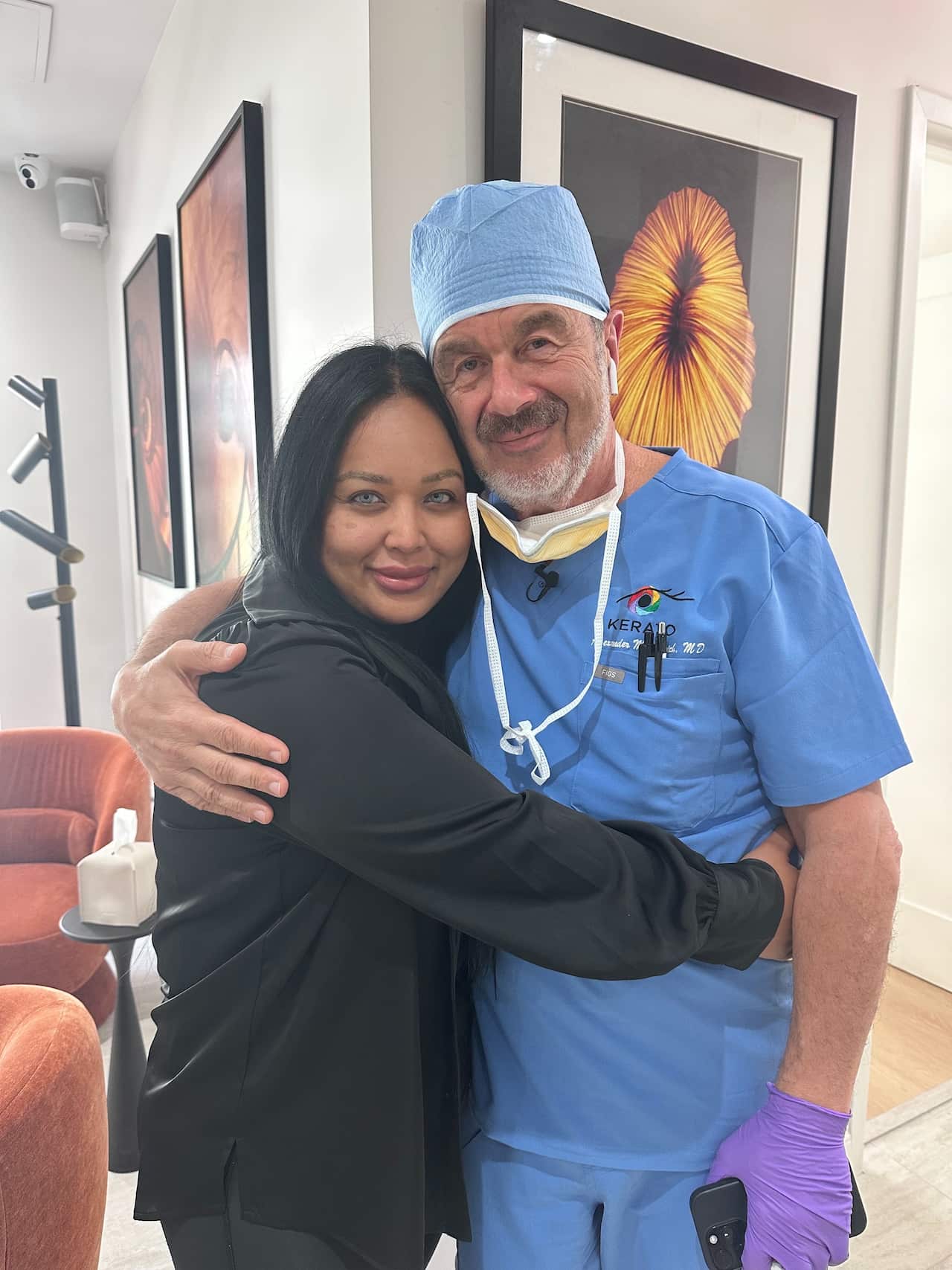
Samantha Fleck hugs Doctor Alex Movshovich after her procedure in New York. Source: Delivered
He said most people go from dark eyes to green or blue – with about 10 percent of patients requesting further work after the procedure.
He says the results often look unnatural or “aesthetically displeasing.”
“He looked ghostly… he now has depression and all kinds of problems,” Bala said.
‘Just put on contact lenses’
“If someone really wants a light tan, they should just put on a contact lens.”
#risky #transformation #led #Australian #fly #front #eyes