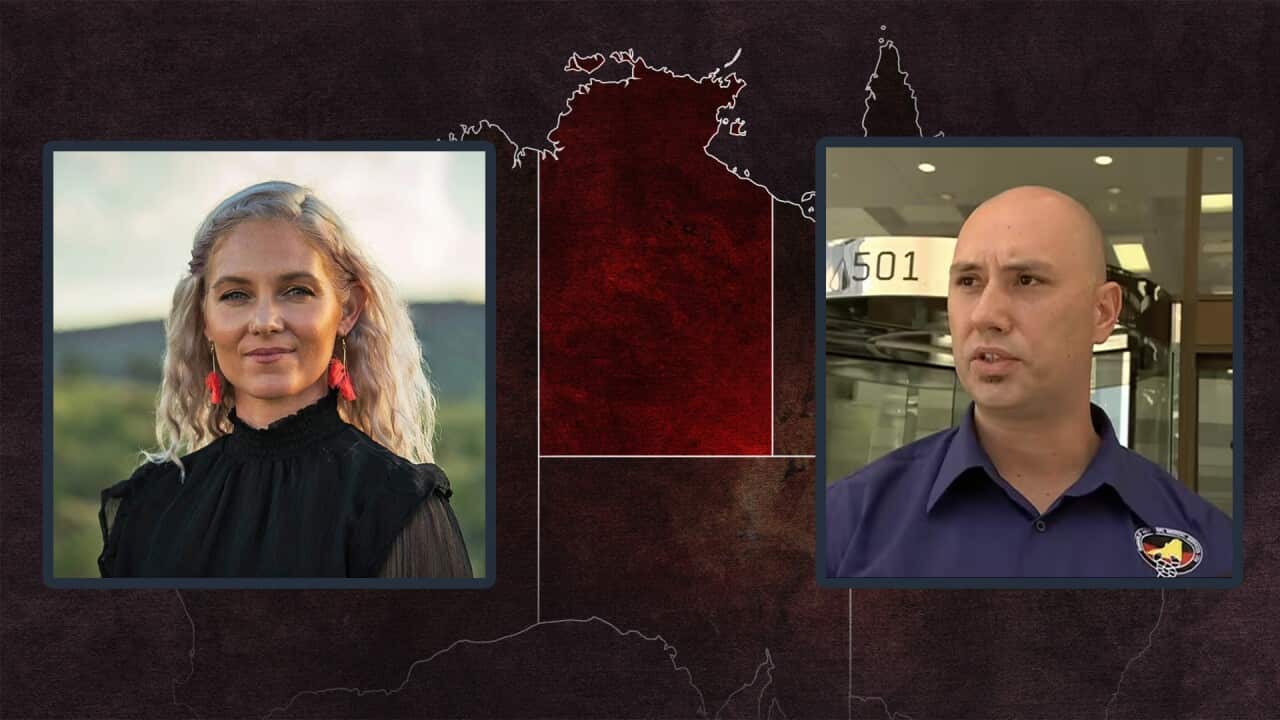
The NT domestic violence crisis continues to kill Aboriginal women, a year after the landmark inquiry

The NT domestic violence crisis continues to kill Aboriginal women, a year after the landmark inquiry

4 minutes, 37 seconds Read

A year on from the landmark inquiry into domestic, family and sexual violence (DFSV) in the Northern Territory, frontline specialists and Aboriginal health leaders say urgent action is still lacking – and more Aboriginal women are dying as a result.
Dr. Domestic, family and sexual violence researcher Chay Brown spoke to NITV about the ongoing crisis in the Northern Territory, highlighting the ongoing government failures and the devastating impact on Aboriginal women, families and communities.

“This year alone we have lost eight women, reportedly at the hands of their partners. Based on last year’s figures, that is about five times the national average,” she said.

“The violence is frequent, severe and the impact on families and communities is immeasurable.”
Dr. Brown criticized the NT government’s response to the coronial findings, describing it as dismissive and insufficient.
“All we have seen from the government is them standing in parliament and trying to ridicule the coroner – and by extension the families and friends of those four women.
“It is a deliberate attempt to demean the efforts of families who devoted 18 months of their lives to a traumatic investigation and traveled through remote communities to testify and contribute.”
She said the area’s housing crisis is exacerbating the problem.

“The Northern Territory has 12 times the country’s homelessness rate. Programs like the Escape from Violence Payment are useful in theory, but they are pointless if you have nowhere to go.

“The waiting list for public housing is around ten years, even for priority cases. At the very least, women’s and childcare centers need proper funding and resources – currently hundreds of women are being turned away every month.”
Dr. Brown emphasized that the crisis is systemic and racial.
“If the area continues to delay, there will be more dead Aboriginal women and children.
“More than 90 per cent of domestic violence murders in the NT since 2000 have been of Aboriginal women. The Government has no political will to tackle the most important safety issue for the community here.”
She emphasized that the consequences extend beyond direct deaths.

“The effects are generational. You cannot exaggerate the devastation these deaths have on friends, family and the wider community.”

Dr. Brown called for urgent resources and support for the frontline sector, saying communities cannot continue to bear the burden alone.
The Aboriginal Medical Services Alliance of the Northern Territory (AMSANT) has also marked the anniversary with a renewed call for systemic reform.
The coronial findings, handed down by NT Coroner Elisabeth Armitage on November 25, 2024, followed the largest ever DFSV inquest in Australia, which investigated the deaths of four Aboriginal women – Kumarn Rubuntja, Kumanjayi Haywood, Miss Yunupingu and Ngeygo Ragurrk – all murdered by partners with known violent histories.
Despite detailed recommendations calling for transformational change, AMSANT says little has changed.
In the year since the report was published, a further five Aboriginal women have reportedly been murdered by their partners in the NT.

New figures highlight the severity of the crisis: the Northern Territory continues to have the highest rates of domestic, family and sexual violence in the world, and Aboriginal and Torres Strait Islander women face intimate partner homicide rates seven times the national rate.

The harm is also evident in the healthcare system, where almost three-quarters of abuse-related hospital admissions for Aboriginal and Torres Strait Islander people are related to domestic violence.
AMSANT chairman Rob McPhee said these figures reflect an emergency situation across the territory.
“Aboriginal women suffer the harshest and most devastating consequences,” he said.
“Every woman and child deserves to be safe. We would not accept this level of violence anywhere else.”
Mr McPhee said the inquest made clear that Aboriginal-led responses must be at the heart of any reform.
“Every woman who died was not hidden from the system. They all asked for help and their partners were known to the authorities. Yet the system failed to protect them.”

Coroner Armitage’s report identified trauma, grief and systemic disadvantage as driving forces behind DFSV in the area.

She urged the government to prioritize Aboriginal leadership, community-designed prevention programs and early intervention.
In a statement, NT Minister for Domestic Violence Prevention Robyn Cahill said the government was committed to reducing the incidence of domestic violence.
“This government has considered the recommendations of the Coronial Inquiry… and concluded that the majority of the recommendations related to programs that were already in place,” she said.
“It was clear that doing more of the same would not achieve the desired outcome of tackling DFSV in communities.”
But AMSANT says the territory has not yet translated these recommendations into meaningful investments.
“In principle, acceptance does not make women safer,” Mr McPhee said.
“We need real investment in prevention, early intervention, community leadership and culturally strong support – exactly what the coroner found. Our duty of care is to ensure that no woman’s cries for help go unheard.”
Ms Cahill said a “record” $36 million had been allocated to the sector, an investment that was already “delivering results”.
“We have seen a decline of 1.4% between January and September 2025 compared to the same period last year… That is a huge turnaround and has come about because this government is willing to do things differently.”
AMSANT and community-led organizations are calling on the NT Government to engage meaningfully with Aboriginal organizations and adopt new approaches to prevention and support, as consistently recommended by the coroner.

The anniversary also coincides with the start of the global 16 Days of Activism campaign – a reminder, says AMSANT, that the region cannot afford another year of delay.

#domestic #violence #crisis #continues #kill #Aboriginal #women #year #landmark #inquiry

Similar Posts

Leave a Reply

Your email address will not be published. Required fields are marked *