

One of the homeowners, a filmmaker with an affinity for Korean and Japanese design, was looking for “beautiful, clean, clear, refined details,” Lorenz said. As a point of reference, she mentioned science fiction films like “After Yang” and “Her.” “They’re both set in a utopian future, but they’re not a display of technology. They’re human-centered,” says Lorenz, who founded his Brooklyn-based company. Studio Fabian Lorenzin 2021. “We were interested in a homely feel, with a calm, natural palette of wood, but there are subtle cinematic hints of this futuristic layer in the design.”
Hence the special attention to reflective surfaces, lighting effects and use of color. Elements such as a kitchen back wall made of dichroic glass that splits the light into different colors depending on the viewing angle, moody nighttime lighting and unexpected color shocks everywhere ‘take you’, as Lorenz put it, ‘out of the neutral atmosphere’.
The gut renovation transformed the mid-19th century wooden frame house without a sidewalk from a simple multi-family home to a two-family home. There is an owner’s duplex on the two lower floors and a separate apartment above, in keeping with the homeowners’ vision for a long-term residence that would adapt to the different phases of their family’s lives. It was an “A to Z” job, Lorenz recalled. “We removed a load-bearing wall and thoroughly renovated the structure with steel. There was a time when you could see from basement to roof.”
Wood predominates in the reconstructed interior. “We wanted something warm to the touch, so pale or faded wood was rejected,” said the architect. “We found this beautiful cherry for the floor that radiates a warmth that you don’t get with oak. It really carries a big part of the project.” Cabinet veneer is also cherry wood, although lighter in tone.
The open plan design of the ground floor is built around a multi-functional mill wall that extends the entire length of the building, with a folding bed at the front, a dining alcove in the centre, a kitchen at the rear and plenty of storage space. New sliding glass doors open to the garden. The second floor contains three bedrooms: the master bedroom; a guest room that doubles as a home office; and a large bedroom for the homeowners’ two children, which will be divided into separate spaces in the coming years.
The public space on the ground floor was organized around a long, custom-made milled wall. “The wall is like a Swiss army knife,” Lorenz said. “It has all these functions in different sections that activate different uses,” while maintaining maximum open floor space.
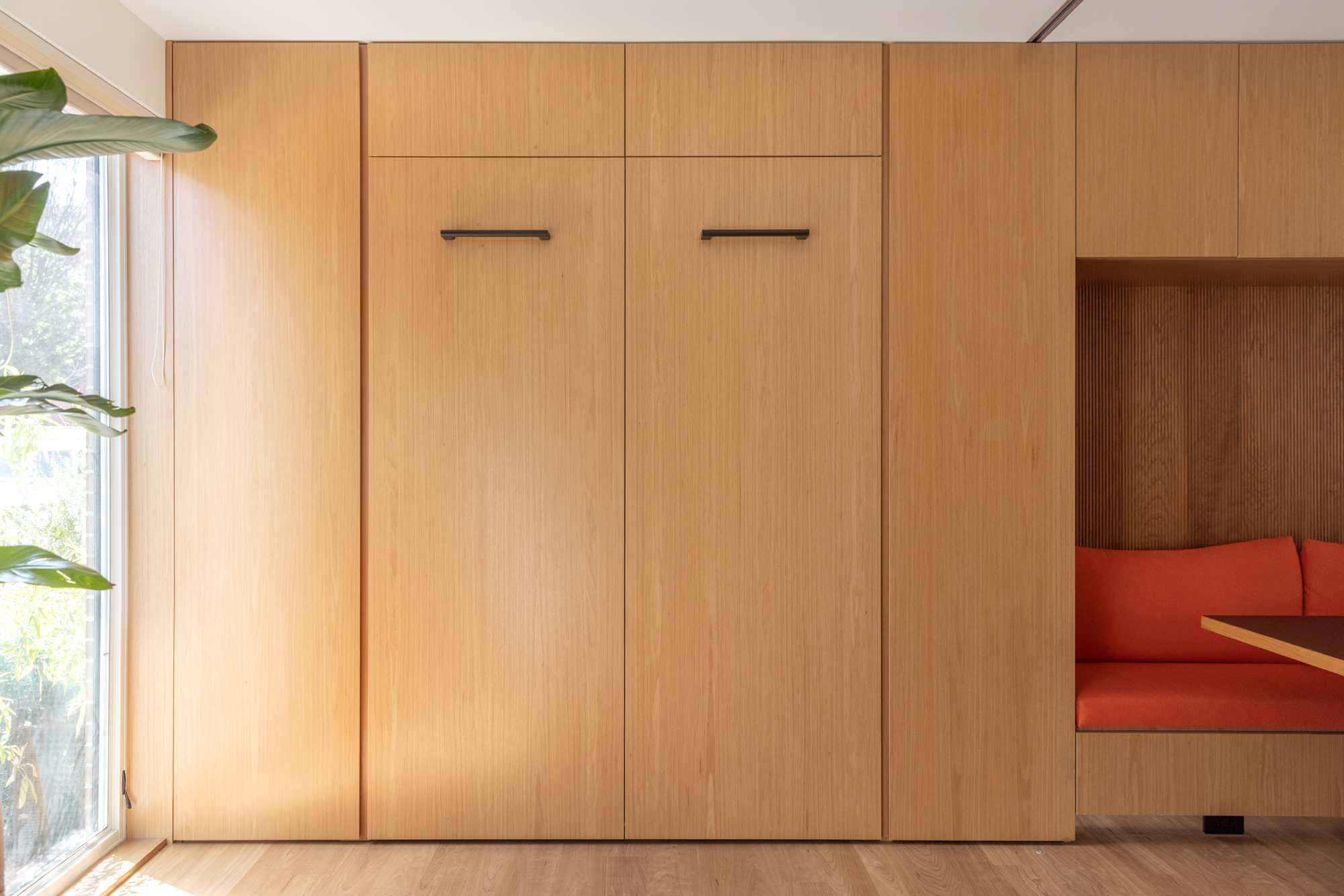
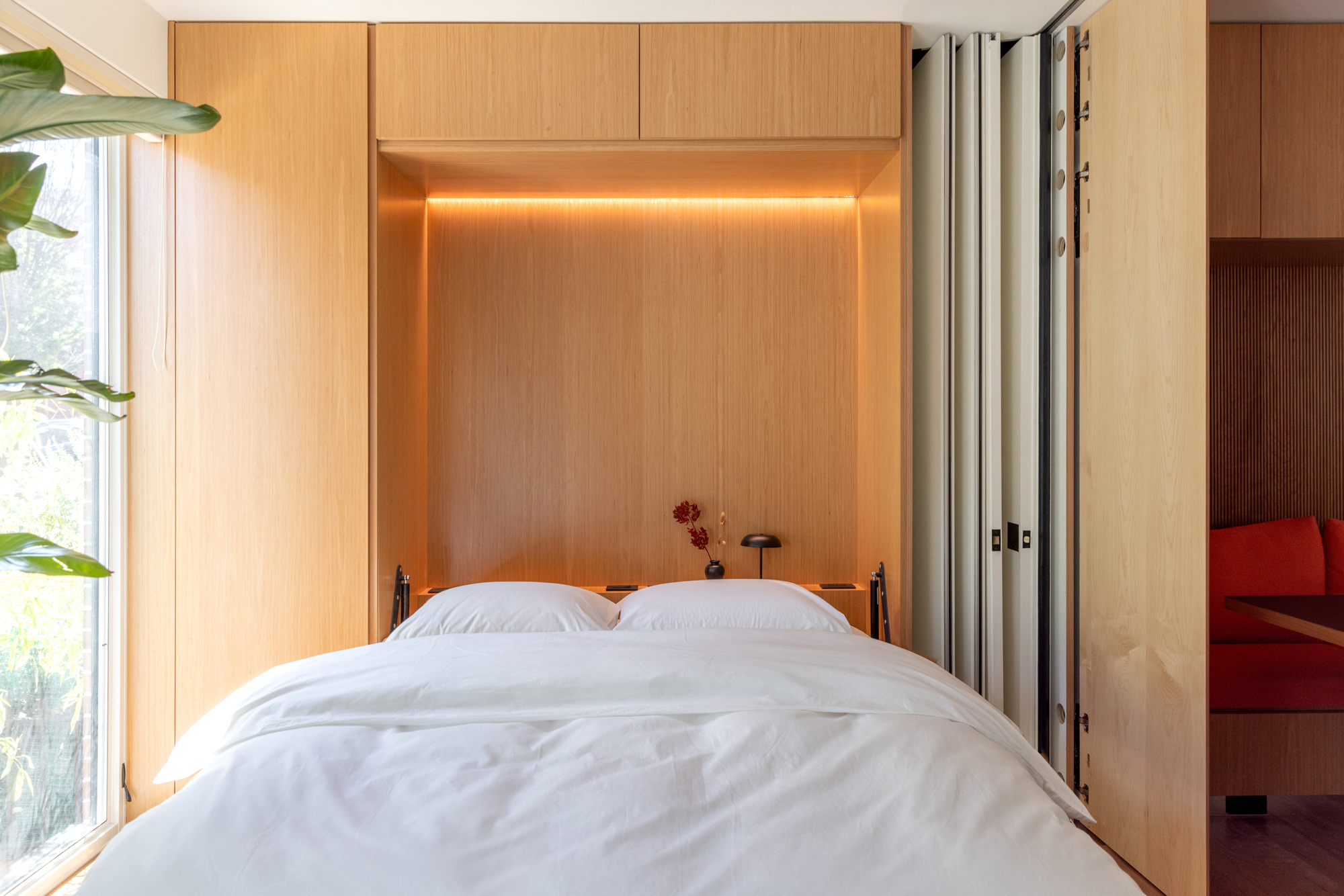
Accordion panels tucked into the wall slide out to transform the front portion of the large open space into private guest quarters. Integrated lighting around the Murphy bed provides atmospheric lighting.
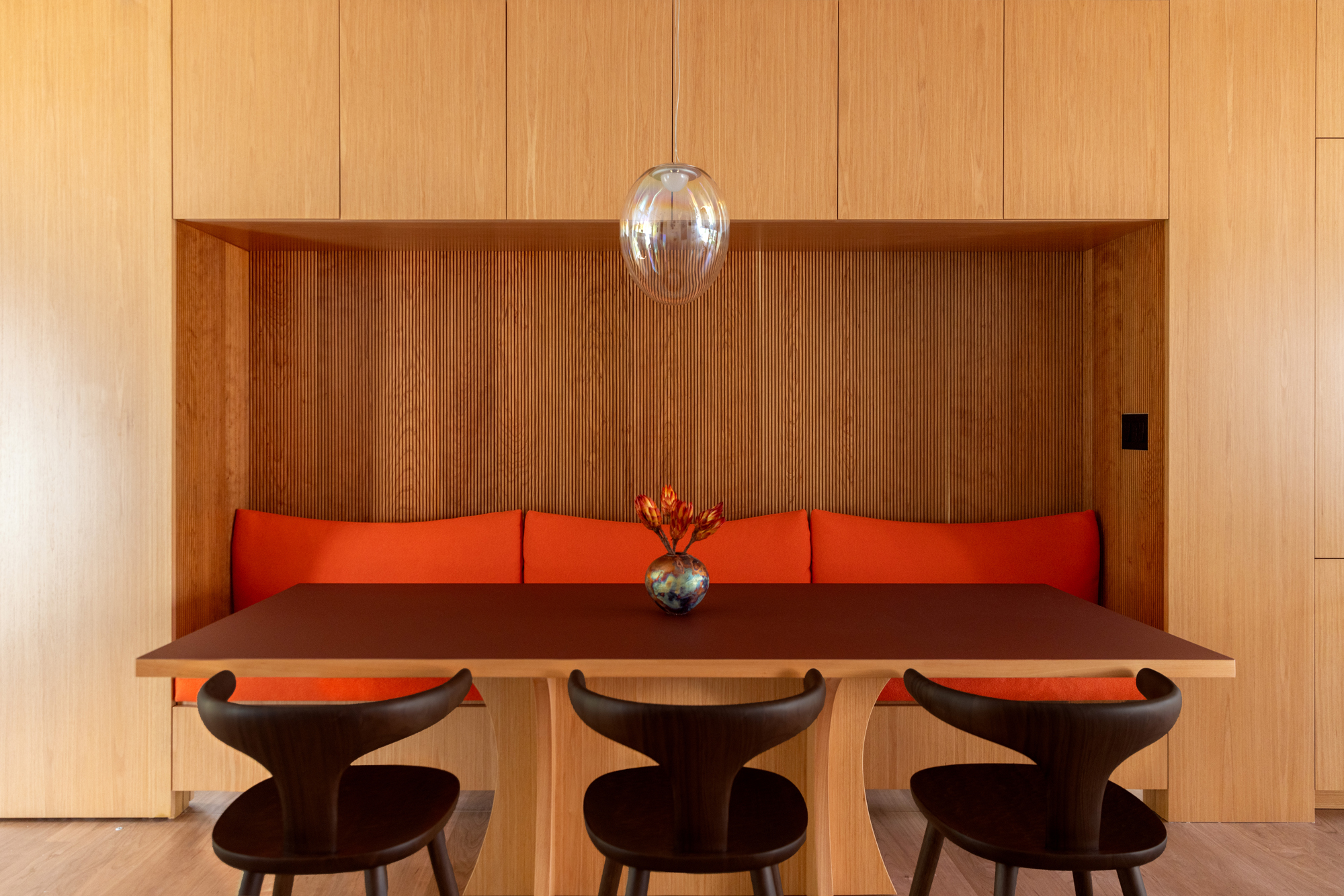
The custom-made dining table, designed by Fabian Lorenz Studio, comfortably seats 10 people. The cantilevered shape allows people to easily slide into the built-in bench, which is upholstered in orange-red Knoll fabric.
The dining room lamp is a futuristic Nebula hanging lamp from Artemide; the handmade Bunna chairs came from the Serbian manufacturer Zanat.
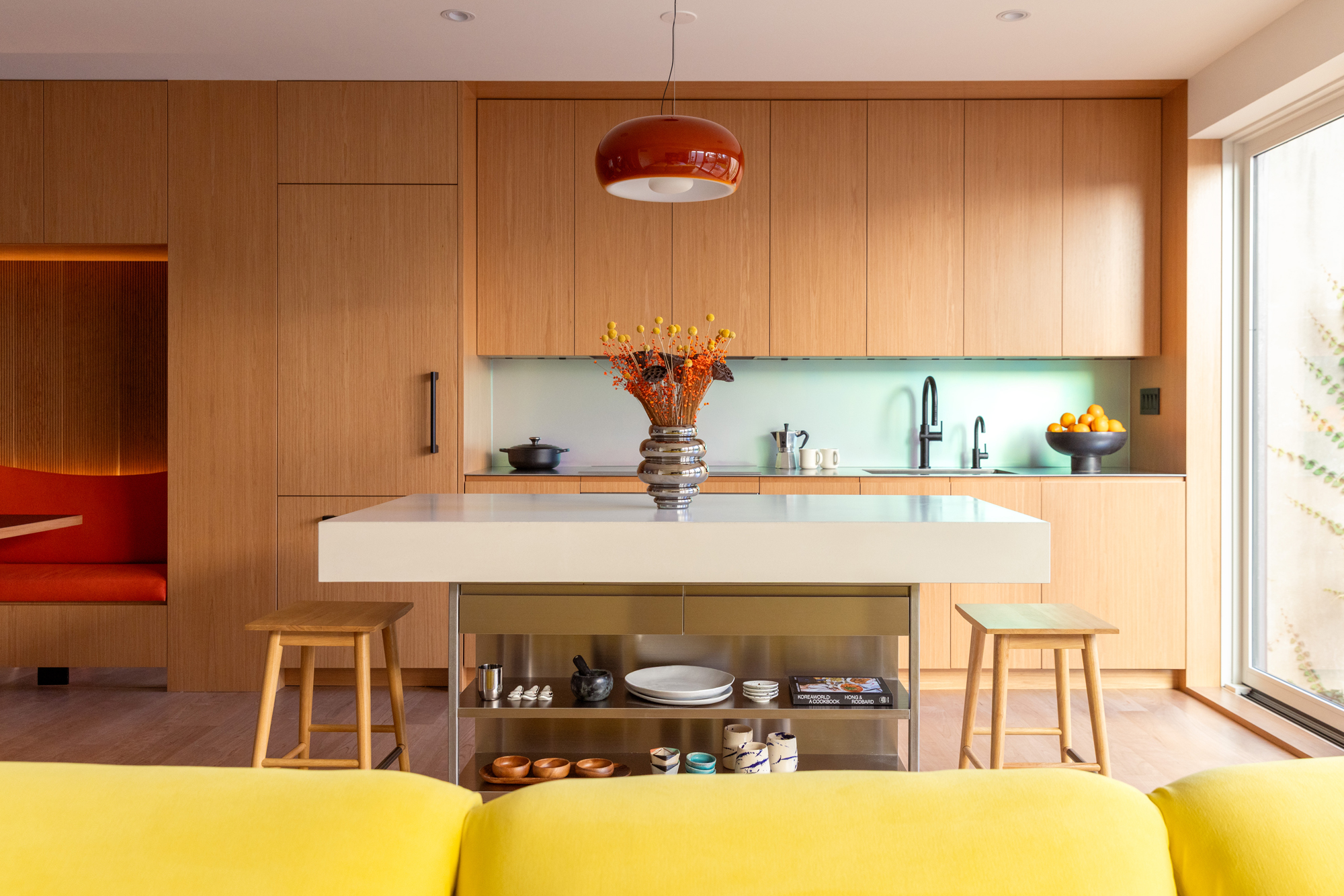
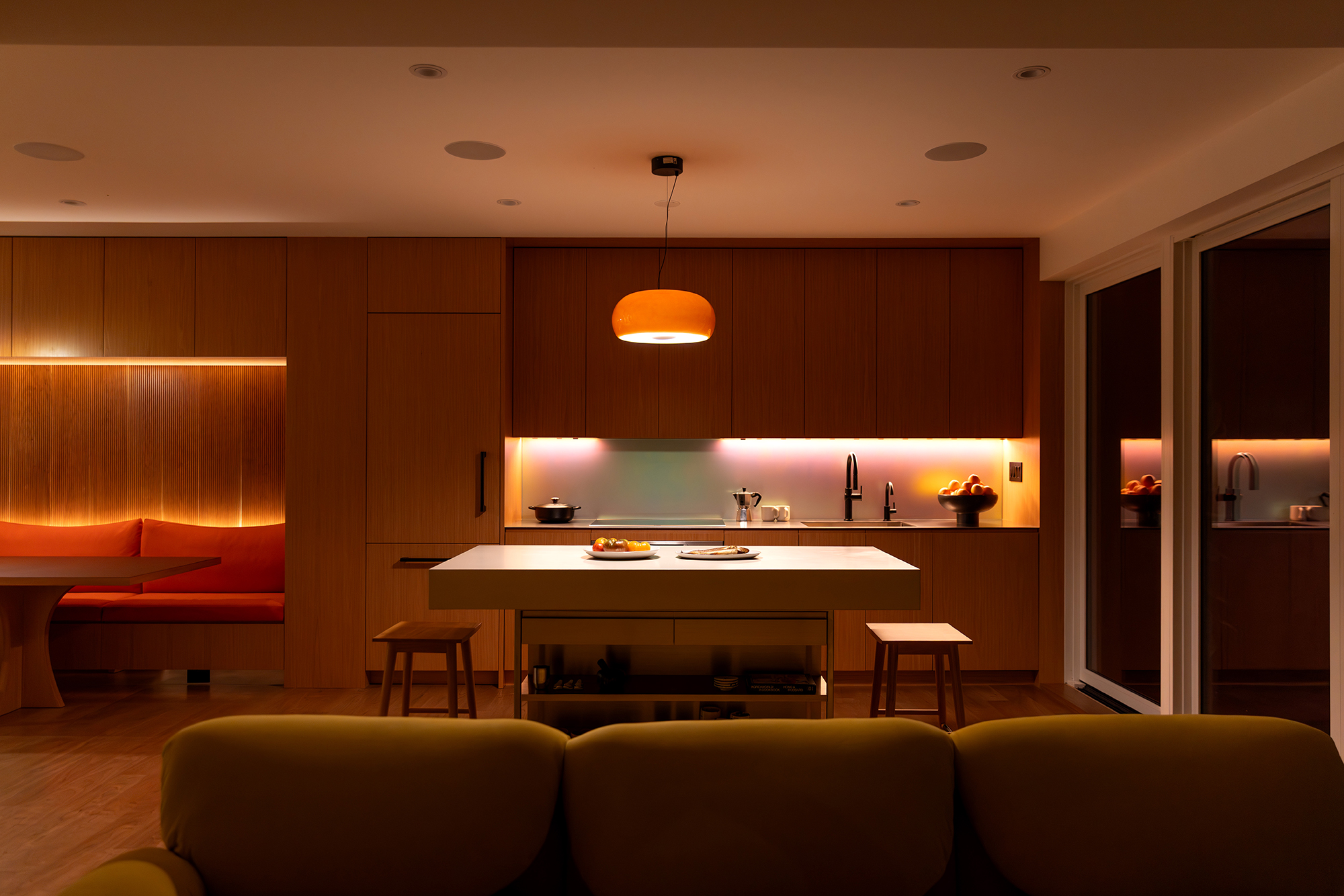
Several steps were involved in the construction of the fully custom kitchen, which includes a stainless steel island with a 6-inch-thick glass fiber reinforced concrete top.
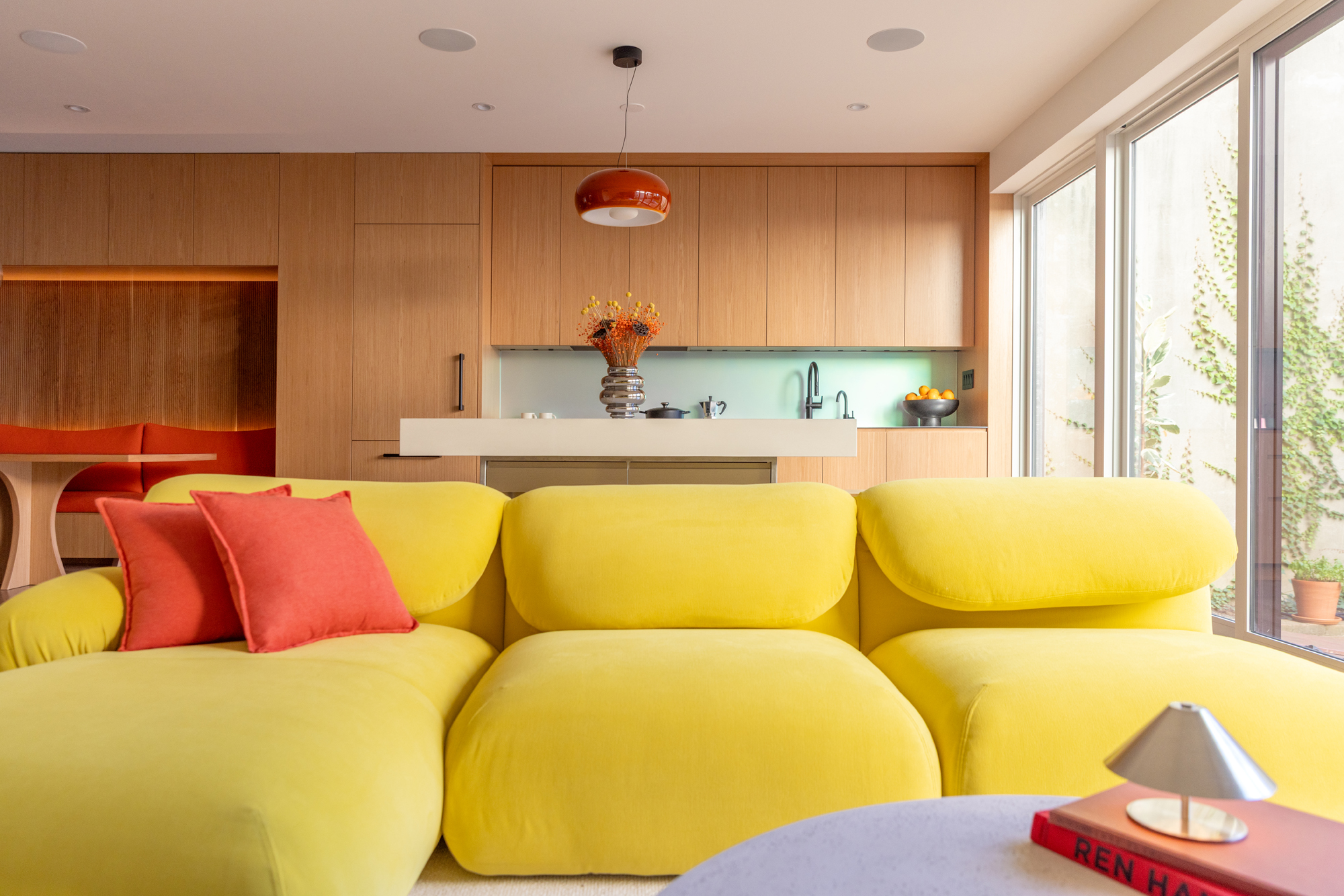
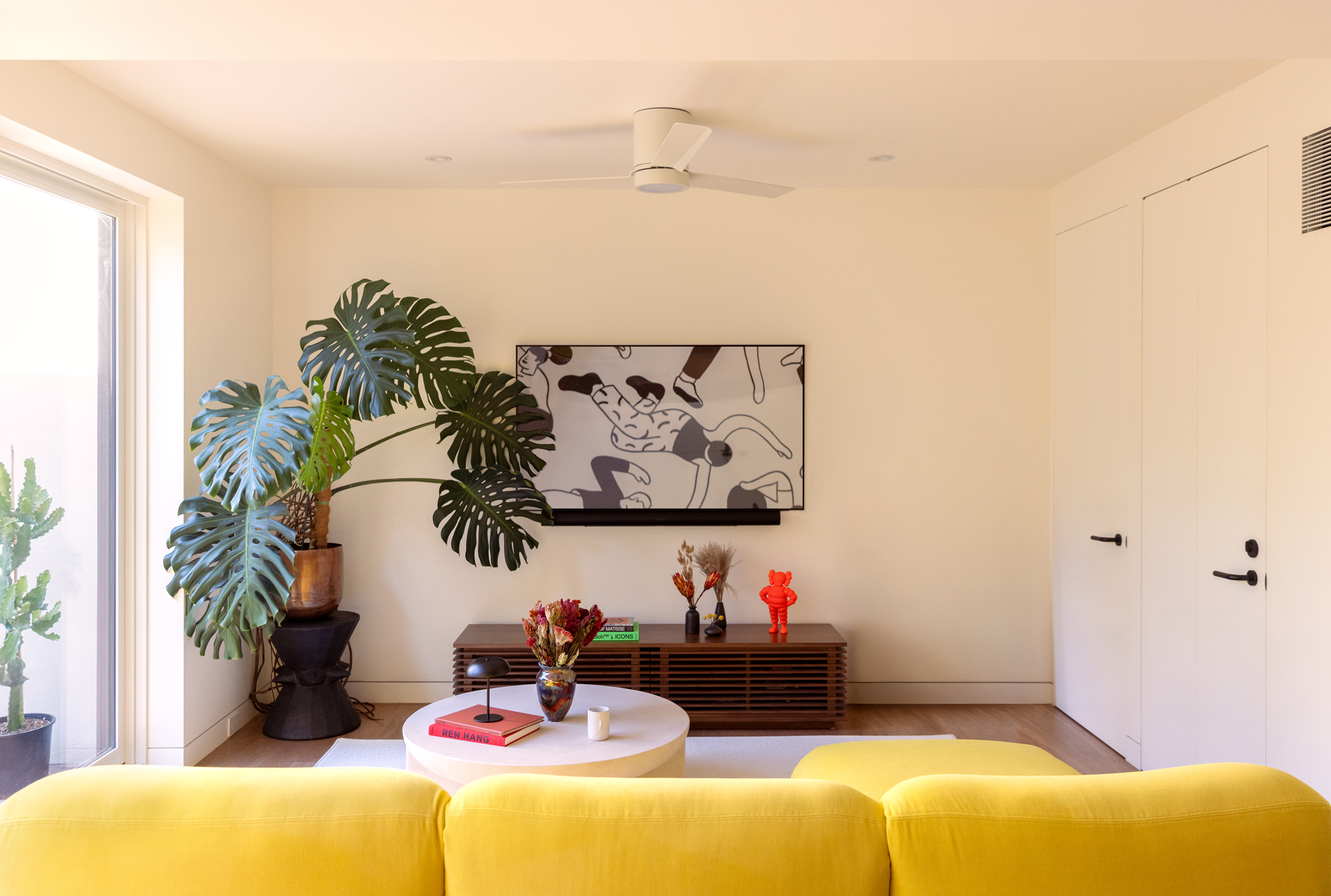
The Luva sofa from Herman Miller in sunny yellow strongly harkens back to Italian design from the 1970s.
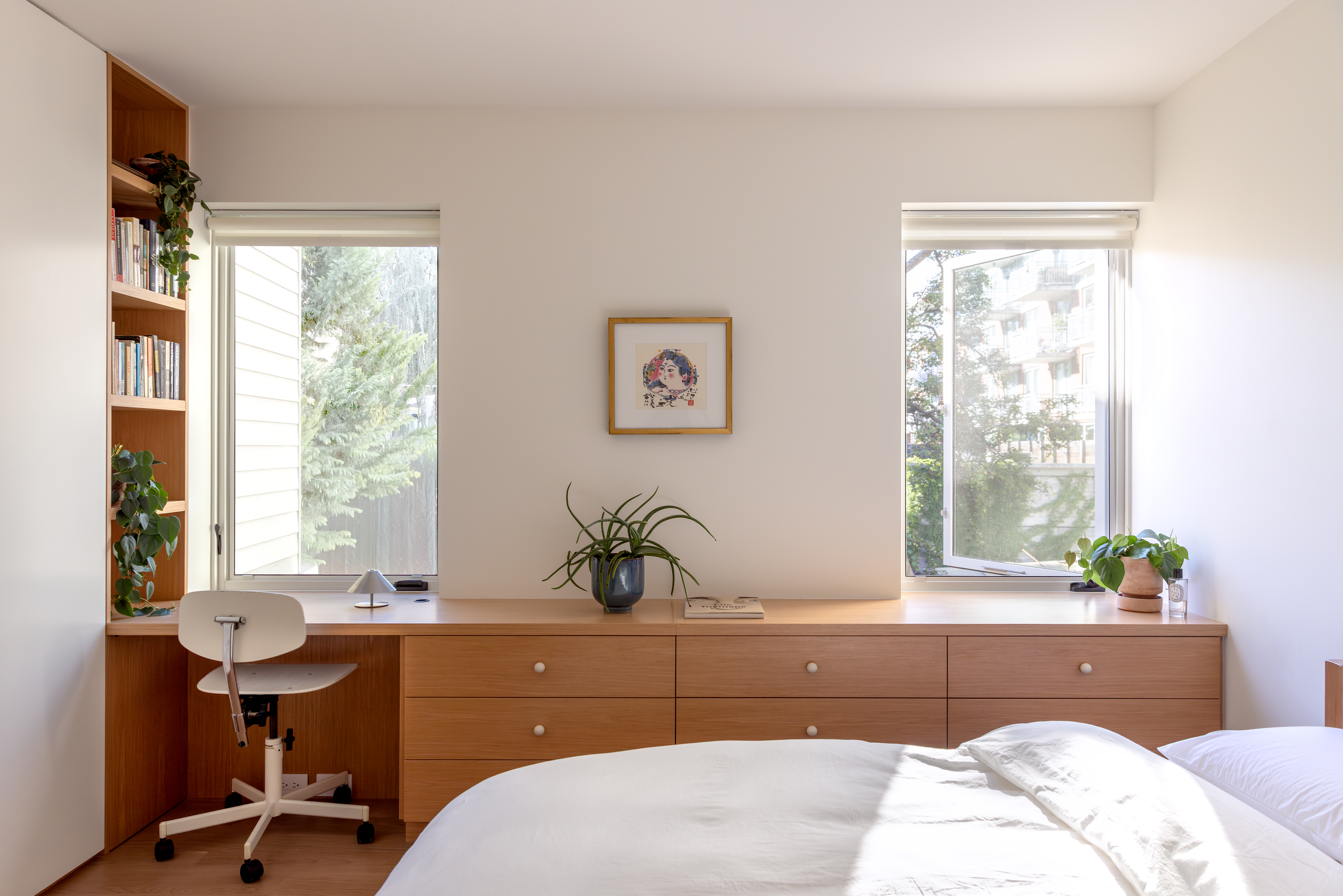
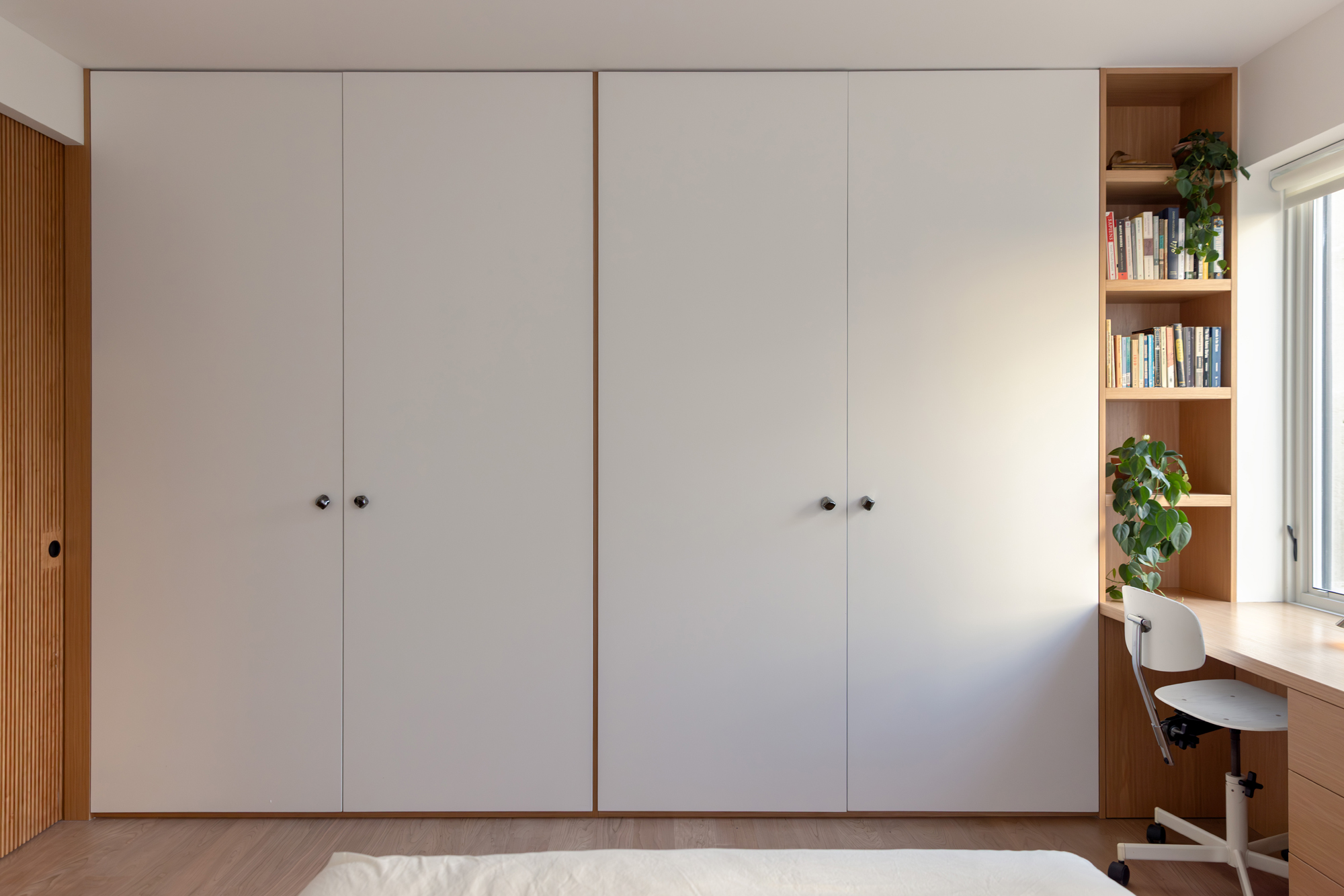
The cherry millwork in the master bedroom is leavened by closet doors painted warm white. The custom desk is made of ash wood.
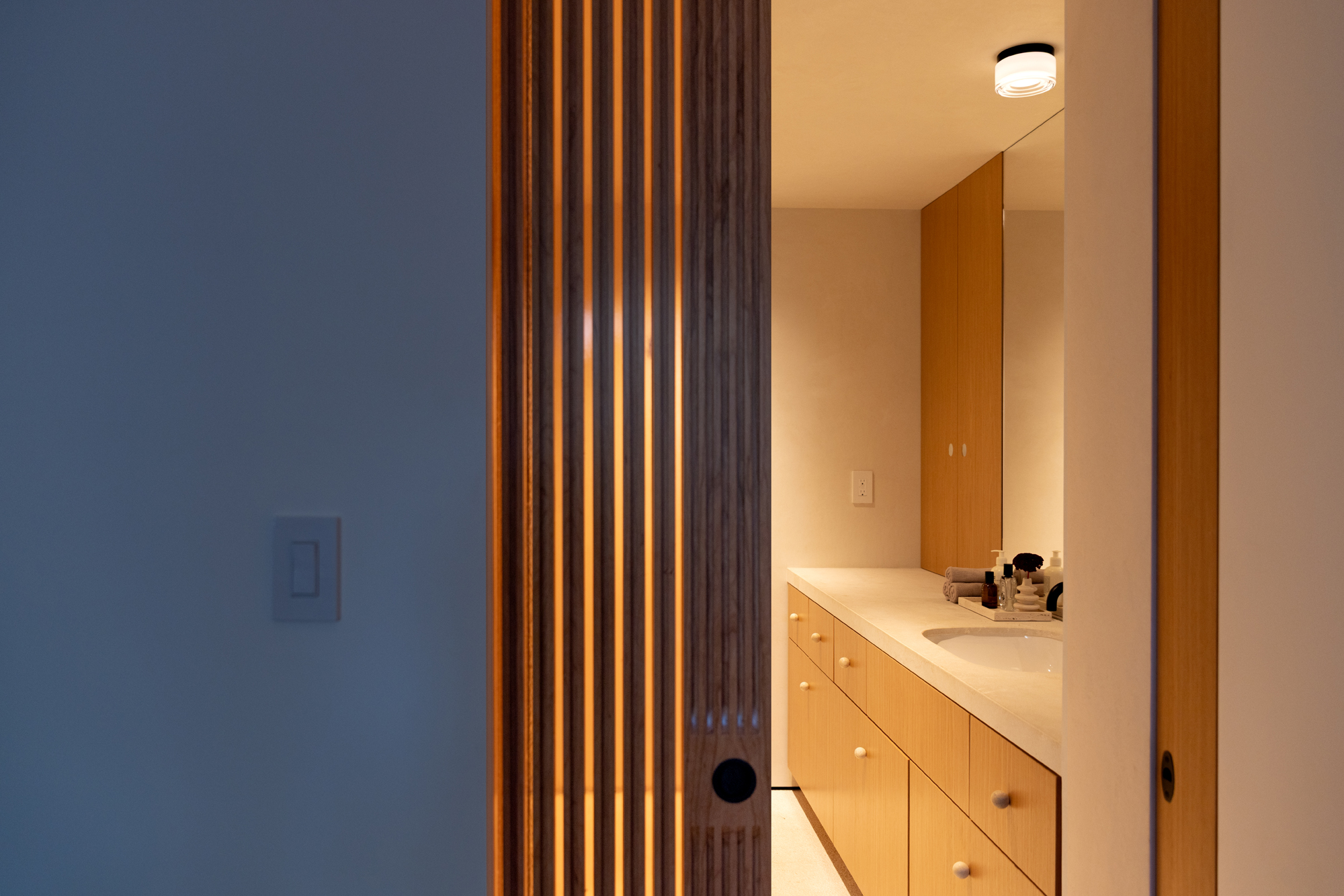
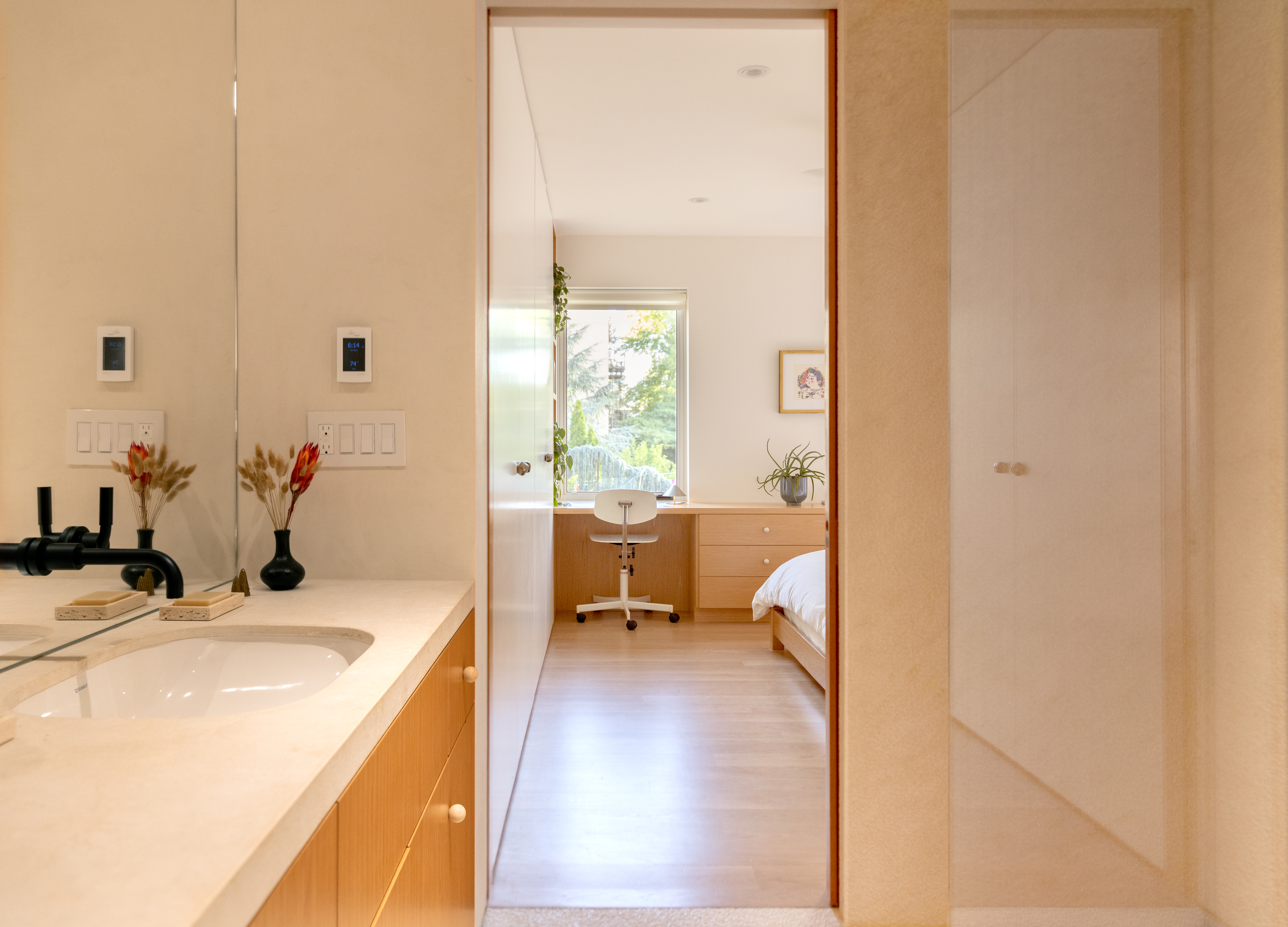
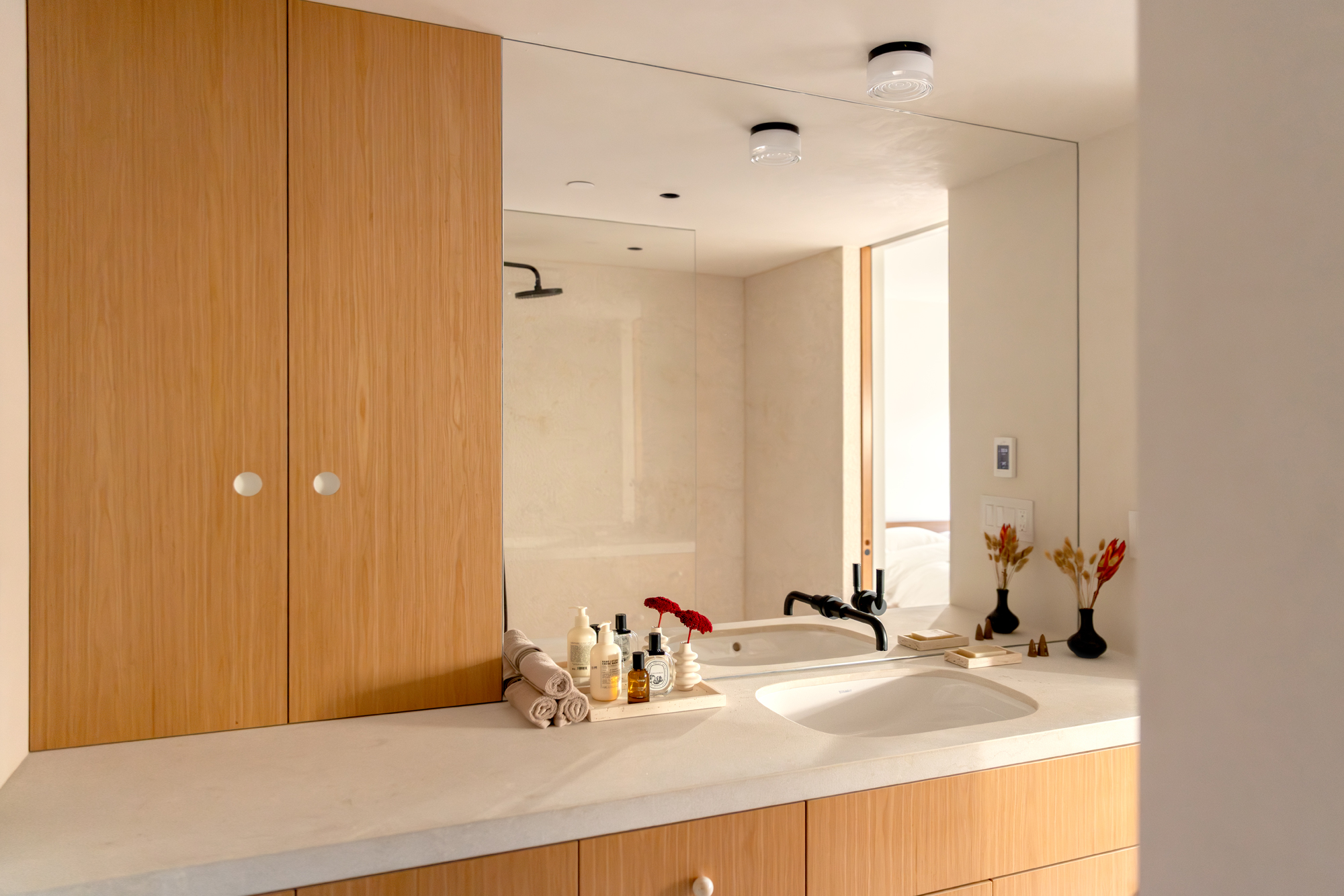
A slatted wooden pocket door filters light into the windowless primary bath. The architects took the opportunity to introduce color with an accent wall of deep blue and inserts of transparent salmon-colored material between the door slats.
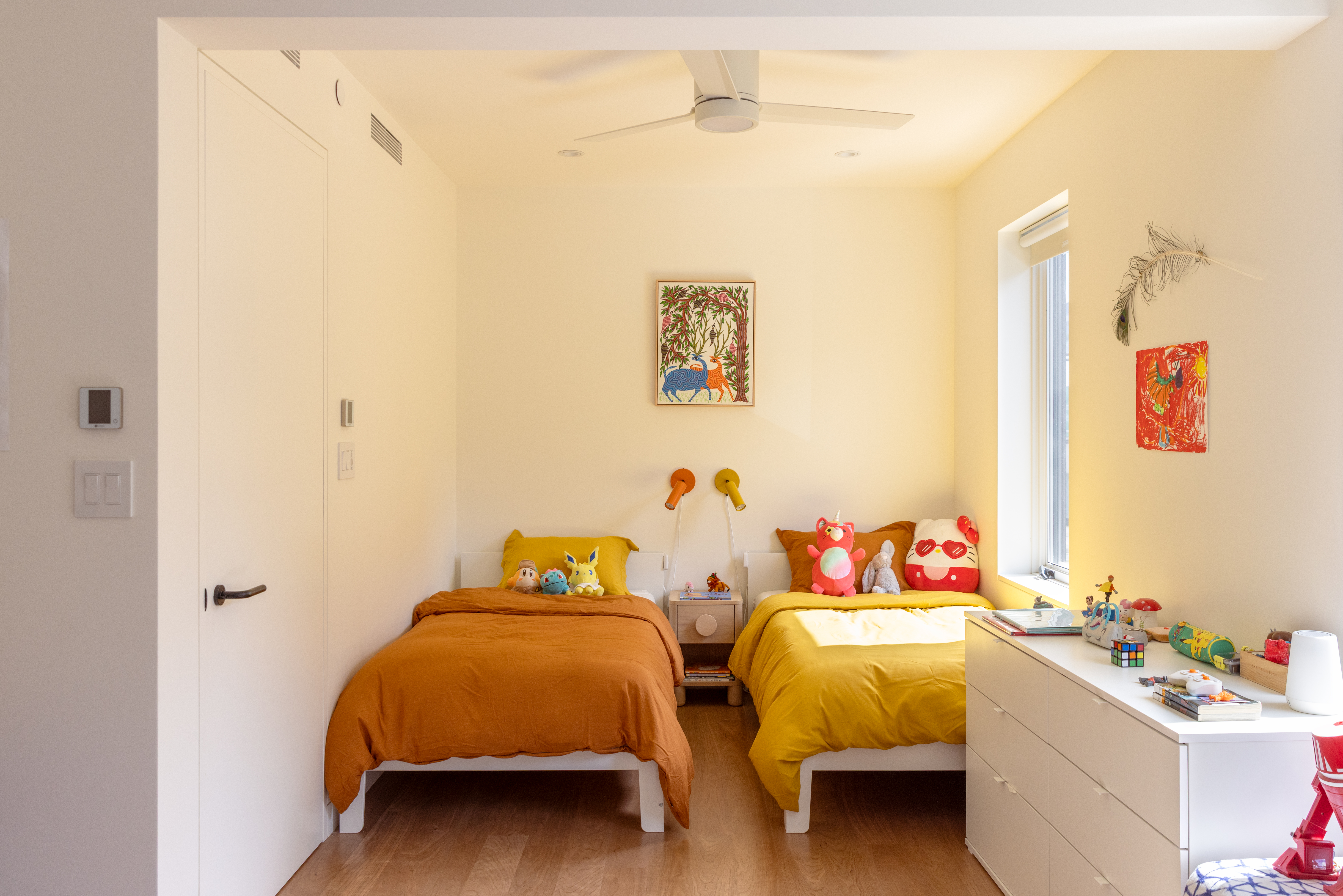
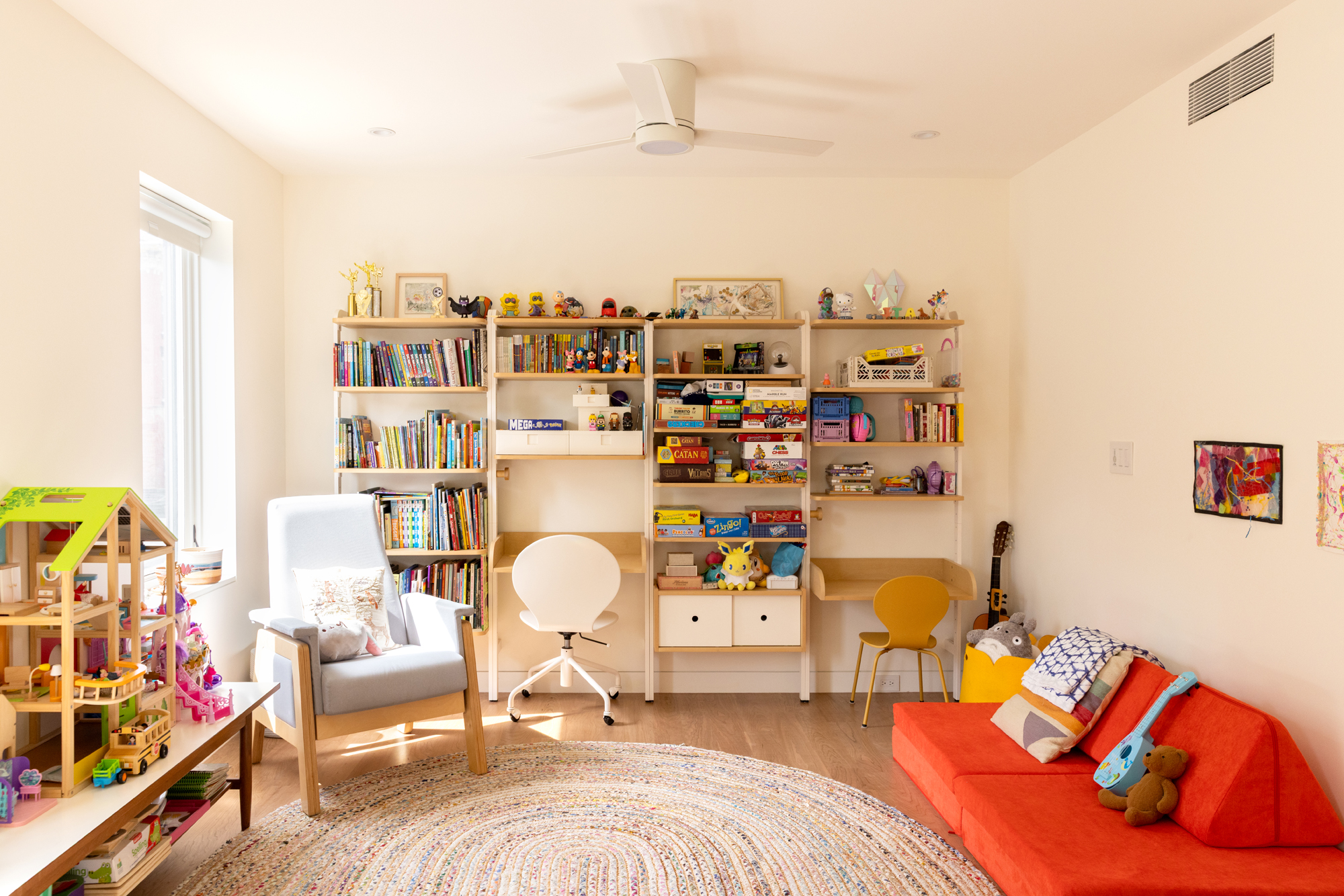
Today, the children’s room is a single room with twin beds and a large play area, designed to anticipate family life for years to come. “The space is organized in such a way that by placing one simple wall and door you can create two rooms of the same size,” says Lorenz. “We even left cables and such in the floor so that they can be easily connected.”
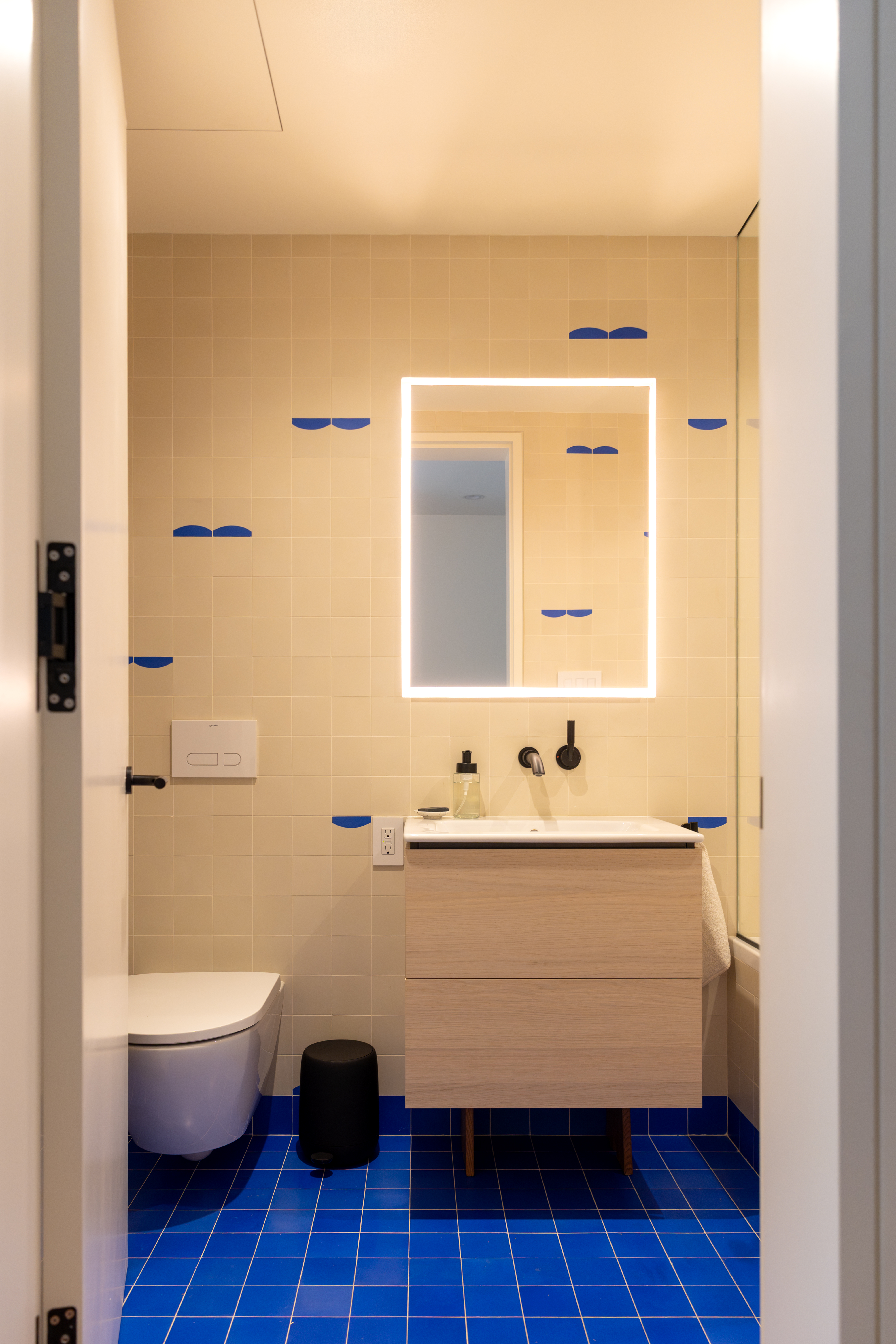
A regular medicine cabinet in the children’s pool was adapted with a custom light cove.
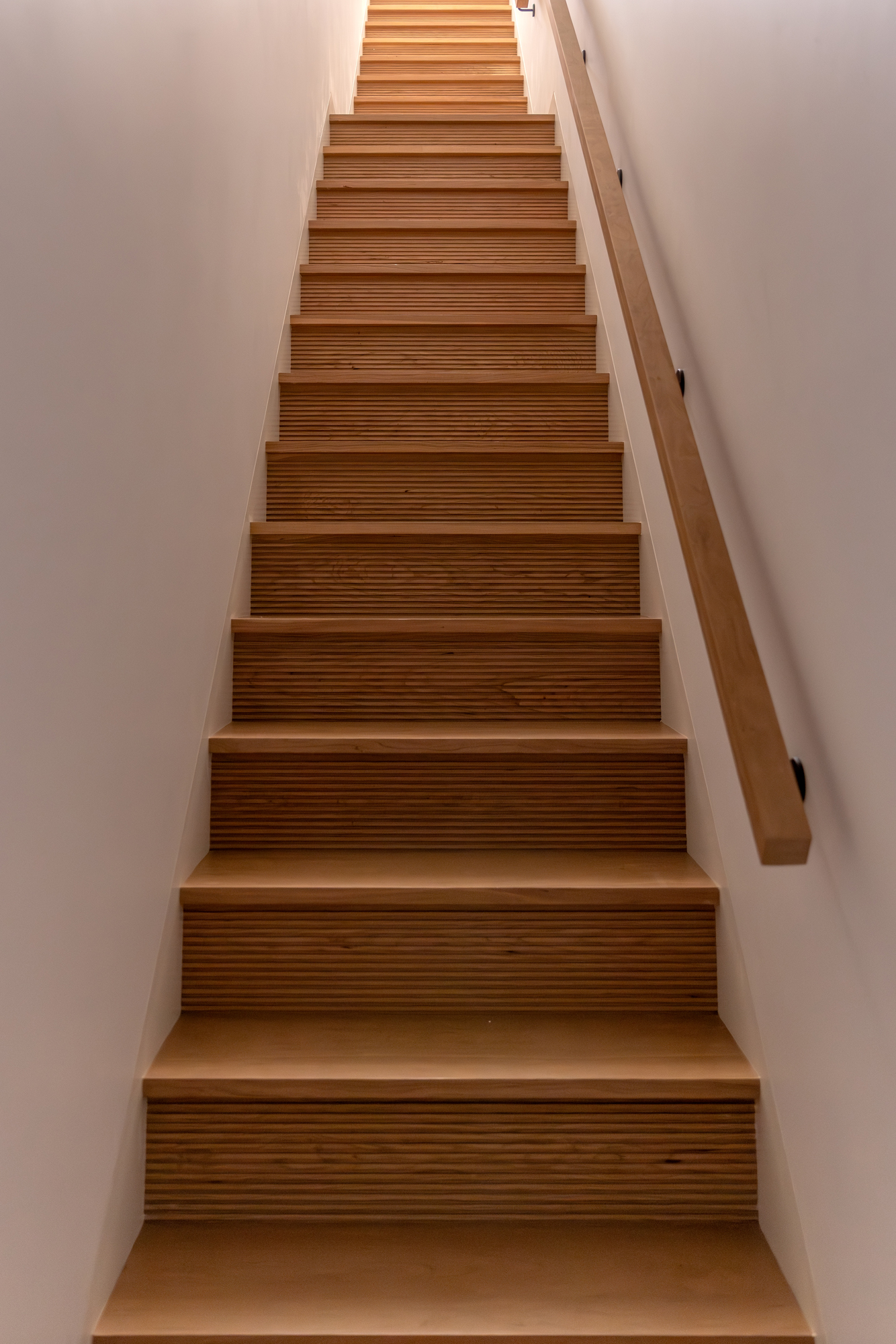
A newly installed straight staircase begins in a small shared vestibule into which the house’s only entrance door opens, and runs along a dividing wall to the top floor unit.
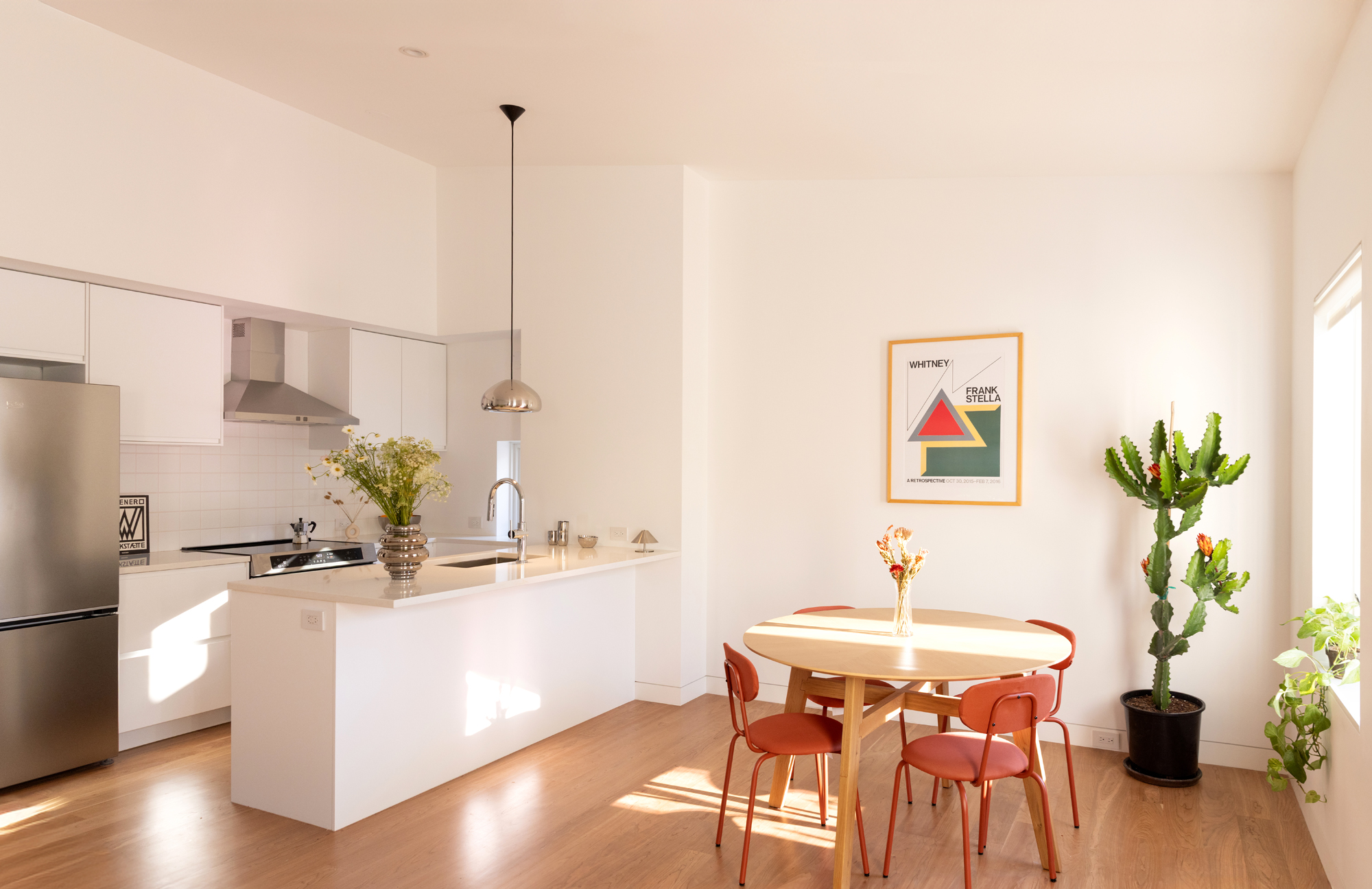
The roof-lit top floor apartment, now used for guests and expected as an eventual home for grandparents, is designed to be joined to the duplex at a future date.
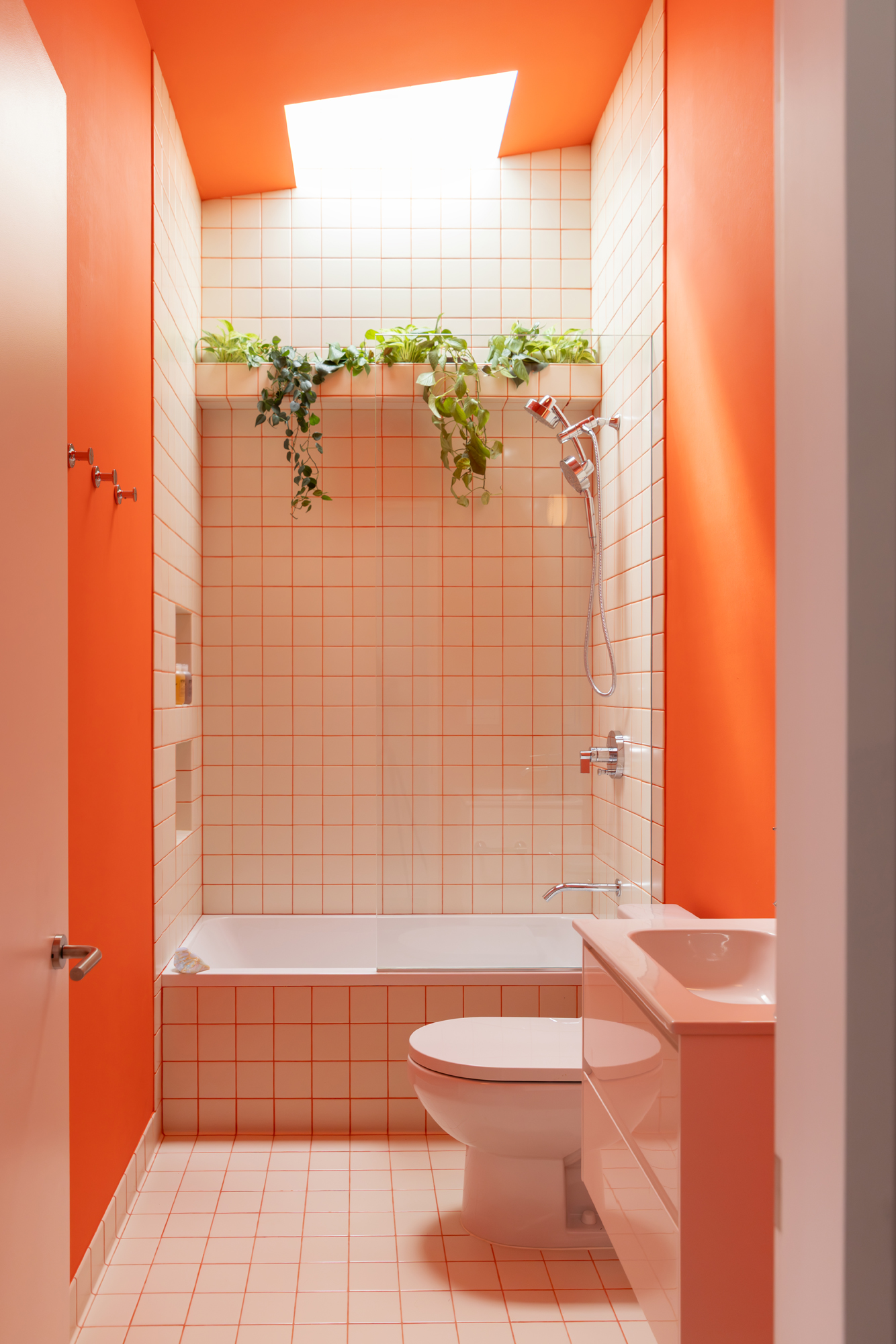
A striking orange bathroom is an energetic splash of color at the top of the house.
[Photos by Eva Zar]
I have a project to present The insider? Contact Cara at caramia447 [at] gmail [dot] com
The insider is Brownstoner’s weekly in-depth look at a remarkable interior design/renovation project, by design journalist Cara Groenberg. Find him here every Thursday morning.
Related stories
- The Insider: Stylish ‘upside down’ owner duplex crowns Greenpoint townhouse renovation
- The Insider: Central Light Well hosts the space in Greenpoint Row House Gut
- The Insider: Penthouse extension with views, planting Tops Greenpoint factory building
E-mail tips@brownstoner.com with further comments, questions or tips. Follow Brownstoner further X And Instagramand like us further Facebook.
#Insider #Greenpoint #House #evolve #growing #family