

“When UNAMI started, Iraq was a very different place than it is today,” he said UN news. Just days after the mission in August 2003, the The UN was attacked at headquarters in Baghdad, killing 22 staffers and wounding more than 100.
On August 19, 2003, a truck bomb destroyed the United Nations headquarters in Baghdad.
Today, a new era has begun: “With the sacrifices of the Iraqis first and foremost, and with international support, especially the United Nations, Iraq believes it is ready to move on to another phase, strengthening its sovereignty and territorial integrity. I wholeheartedly believe that Iraq is ready for that.”
AND Secretary General António Guterres will travel to Baghdad to join the Iraqis and the diplomatic community to mark the conclusion of the mission – an event he called a clear signal that this “mission is accomplished.”
Democratic progress
Mr Al Hassan said that recent political developments in Iraq underline how dramatically the country has stabilized.
November’s parliamentary elections, which were supported by UNAMI, were widely regarded as one of the most credible to date. With a turnout of 56 percent, they were also a demonstration of renewed public involvement.
“It was the most fair, free and peaceful election,” he said. “When you see such fair and democratic elections, you know that is a belief in a new Iraq.”
Over the years, UNAMI has provided crucial support in a wide range of areas: advising the government on political stabilization, promoting inclusive national dialogue and supporting community-level reconciliation in conflict-affected areas.
It has also played a central role in electoral support, helping Iraq organize several rounds of local and national elections.
Security revolution
One of UNAMI’s most important legacies, Mr Al Hassan said, is the dramatic improvement in security. He noted that Iraq “would have had no way of defeating Da’esh without the help of the United Nations and the international community,” but stressed that ultimately it was the courage and resilience of Iraqis that undid the extremist group’s progress.
The country continues to feel the long-term effects of conflict. About a million Iraqis remain internally displaced, including more than 100,000 Yazidis who still live in camps after suffering unimaginably at the hands of Da’esh.
Many are still unable to return home, especially to the Yazidi heartland of Sinjar, due to destroyed infrastructure and unresolved security issues.
“I hope they will have the time, the resources and the support to return to the homes from which they were taken,” he said. “It’s about time.”
A gender lens
Promoting women’s rights has been an integral part of UNAMI’s mandate, and Mr Al Hassan said Iraq must continue that work long after the mission has left.
“Yes, Iraq today is much better than before in terms of women’s rights,” he said. “But violence against women has unfortunately increased.”
He emphasized that sustainable progress must come from within. “We want Iraqis to be the sponsors and advocates of women’s rights – through Iraqi law, Iraqi protection and Iraqi legislation,” he said. “At the end of the day, it is the protection of their own people,” Mr Al Hassan added.
A key pillar of UNAMI’s mandate has been the promotion of human rights, including support for judicial and legal reforms, the protection of vulnerable communities and the promotion of the rights of women and minorities.
These responsibilities shaped the mission’s work until its planned closure in December 2025.
As Iraq prepares to take its seat in the UN Council for Human RightsHe said the country must “act as such,” ensuring full protection for women, youth and minorities and guaranteeing freedom of expression.
The UN presence remains in Iraq
While the political mission will close, Mr Al Hassan stressed that the UN’s broader footprint will remain unchanged.
“People confuse UNAMI with the United Nations,” he said. “All specialized agencies – UNICEF, WHO, IOM, UNDPand many others – will remain in Iraq. Even the World Bank and IMF open new offices.”
With significant oil reserves and a large GDP, Iraq is not looking for help, he noted. “Iraq does not need charity; it needs the support and friendship of the international community.”
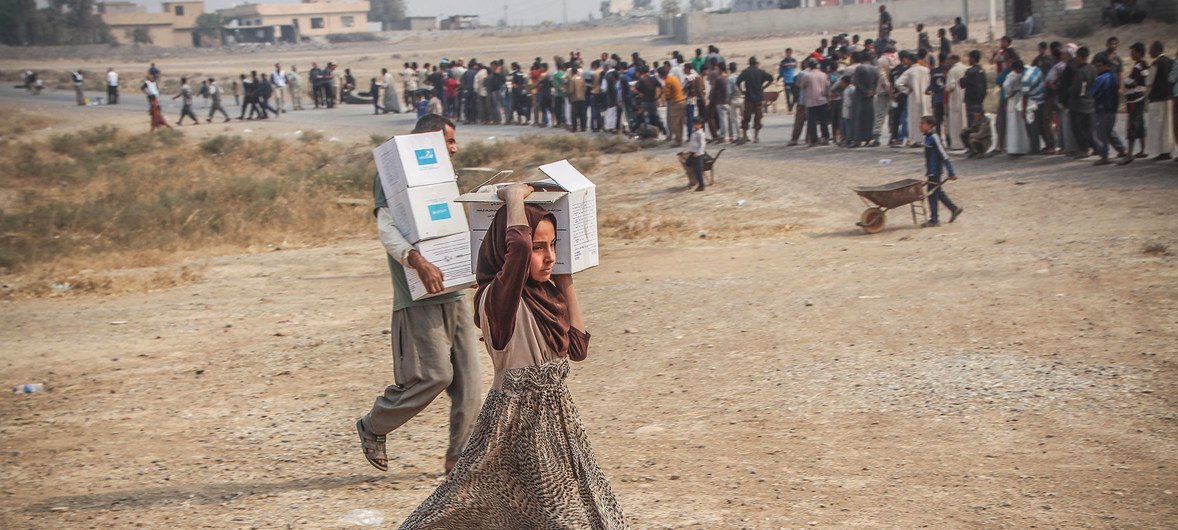
NO/Temba Linden
Humanitarian partners distribute emergency aid in the village of Ibrahim Khalil in Iraq.
‘Success story’ in a turbulent region
Mr Al Hassan called Iraq “a success story” and “a unique country” and urged the international community to give Iraq the space and support it needs to succeed.
“My message to the international community and neighboring countries is: give Iraq a chance to prove that they are worthy of the freedom for which Iraqis have paid a very high price.”
The departure of UNAMI does not mean the end of the partnership between Iraq and the UN.
“I have no doubt that Iraqis have turned the page to a new bright page that will put their country in a better position than before,” Mr Al Hassan said.
#departure #mission #marks #milestone #Iraqs #postconflict #transition