

Why traditional bread contains a lot of carbohydrates
Most traditional bread is made from refined wheat flour. Wheat flour contains a lot of starch. Starch is a dense carbohydrate. During baking, the flour is ground, stripped of most of the fibers and compressed into a soft bread. That process concentrates carbohydrates into a small portion. As a result, even one slice of standard bread can contain a significant amount of carbohydrates, with limited fiber to compensate.
Carbohydrate snapshot of traditional bread
| Type of bread | Portion size | Total carbohydrates | Fiber | Net carbohydrates |
| White Bread | 1 slice (25g) | 13-15 g | 0.5-1g | 12-14 g |
| Whole wheat bread | 1 slice (28g) | 12-14 g | 1.5-2g | 10-12 g |
| Multigrain bread | 1 slice (28g) | 15-18g | 2-3g | 13-15 g |
| Sourdough bread | 1 slice (28g) | 15-20g | 1-2g | 13-18g |
Even whole grain products remain carbohydrate-rich because flour is still the main ingredient. The fiber increases slightly, but the total starch load remains high.
What is a good low-carb bread alternative?
Not all substitutes work the same way. Some lower carbs, but they fall apart. Others retain structure but feel compact. A good low-carb bread alternative should balance carbohydrate control with real function during a meal.
Main criteria to evaluate:
- Lower total or net carbohydrates per serving compared to traditional bread
- Made from grain-free or alternative flour bases such as nuts, seeds, eggs or vegetables
- Strong enough to hold fillings without tearing or collapsing
- Controlled moisture level, not soggy or overly dry
- Simple ingredient list without heavy fillers or hidden starches
- Texture that suits the intended use, soft for wraps, firm for toast, firm for burgers
The right option depends on how you want to use it. Some swaps are best for cold sandwiches. Others perform better under heat. The following sections break them down by category and real-world use.
Plant-based bread alternatives

Vegetables can replace bread when texture is more important than fluff. They naturally contain fewer carbohydrates than wheat flour. They also add texture and volume without relying on starch. The trade-off is moisture and durability. Some work best cold. Others require cooking to keep their shape.
Plant-based bread swap
| Alternative | Typical carbohydrates per serving | Texture | Best for | Preparation needed |
| Lettuce wraps | 1-2 g per large leaf | Clear, light | Cold sandwiches | Wash and dry |
| Cabbage leaves | 3-4g per leaf | Sturdy, flexible | Savory wraps | Lightly steam |
| Portobello mushroom caps | 4-5 g per cap | Juicy, compact | Burgers | Grilling or roasting |
| Zucchini Slices | 2-3 g per ½ cup | Soft when cooked | Open stacks | Grill or bake |
| Eggplant Slices | 4-5 g per ½ cup | Fleshy, soft | Layered sandwiches | Roasting or grilling |
| Cauliflower Flatbread | 3-6 g per serving | Soft, slightly crunchy | Wraps, pizza base | Bake before use |
Practical notes:
- Pat the vegetables dry to reduce sogginess.
- Use thicker cuts for hot fillings.
- Lettuce works best cold. Heat weakens it quickly.
- Mushrooms and eggplants release moisture, so cook them first.
- Cauliflower needs a binding agent such as egg or cheese to keep its shape.
Vegetable swaps are simple and require little effort. They will not feel like eating bread, but it does solve the structural problem in many meals.
Alternatives to bread based on nuts and seeds

Nut and seed flour behaves very differently than wheat flour. They contain less starch and more fat or fiber. That changes the texture and density. These breads tend to be heavier than traditional sliced bread, but offer better texture than most vegetable swaps.
Nut and seed based bread options
| Basic ingredient | Typical carbohydrates per slice | Fiber content | Texture profile | Best use |
| Almond flour | 2-4g | Moderate | Soft, slightly dense | Sandwiches, toast |
| Coconut flour | 2-3g | High | Light but sturdy | Toast, small slices |
| Flaxseed meal | 1-3g | High | Dense, sturdy | Open sandwiches |
| Psyllium based mix | 1-3g | High | Tough, structured | Sliced bread loaves |
| Sunflower seed meal | 2-4g | Moderate | Dense, moist | Buns, sandwiches |
Practical differences to understand:
- Almond flour produces a softer crumb, but can feel rich.
- Coconut flour absorbs more liquid, so recipes use more eggs.
- Flax and psyllium add structure through fiber, making the bread firmer.
- Seed-based bread often feels heavier than wheat bread.
- Toasting improves the texture of most nut-based breads.
These options are closest in function to traditional bread. The trade-off is density and a slightly different flavor profile.
Egg and dairy based alternatives
Egg- and cheese-based options rely on protein rather than starch for their structure. They contain few carbohydrates and have simple ingredients. The texture varies. Some are light and airy. Others are firm and crunchy. These options work well if you need structure without flour.
Egg and cheese based alternatives
| Alternative | Main ingredients | Typical carbohydrates | Texture strength | Best for |
| Cloud bread | Eggs, cream cheese | 1-2g | Light, airy | Soft rolls |
| Egg wraps | Whole eggs | 0-1g | Flexible, thin | Wraps and rolls |
| Cheese wrappers | Melted cheese | 1-2g | Crispy when cooled | Tacos, small wraps |
| Chaffles | Egg and grated cheese | 1-3g | Firm, waffle-like | Hamburgers, toasted sandwiches |
| Mozzarella-based dough | Mozzarella, egg, almond flour | 3-5g | Dense, structured | Pizza, sandwiches |
Practical notes:
- Cloud bread does not toast well and can flatten under heavy filling.
- Egg cartons remain flexible, but will tear if overfilled.
- Cheese wrappers become crispy as they cool, which improves strength.
- Chaffles keep their shape and brown well in a waffle iron.
- Mozzarella-based dough behaves more like traditional dough, but is heavier.
These options are simple and effective. They won’t exactly mimic wheat bread, but they provide a reliable structure with very few carbohydrates.
Store-bought low-carb bread products
Packaged low-carb bread is available everywhere. Labels often emphasize “keto” or “low net carbs.” That doesn’t mean all options are equal. Some rely on added fiber blends or modified starches. Texture also varies. Some feel close to sandwich bread. Others are dry or rubbery.
Please check the label carefully before purchasing.
Key things to review:
- Serving size: Many slices are smaller than standard bread
- Total carbs vs. net carbs
- Fiber source, such as inulin or modified wheat starch
- Sugar alcohols, which can affect digestion in some people
- Order of ingredients, arranged by weight
Overview of store-bought low-carb bread
| Product type | Typical net carbs per serving | Shelf stable or refrigerated | Texture | Price range |
| Keto sandwich bread | 0-3 g per slice | Shelf-stable or frozen | Soft to slightly compact | Moderate to high |
| Low carb tortillas | 2-5 g per tortilla | Shelf stable | Flexible | Moderate |
| Keto burger buns | 1-4g per sandwich | Shelf-stable or frozen | Soft, light | Moderate to high |
| Sandwich thin | 2-5 g per thin layer | Shelf stable | Soft, flat | Moderate |
Store-bought options offer convenience. The trade-off is the complexity of the costs and ingredients. Some work well for everyday use. Others are better as an occasional backup when you don’t want to cook.
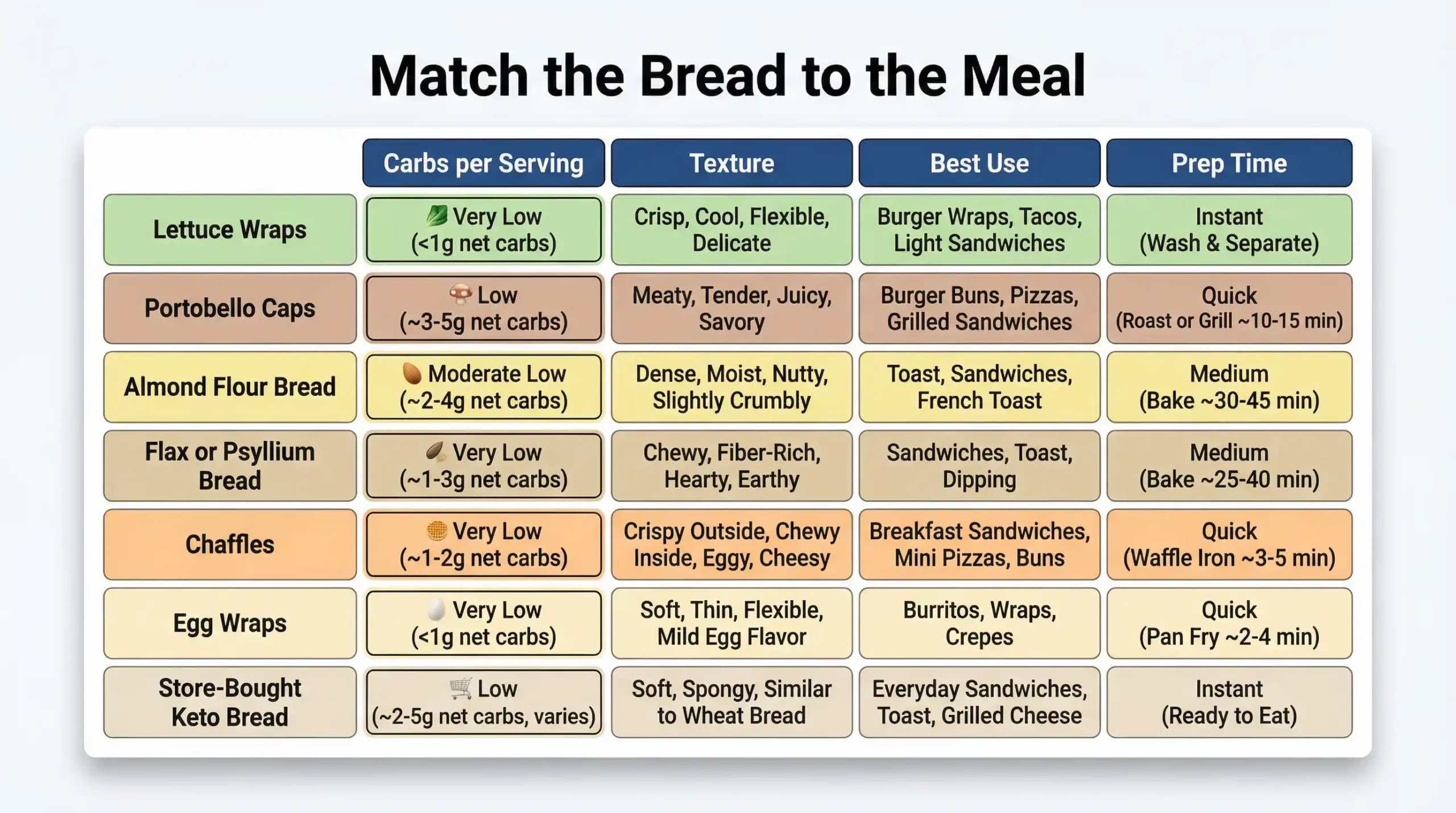
Choosing the right bread alternative
There is no one best option. The right choice depends on how you want to use it. Texture, strength and prep time are all important.
Quick comparison of bread alternatives
| Alternative | Carbohydrates per serving | Texture | Best for | Preparation time |
| Lettuce wraps | 1-2g | Clear, light | Cold sandwiches, wraps | No |
| Portobello caps | 4-5g | Juicy, compact | Burgers | Cooking required |
| Almond flour bread | 2-4g | Soft, dense | Sandwiches, toast | Moderate |
| Flax or psyllium bread | 1-3g | Firm, cordial | Open sandwiches | Moderate |
| Chaffles | 1-3g | Fresh on the outside, soft on the inside | Hamburgers, toasted sandwiches | Quick cooking |
| Egg wraps | 0-1g | Thin, flexible | Wrappers | Quick cooking |
| Store-bought keto bread | 0-3g | Soft | Daily sandwiches | No |
Quick guidance:
- Best for cold sandwiches: lettuce wraps, almond flour bread, store-bought keto bread
- Best for burgers: portobello caps, chaffles, hearty keto buns
- Best for toast: almond flour bread, chaffles
- Best for meal prep: flax or psyllium loaves, store-bought options
- Best for minimal cooking: lettuce wraps, packaged low-carb bread
Focus on the function first. Decide how you want to use the bread. Then choose the option that supports that structure.
Conclusion
Traditional bread is high in carbohydrates because it relies on refined flour and starches. Low-carb alternatives replace that starch with vegetables, nuts, seeds, eggs or cheese. Each option has strengths and limitations. Some are light and fresh. Others are compact and structured. No one will behave exactly like wheat bread, but many solve the structural problem in a practical way. The key is simple: tailor the alternative to the meal, not the other way around.
#Bread #Alternatives #Carb #Keto #Diets