

Writer: Helena Bergström
In our opinion so… and yes, I know many will certainly be upset right now. All surveys show that Italian food is Swedes’ number one favorite. And yes, there are of course many beautiful flavors and ingredients in Italy. But we still wonder if it is Italian food culture that is meant when Swedes answer these studies… or if you are thinking of “Italian food” as it is eaten outside Italy?
Italian food in Italy – and “Italian food” in the rest of the world
Yes, we like the tomatoes and prosciutton and the olives. We also like the pizza. But we struggle a bit to agree with all the “rules”, we lack innovation and we think the main course is a bit… bad. Plus, we find it exciting that several “Italian dishes” in the rest of Europe are not in Italy. Let’s think a little!
Italian favorites…that aren’t in Italy
Do you like spaghetti bolognese, pasta with meatballs in tomato sauce or a worthy buffet where you combine many beautiful Italian flavors, both starters and main courses at the same time? Yes, it can be good, but that’s not how you eat in Italy.
Spaghetti bolognese You can probably order in many parts of Europe, but not in Italy. On the other hand, in the Emilia-Romagna region it is the right side Bolognese raguwhich is a meaty, stale and slow-cooked stew, which is browner than red. Ragun is served together with tagliatelle, and certainly not with spaghetti, which is considered thin and smooth for this dish. But couldn’t this be a good thing? Yes, absolutely! But we still thought to start figuring out what is really an Italian dish and what is not…
Pasta with meatballs in tomato sauce Does it also feel a bit Italian? It’s even so that Lady and Lufsen get meatballs for their pasta on Christmas Eve. But that means not That you can get it in Italy. You certainly eat meatballs (polpette) in Italy, but not with pasta. In the elongated country in the south, pasta is served for itself, before the main course. Meatballs can be served with tomato sauce and perhaps some bread, as a main course (without pasta!) or possibly in the form of small fried/marinated balls as a starter/snack. Cooked cuts can also be served in soup.

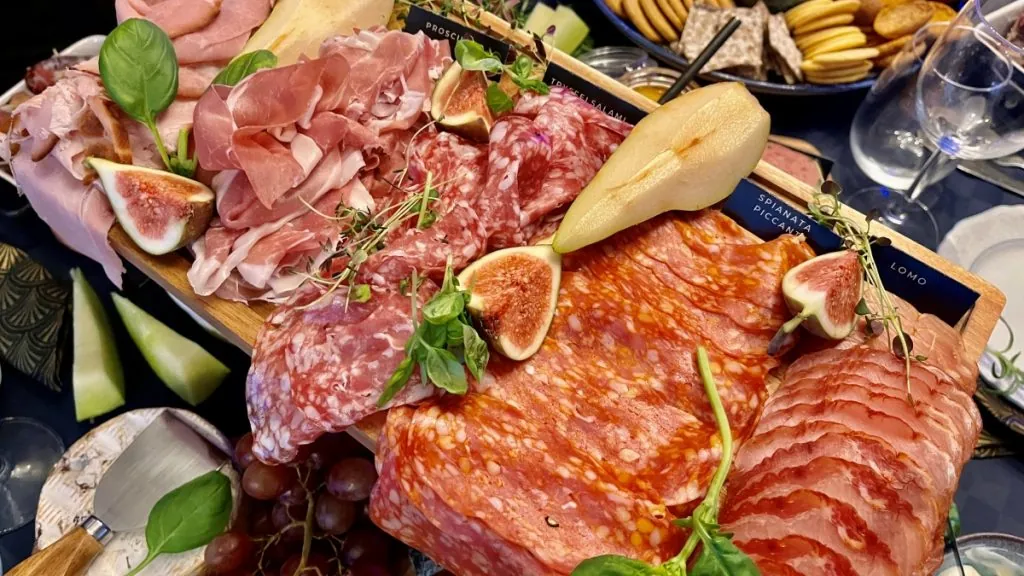
A worthy buffet filled with Italian flavors Can be great. In front of us we see a colorful table with full pasta salads, tomato and mozzarella salad, frittata, focaccia, salami, air-dried ham, sun-dried tomatoes, olives, pickled artichoke hearts and why not a chicken dish and some meatballs?
Very good, but probably more common in Sweden than in Italy. In Italy, you want to avoid that at all costs mix Flavors. At least it will be too far to serve both starters and main courses at the same table. No, you don’t eat in Italy!
Advertisement

The food country where everything has its place – and where one should absolutely not mix
There are many delicious goodies and ingredients in Italy (who doesn’t like the olives, tomatoes, lemons and meat!?) But there are also many rules about how the dishes should be served and how the flavors should be mixed – or rather, how they not Must be mixed. Because that’s the thing in Italy. You eat one thing at a time and you don’t just mix, especially if Grandma’s grandmother didn’t approve of the flavor combination.

The pasta is eaten separately (before the main course) and all accessories (such as salad or potatoes) are served on separate plates. So you mix not Different parts of the meal on the same plate, so there are few opportunities for the chefs to think of new, exciting flavor combinations. The flavors should be rena. Meat or fish are therefore often served as is, straight from the grill or frying pan, without sauces, pipes or other accessories.
Funny enough, there is one dish that is always served with sauce: calfskin. The dish, of course, has a long lineage (which Italian restaurant today would dare to find such an imaginative flavor combination?) and consists of boiled sliced veal, which is served with a creamy sauce made from tuna in oil, anchovies, capers, egg yolks and mayonnaise. To? Yes absolutely, but popular!

The Italian meal plan
So, how do you eat in Italy? Well, you follow the predetermined meal schedule. On a more festive occasion you can eat all different dishes. For every day, or with a simpler restaurant visit, you naturally eat fewer dishes. For example, you can choose to eat only one primo (pasta, risotto, soup) or combine two of the dishes.
- Aperitif – A light drink before dinner, which can sometimes be served. For example, prosecco, vermouth or aperol spritz, possibly with some small snacks, such as nuts, olives or chips.
- Antipasto – The Italian starter, which usually consists of cold cuts and a small choice, such as salami, prosciutto, cheese, crostini and pickled vegetables.
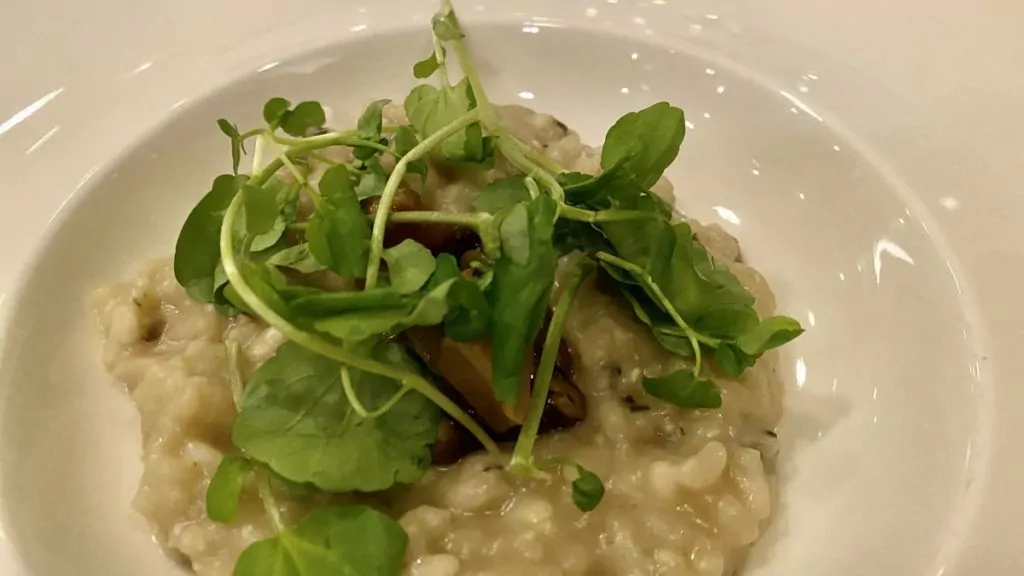
- First course – The first hot dish is usually pasta, risotto or soup. Here the focus is usually on satiating carbohydrates, which can be flavored with a little oil and spice seasoning, or the like.
- Second course – Now it’s time for main course! This dish often consists of meat or fish, which may be served as “clean” as possible, that is, usually without sauce or other accessories.
- Contour – Accessories that can be ordered together with Secondo Piatto, but on separate plates. This can be vegetables, salad or some kind of potato.
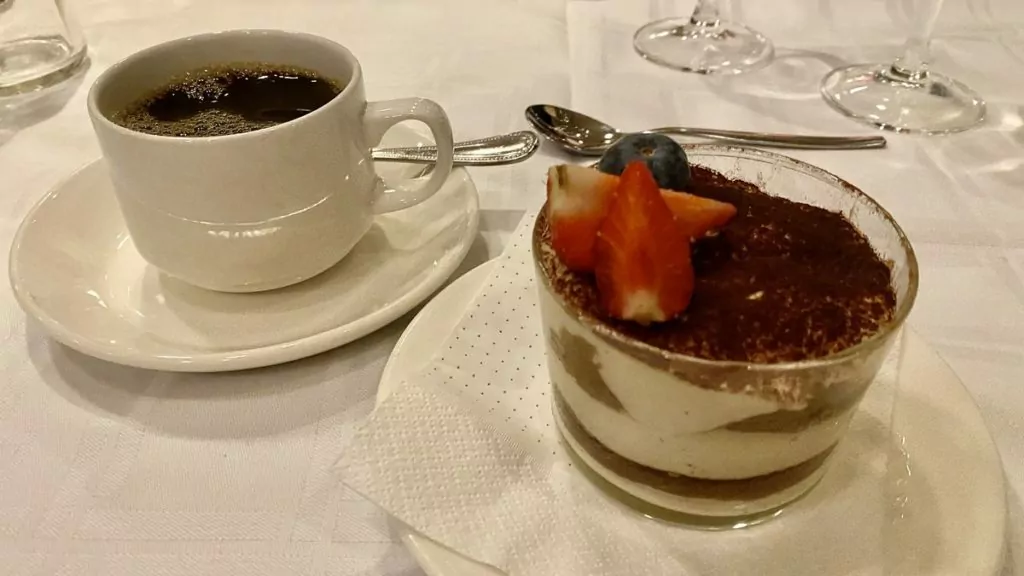
- False – A sweet that can end the meal, especially on festive occasions or during restaurant visits. For example, it could be tiramisu, panna cotta, cake or pastry.
- Coffee – A small strong espresso can end the meal.
- Digestion – On more festive occasions, a small AVEC/liqueur can be served for digestion, such as Grappa or Limoncello.

A food country with strict rules
Italy is a food country with strict rules, and if you want to blend in, it’s important to follow the trodden paths. Some things that may be good to know:
- No spoon for spaghetti! In Italy, spaghetti only turns with the fork. Using a spoon as a tool can be seen as something suitable for smaller children…
- Cheese sometimes – sometimes not! Parmesan (Parmigiano Reggiano) and Pecorino is common, but note those not Sprinkle the cheese over seafood dishes. Cheese and fish are thought to disrupt each other’s flavor profiles.
- Skip the ketchup! Yes, even in Sweden we can avoid ketchup when it should be a more culinary meal. In Italy it can be considered even worse. Pasta should have a seasoning that is cooked from scratch.
- Pasta is eaten Al Dente! Pasta should have some chew resistance and if it is overcooked it is considered a failed dish.
- Match the drink well! Red or white wine is often matched depending on the right side and there should always be water on the table. Soft drinks are usually considered a drink for kids, or perhaps for the fast food restaurant.
- Do not cut the spaghetti with a knife! Spaghetti, as I said, should be spun with the fork. When you start cutting it with the knife, it may seem like you’re giving up…
- Eat the dishes separately! Just that, don’t mix! Chicken mixed into the pasta? Meat, potatoes and vegetables on the same plate? No, no, not in Italy!

That’s why Italian food is better outside Italy
Italy is a food country with many beautiful flavors: sun-tripe tomatoes, tasty olives, delicious meat and good cheeses in the form of mozzarella and Parmesan. There are many flavors we love in Italy, so how can we think that Italian food outside of Italy is better? The Italian tomatoes are of course the best in their place, but …
- All the “rules” surrounding the dishes limit innovation. You shouldn’t do this and you shouldn’t do that. When eating Italian-inspired food in other countries, there is more room to experiment and try new.
- Pasta is just… pasta. Olive oil and herbs in all their glory, and it’s great that the pasta is “al dente”, but it’s still just spaghetti on the plate. When cooking “Italian” pasta dishes outside of Italy, you may top the pit with larger pieces of protein or vegetables.
- “Pure” main course = no surprises on the plate. Chicken breast is chicken breast and cutlet is cutlet. You know what you’re getting, but you’re not surprised. Outside Italy, the chef can surprise with various exciting accessories: maybe a sauce, maybe a mess, maybe an unexpected vegetable.
- The same accessories regardless of the main course. Yes, there are accessories on the menu, but should I order split potatoes and mixed salad… again? In other countries, the chef may choose to combine a particular main dish with a particular vegetable or a particular potato dish. Significantly more exciting!
- “Italian buffet” is delicious. We love a delicious dinner buffet with lots of Italian flavors – all at once. It’s probably a cardinal sin to mingle so wildly in Italy, but it’s a good thing!

And yes, this is of course a text filled with opinions. Of course, you may have a completely different view.

#Italian #food #Italy