

Simple stretches for stability and relief.
(Photo: Vitaly Gariev | Pexels)
Published on October 22, 2025 8:50 am
Whether you’re logging miles on the sidewalk, hiking trails, sitting long hours at a desk, or adjusting to aging, the knees are often the first to experience the pain of everyday life.
As a yoga teacher, my students constantly remind me how common knee problems are. “Runner’s knee” tends to steal the spotlight when it comes to knee pain, but it is far from the only problem. That’s because the knees don’t stand on their own. They sit at the junction between the hips and ankles, bear the weight, absorb impact and are completely dependent on the surrounding muscles for stability. When there is tension, weakness or imbalance anywhere in that chain, the knees will feel the discomfort.
So strengthening the knees is not just now over the knees. It’s about supporting the entire body. This is where yoga for the knees can provide a long-term approach to strengthening surrounding muscles and getting your body moving at its best.
Why knee strength is important
The knees are simple in design, but have a big job. They stabilize us when we stand still, propel us when we move and absorb shock with every step.
Any form of repetitive forward motion, such as running, tightens your quads and hip flexors risk factor for knee injuries. Sitting at a desk for hours on end weakens the glutes and hip muscles over time, which also increases stress on the knees. And as we age, the cartilage thins and muscle tone decreases, reducing the resilience of the knee joints.
Yoga philosophy calls these types of imbalances Pratibandhaa blockage in the natural flow of prana (energy) that manifests as stiffness or misalignment.
Balanced strength across the quads, hamstrings and hips is key to protecting the knees. The classical Sanskrit text The Hatha Yoga Pradipika describes this as: Sthira sukham asanamwhich translates to, “Every posture should cultivate stability and ease.” In other words, when practiced with awareness, yoga can help strengthen the knees and restore balance to the entire body.
Here’s how.
Yoga for Knees: 6 Essential Poses for Knee Strengthening
Yoga reminds us that the body is not a collection of parts, but a connected whole. You can support how your knees, surrounding muscles, and entire body work together by practicing these knee-strengthening yoga poses.
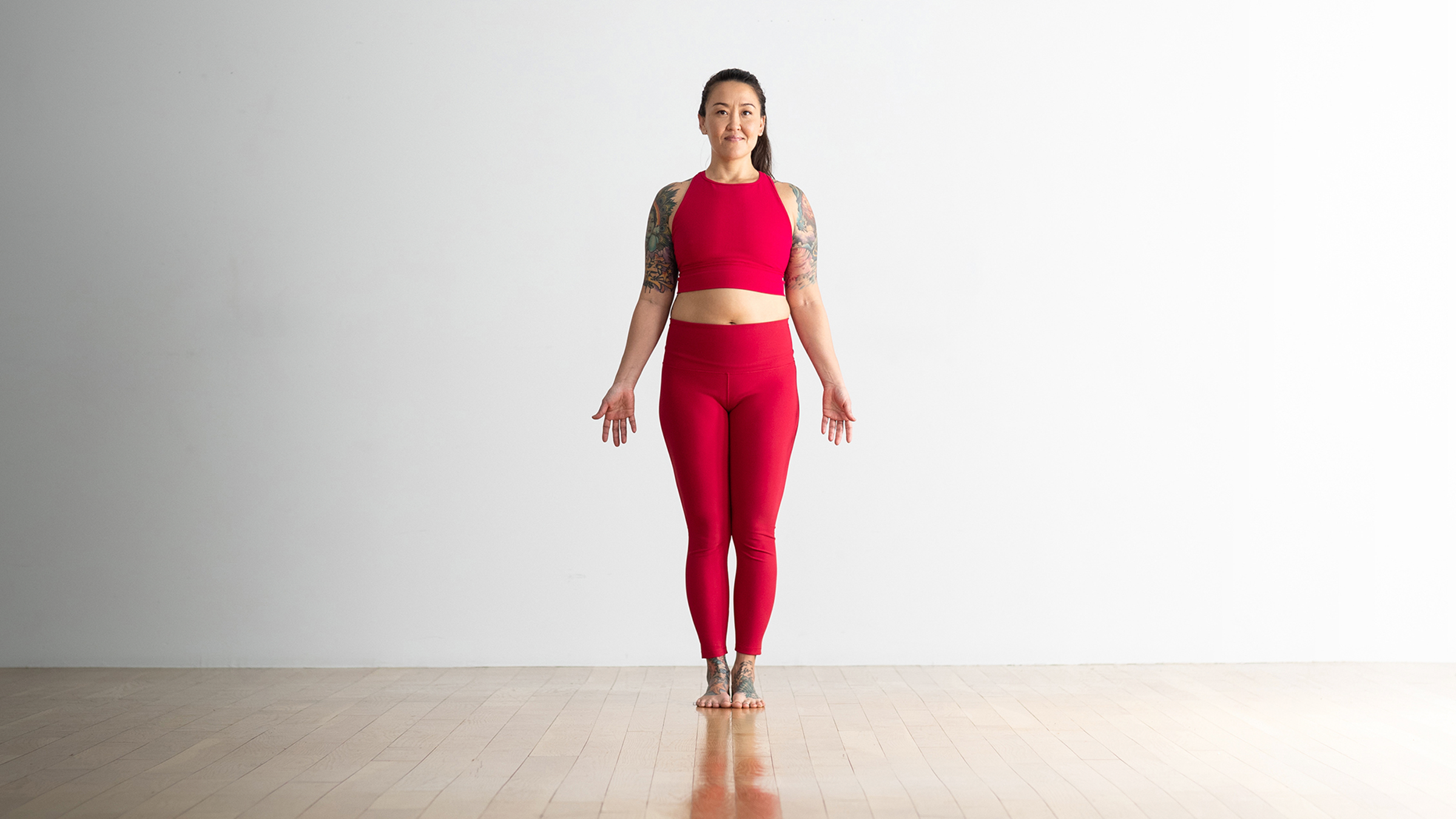
1. Mountain Pose (Tadasana)
Many people overlook the benefits of this simple standing pose, which is essentially the blueprint for all standing poses because you learn full lower body involvement. It activates the quads, calves and foot muscles. By keeping your knees slightly bent, you will learn to distribute the weight evenly between your feet and avoid overextension (hyperextension).
How:
- Stand with your feet together.
- Relax your shoulders away from your ears, draw your belly button toward your spine and press your feet into the mat. Rest your arms at your sides with your palms facing forward. Look straight ahead in mountain pose.
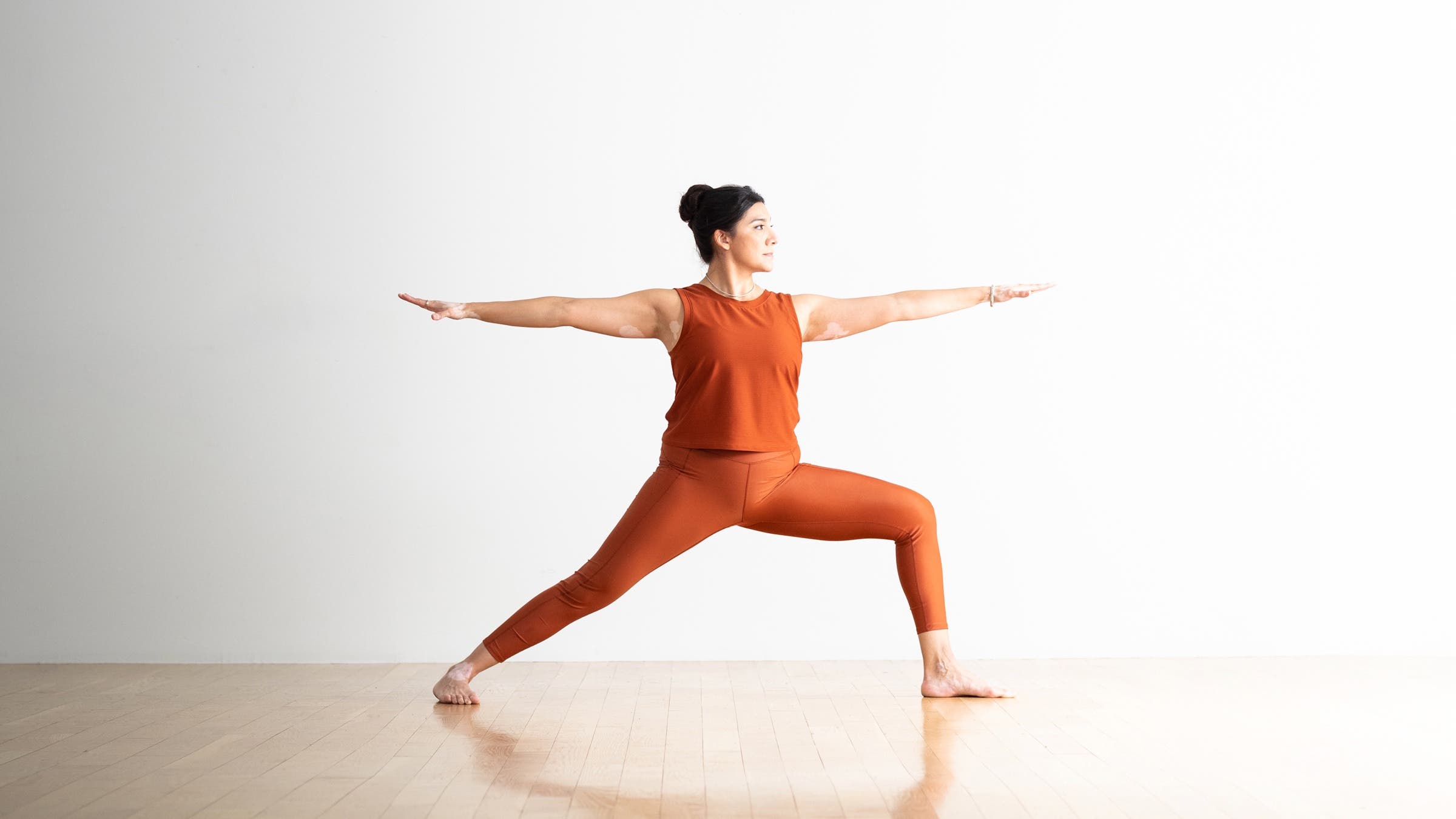
2. Warrior 2 (Virabhadrasana II)
When Warrior 2 is practiced consciously, it is not just a pose; it is a functional training for how we go through life. Tracking your front knee above your ankle, rather than letting it collapse inward, builds your body awareness, strengthens your quads and glutes, and works your outer hips
How:
- Stand in a straddle stance with your arms in a T position.
- Turn your left foot toward the short side of the mat and tilt your right foot slightly outward. Bend your left knee. Press the outside edge of your right foot into the mat. Stack your shoulders over your hips and reach the crown of your head toward the ceiling. Look past your left fingertips into Warrior 2. Breathe here and then switch sides.
Variation: Supine Warrior 2 is a softer, supine version of Warrior 2 that allows you to focus on alignment and muscle engagement without carrying weight. Lie on the mat and get into Warrior 2 position with blocks under each ankle. This variation helps train your body to keep your knee stable above the ankle.
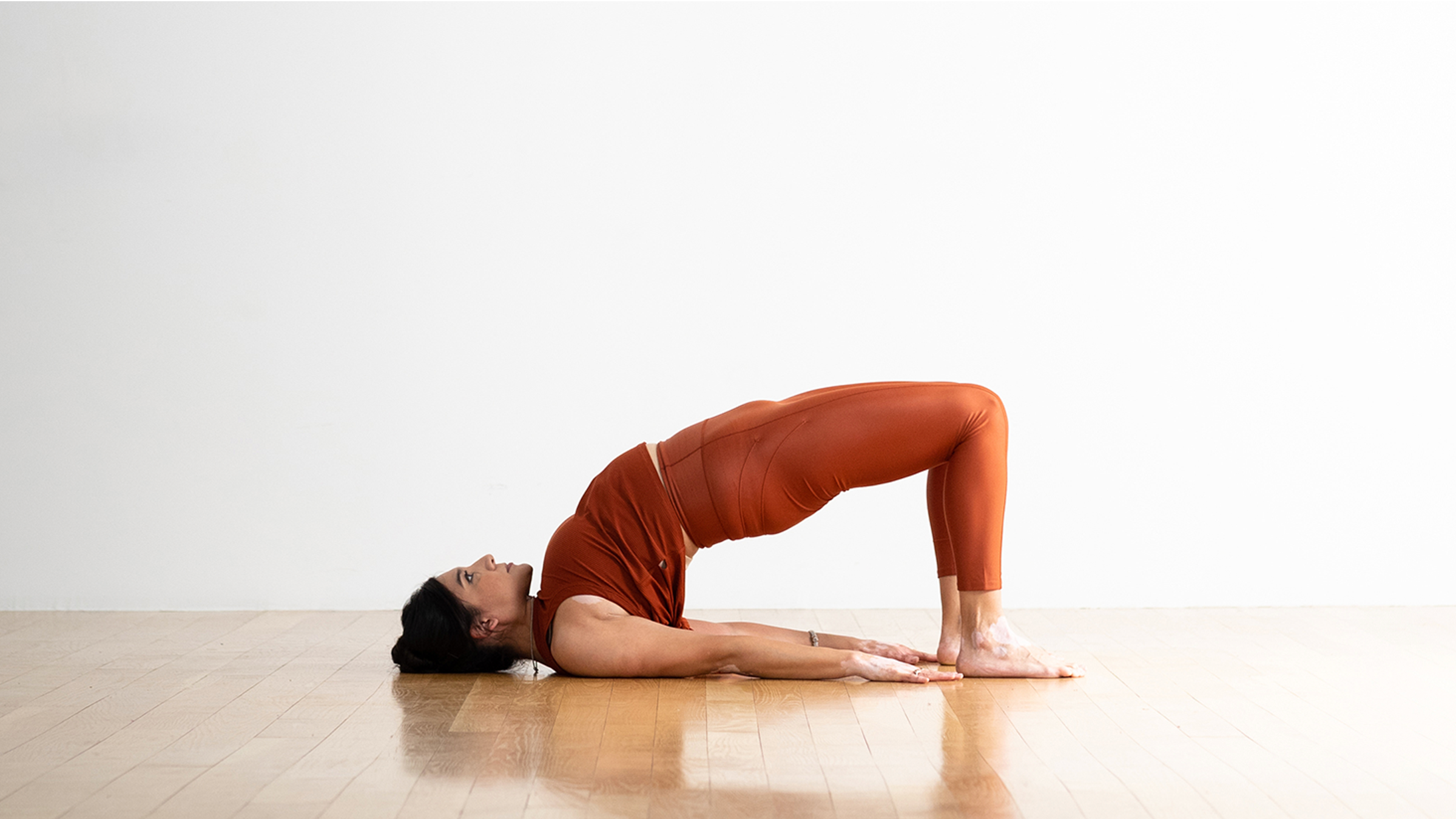
3. Bridge pose (centurance)
Building strength in the back body can significantly reduce stress in the knees. That’s why Bridge Pose is often a game changer, especially for runners. It activates the hamstrings and glutes, often neglected muscles that balance the dominant quadriceps. Additionally, it supports hip stability and lower back health, two crucial allies in knee longevity.
How:
- Lie on your back with your knees bent and your feet on the mat, hip-distance apart. Rest your arms at your sides with your palms facing down.
- Inhale, press your feet into the floor and lift your hips off the mat. Press your arms into the mat or fold your hands behind your back. Pull your shoulders under you in Bridge Pose.
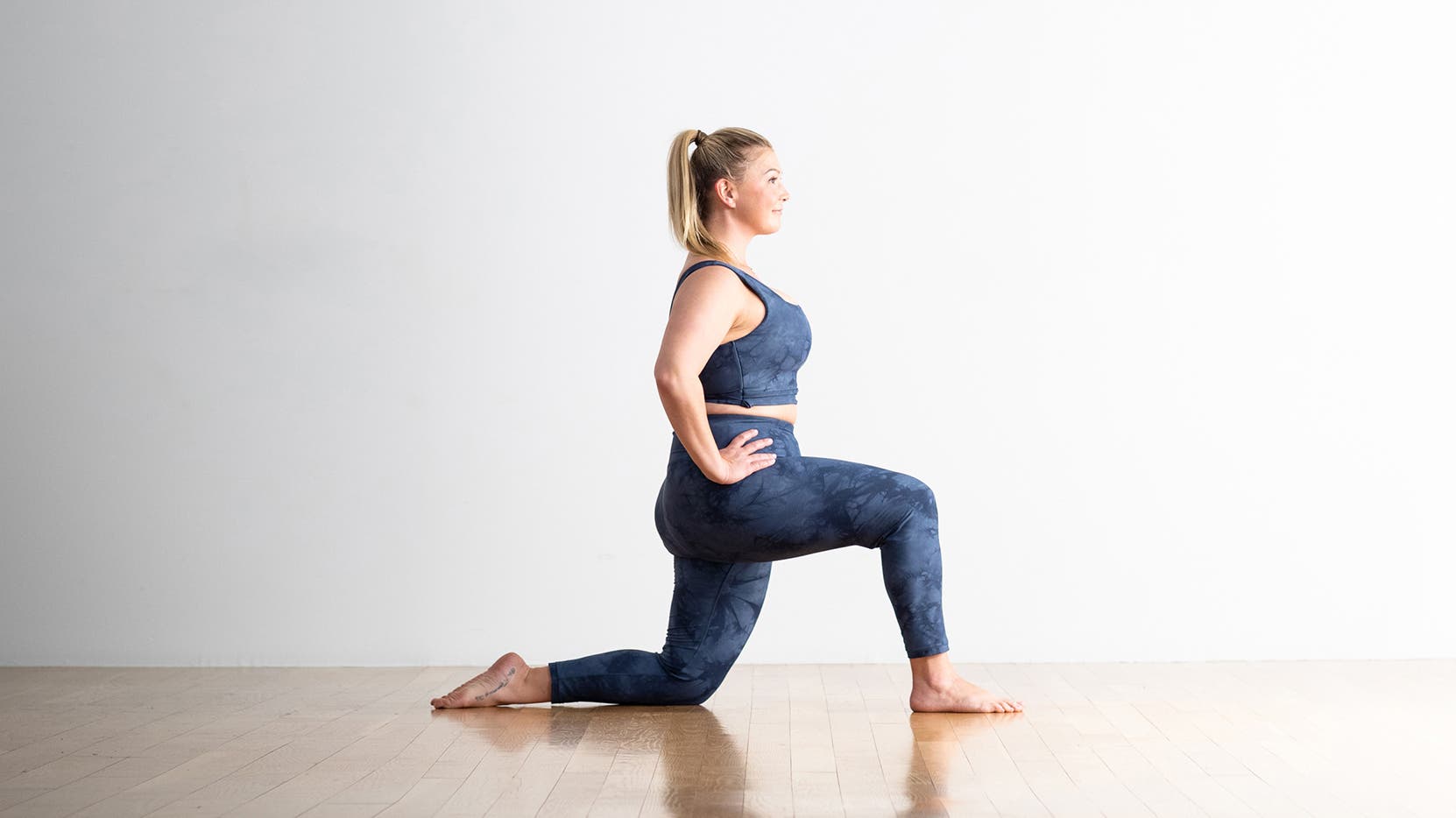
4. Low Lunge (Anjaneyasana)
Knee problems often stem from tight hip flexors and quads. Low Lunge helps loosen these muscles and reduce tension in the front of the body. Stretching the hips in Low Lunge allows the knees to move more freely and without tension.
How:
- Get on your hands and knees. Place your right foot forward between your hands. Slide your left knee back until you feel a comfortable stretch in the left front thigh.
- Inhale and sweep your arms out to the sides and above your head, keeping your torso upright. Pull your shoulders away from your ears in Low Lunge. Switch sides.
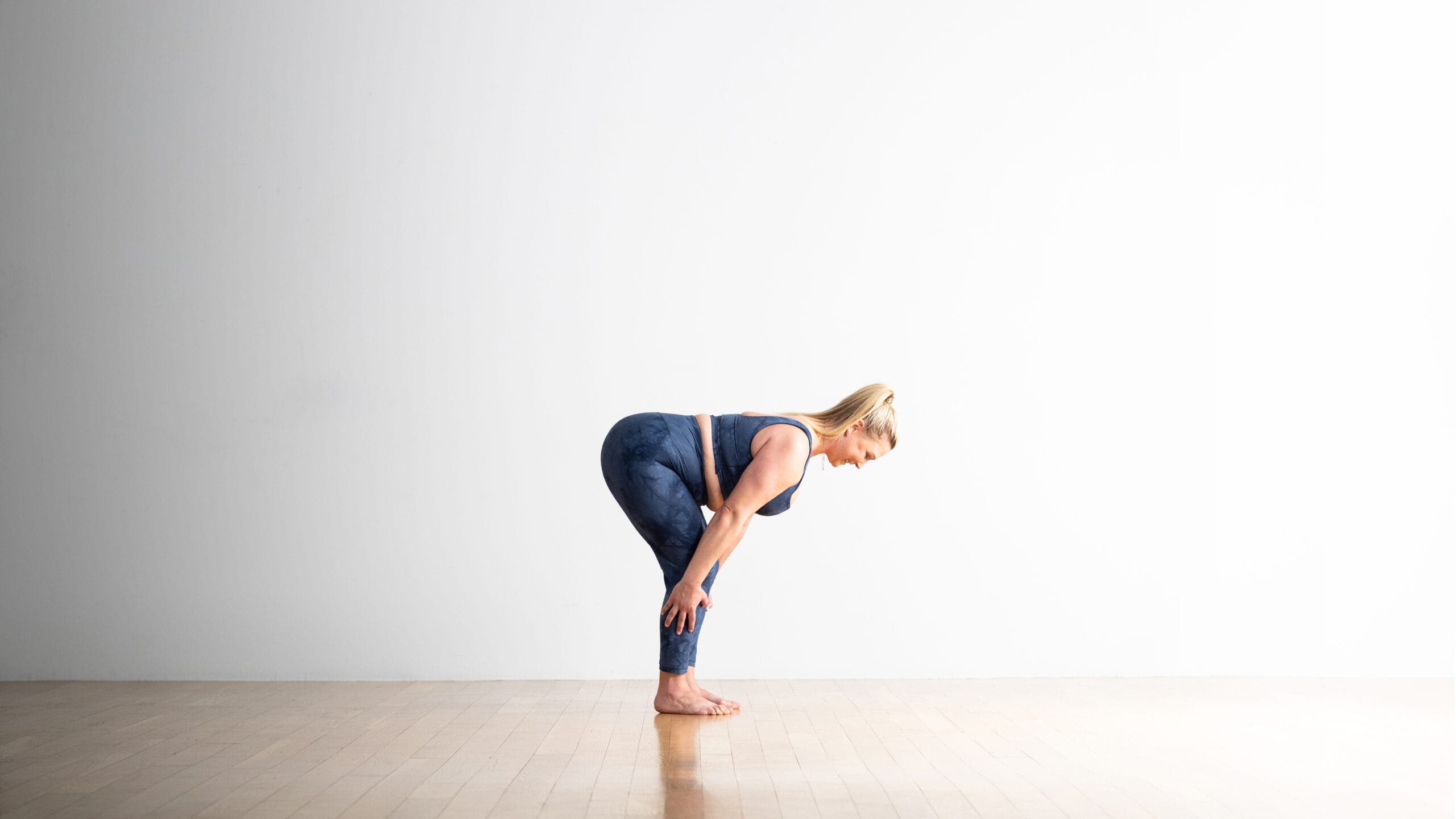
5. Half Forward Fold (Ardha Uttanasana)
A pose that can deeply relieve tension in the hamstrings and calves. Half Forward Bend is safest for the knees if you keep them slightly bent. Over time, this pose also strengthens the popliteus – a small but powerful muscle that stabilizes the knee.
How:
- From the forward bend, press your palms or fingertips into the mat or blocks next to your feet. Inhale and straighten your elbows, lifting your chest away from your thighs. Bend your knees as much as necessary. Look at the floor a few feet in front of you in Half Standing Forward Bend.
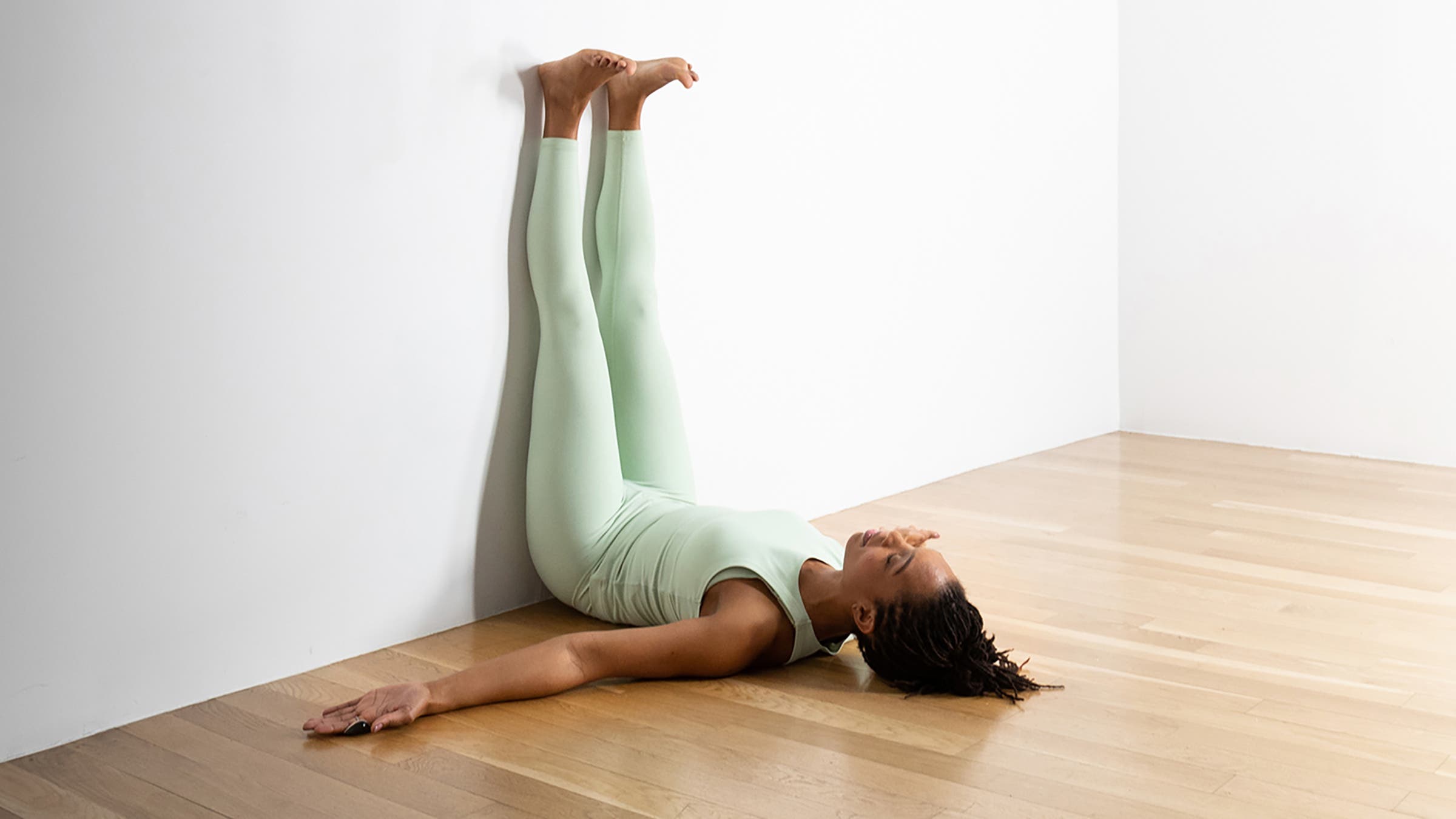
6. Legs-to-the-Wall Pose (Viparita Karani)
Consider this your active recovery ritual. Lifting the legs reduces swelling and soothes tired joints after long runs or active days. The focus is not on reinforcement in Legs Up the Wall; it’s about supplementation. After all, rest is an essential part of resilience.
How:
- Sit on the floor with one hip against a wall. Lie on your other side, then roll onto your back and swing your legs against the wall. Adjust your position by moving your tailbone toward the wall. Place your feet hip-distance apart and rest the weight of your legs against the wall. Rest your arms at your sides with your palms facing up in the Legs Up the Wall pose.
#Knee #strength #yoga #poses #knees #painfree