

NGC 1511, a spiral galaxy 50 million light-years away in the serene constellation Hydrus, will not remain calm. New photos from the Hubble Space Telescope reveal a disk lying almost on its side and glowing blue with millions of newborn stars. The birthplace of new suns is marked by red and pink hydrogen clouds. Dark ribbons of fabric cross the face, blocking the light and exacerbating the already tense situation.
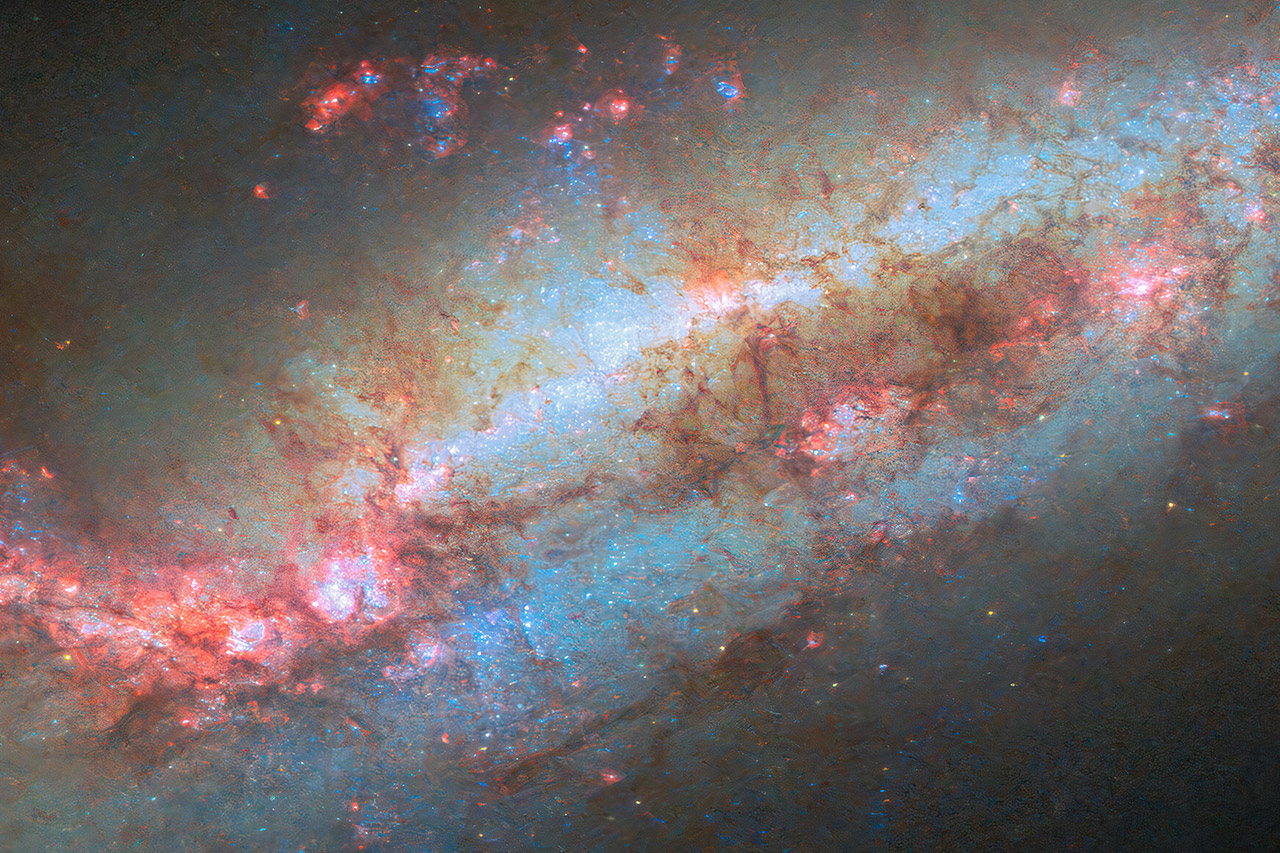
NGC 1511 never travels alone; it is always with two smaller galaxies, NGC 1511A and NGC 1511B. Its nearest neighbor, 1511B, is just outside Hubble’s frame, but has left its mark on the main galaxy. A narrow bridge of hydrogen gas connects the two, evidence of a recent collision. The smaller galaxy is now stretched and torn, like a piece of cloth stuck in a barbed wire fence. The other companion suffered a worse fate: NGC 1511 tore it apart and scattered its remains long ago.
Collisions like these shake galaxies to their core. Gravity pulls gas into dense pockets that quickly collapse into stars. That’s why the spiral arms of NGC 1511 glow blue. Loops and plumes spin through the disk, remnants of previous interactions that have distorted the shape of the galaxy. Each disturbance fuels the cycle: gas turns into stars, stars erupt and new material flows back into the disk and the cycle begins again.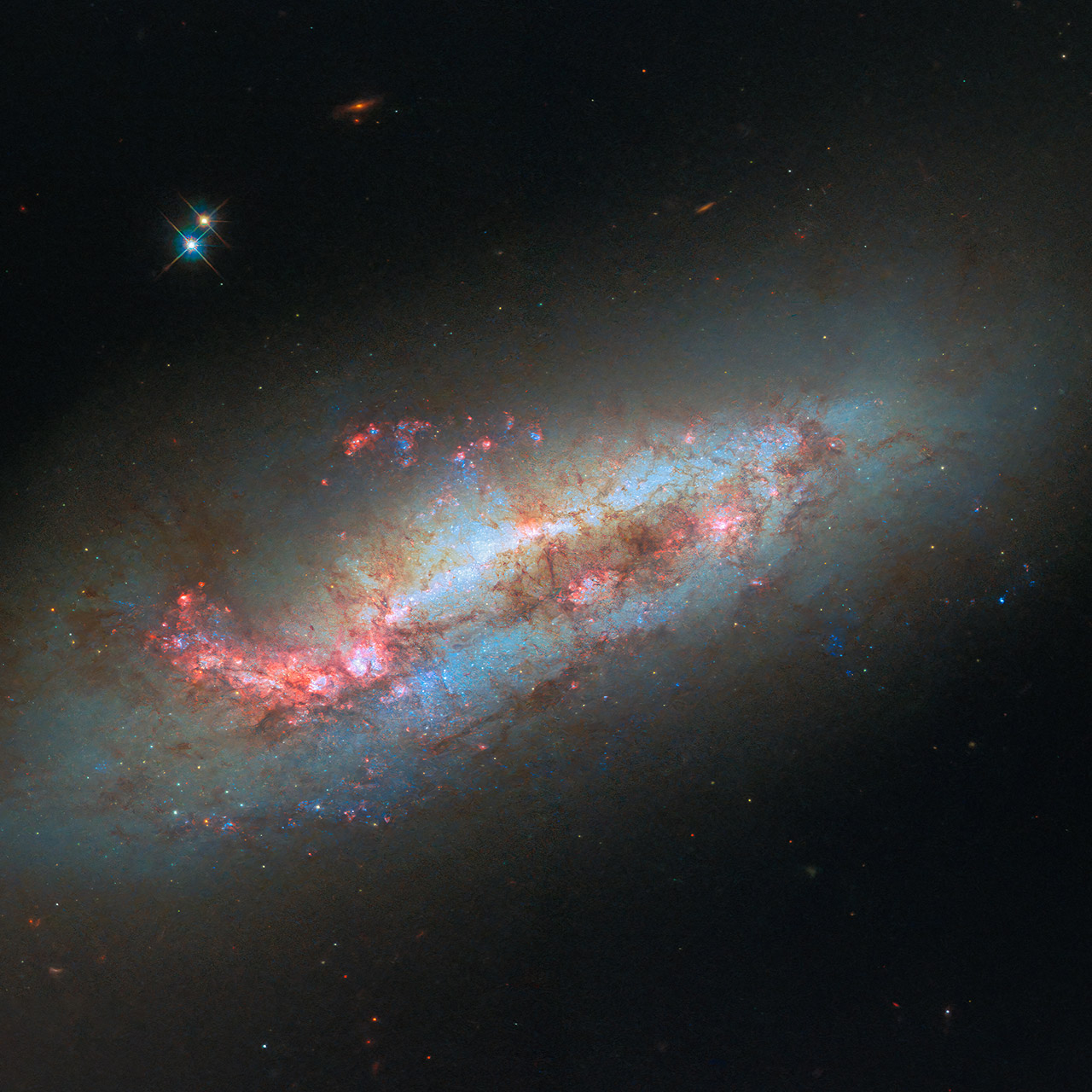
Hubble captured the image using six filters, from ultraviolet to near-infrared. Ultraviolet shows the hottest and youngest stars. A small filter separates out the red hydrogen glow and shows where star formation is brightest. The combination is sharp enough to see individual clusters of young stars hidden beneath dusty clouds.
Astronomers will investigate these clusters in depth. Each represents a glimpse into how stars form under harsh conditions. By counting stars of different masses and ages, they can determine how matter travels from clouds to bright sources of light and then back to clouds after the stars die. NGC 1511 provides a front-row seat to this process, which happens faster here than in quieter galaxies. Galaxies are never clean, and NGC 1511 shows that nearest neighbors create disorder, which creates beauty. The same forces that destroy companions form new stars in the sky. In space, destruction and creation share the same address. Hubble’s new image shows that moment: a spiral in the middle of a battle, still throwing punches and growing brighter.
#Hubbles #photo #NGC #shows #throwing #galactic #party #causing #cosmic #trouble #door