

There are hundreds of millions of motor vehicles on America’s roads, and tens of millions of people share them as drivers, pedestrians, cyclists, skateboarders, and electric scooter users. It is up to traffic engineers to decide what speeds are appropriate for vehicles to travel on a given roadway. This can be a very complicated job at the intersection of science, civil service and policy.
States set their own speed limits, of which there are two types. Legal speed limits are uniform and generally apply to regular roads in a given jurisdiction. For example, Oregon limits vehicles to 25 miles per hour in residential areas, and passenger vehicles are limited to 60 miles per hour on highways. Speed zones – which have recently come under scrutiny – are where legal speeds merge with context, making a lower or higher speed limit more appropriate based on engineering studies.
Traffic engineers commonly use one of three methods to determine speed limits: the Engineering, Expert System, and Safe System approaches. Optimization is a fourth approach that is not widely used on its own, but does add context for community issues such as air pollution or noise pollution. The Engineering and Expert System approaches are most commonly used in North America, and they both rely on the 85th percentile perceived speed, which focuses on how fast 85% of drivers are actually driving when traffic is flowing smoothly.
The 85th percentile standard

In the simplest terms, the Engineering approach uses one of two paths to determine a speed limit. The operational speed method starts with a basic speed limit, determined by the design of the road (for example, straight or curved) or the speed of the 85th percentile. Traffic engineers then set a speed limit within five miles per hour of that base, before adjusting for speed studies, crash data, pedestrian usage, and so on. In some cases, engineers may instead use the Road Risk Method, which prioritizes the function and development status of the road to determine the basic speed limit.
An expert system – such as the Federal Highway Administration’s (FHWA) USLIMITS2 knowledge base – uses input from traffic engineers and road usage data to algorithmically suggest speed limits. Computers take into account everything from operating speeds in the 50th and 85th percentiles to traffic flows and area development, as well as parking data, accident rates, pedestrian usage and injury data. After the data is processed, recommendations are made in 10 km/h increments depending on operating speed. This method can be seen as part of a larger push for technology and data to shorten travel times and reduce red light delays.
Eliminating the 85th percentile standard has also gained momentum, but state laws and red tape can make it difficult for local jurisdictions to implement changes. The National Association of City Transportation Officials (NACTO) is part of a movement to rethink how traffic engineers fundamentally set speed limits by taking a pedestrian’s perspective and rethinking risk.
Reconsideration of the 85% standard
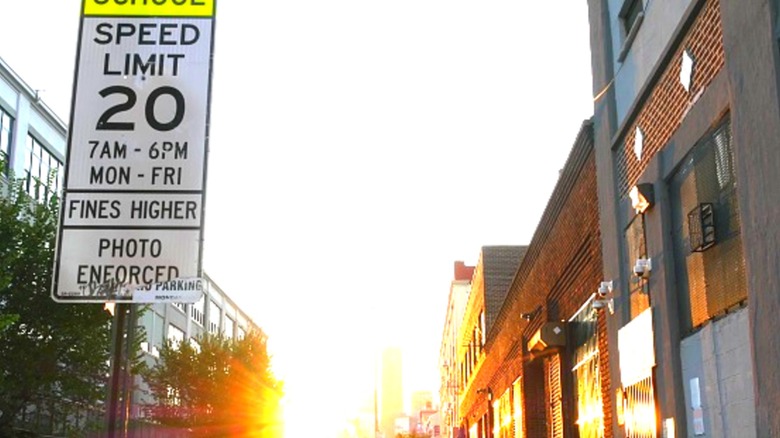
Speed zones are at the heart of the call for traffic engineers to adopt new methods to emphasize context when setting speed limits – particularly with greater attention to ‘non-motorized road users, such as pedestrians, cyclists, other cyclists and persons using personal transport, who cannot rely on vehicle bodies or technologies to protect them’, such as the FHWA explains in the Speed Limit Setting Handbook (2025). It goes on to say that “the 85th percentile speed should not be used as the sole consideration in setting speed limits.” In other words, especially in densely populated areas, base speeds may not necessarily or uniformly be calibrated based on how fast drivers want to go.
There is a focus on helping states address where higher speeds and injury severity are linked. According to the report, the number of car-pedestrian accidents increased by 78% between 2009 and 2023. Insurance Institute for Road Safety. The FHWA spotlight on safety and context reflects NACTO’s 2020 City limits publication, which provided traffic engineers with new tools to weigh street activity and determine urban speed limits: “The risk matrix is based on the idea that streets with high conflict and high activity require lower speed limits because the risk of a crash is high, while streets with low conflict and low activity can tolerate slightly higher speed limits.”
This is in line with the Safe System method used by Sweden and the Netherlands. It sets speed limits based on the types of accidents that can occur on a given roadway, and how these forces affect pedestrians. While no system is perfect and speed is part of the puzzle, these potential changes will hopefully lead to safer roads for everyone.
#traffic #engineers #determine #speed #limits #Jalopnik