

The quick and short answer to whether twin turbos hurt gas mileage is no. As for whether they contribute to efficiency – again, the simple answer is yes. As you may have already imagined, things are quite nuanced, with several variables coming into play. Simply put, the way you drive plays a major role; the whole process involves more than just the accelerator, steering wheel and brakes. There’s a lot of judgment, hand-eye coordination, and little calculations going on in the background that determine the outcome of the ride itself. Just as bad driving habits can cause transmission damage, they can also reduce your car’s fuel economy, whether you have a twin turbo or not.
Turbocharging affects fuel efficiency depending on usage, layout (single or dual), size, and so on. If you use the accelerator wisely, you can expect decent fuel economy. On the other hand, if you drive the car like you stole it, turbocharging won’t magically make the fuel gauge needle drop more slowly.
Turbochargers, single or dual, are quite simple because they use exhaust gases to drive turbines that help push more air into the engine and burn more fuel. Ergo, you can get more horsepower without messing with the engine displacement. For the most part, turbo engines are better for gas mileage. However, their claims about efficiency are not always true and come with several caveats. Allow us to explain.
There are several factors that affect the twin-turbo’s efficiency, but it’s largely your right foot
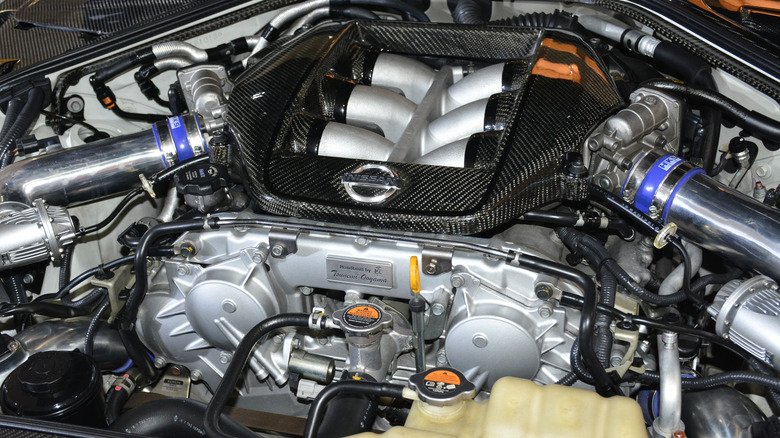
Twin turbos, depending on how they are designed and arranged, have a rev level (a speed range) at which they operate at their peak and help the engine deliver its maximum power. For example, a parallel twin-turbo setup (as seen in the GT-R) features two turbochargers working as one large turbo, while a sequential setup uses twin turbos of different sizes, each operating at different speeds. When the turbos kick in, you can expect the engine to consume more fuel. However, when the engine is not on boost (that is, when it is below 3,000 rpm in the case of the GT-R), the engine does not reach full power and uses much less fuel.
If you’re driving around town, a twin-turbo engine will probably use less fuel, but if you’re driving it, don’t expect much in terms of gas mileage. Of course, it depends on the engine, the power range, the gear you are riding in, your driving style, and so on. But the bottom line is that twin-turbocharged engines can be more fuel efficient than larger capacity engines, provided you use your right foot wisely.
#Twin #Turbos #Hurt #Gasoline #Jalopnik