

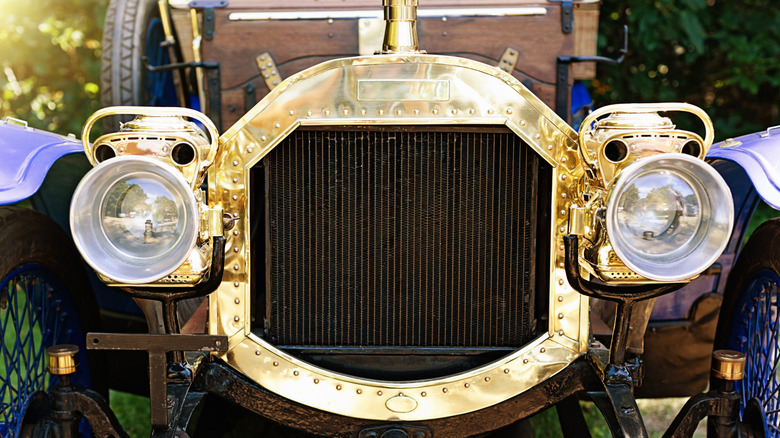
The horse-drawn carriages that predated internal combustion vehicles were essential for mobility, but horses don’t have headlights or any form of electrically powered headlights we’re used to in our metal, rubber and microplastic-laden horses. Instead, the early nobles had to make do with candle-powered lamps, which, as you can probably imagine, weren’t very good at illuminating a darkened path. For what it’s worth, night carriages needed light to be seen, and those candle lights were quite adequate for the time.
Around the same time that Thomas Edison invented the light bulb in 1879 (decades before Henry Ford changed the world with the Model T in 1908), steam cars and the first gasoline cars switched from candle power to oil and acetylene. Machine-driven cars are faster than carriages, and we all know that wind can blow out candles. This is where oil lamps had an advantage, as they could stay lit in snow and rain. The oil headlights on a vintage car are no different from a portable torch, which draws oil to a wick and burns at the tip to produce light.
However, acetylene (or carbide) headlights became more mainstream. They burned a brighter, whiter light than the yellow flame of an oil lamp and were less affected by gusts of wind or precipitation. On the other hand, they were finickier than oil lamps and required constant maintenance to work flawlessly without exploding and turning your beloved vintage car into a smoking mess.
How acetylene headlights produce light
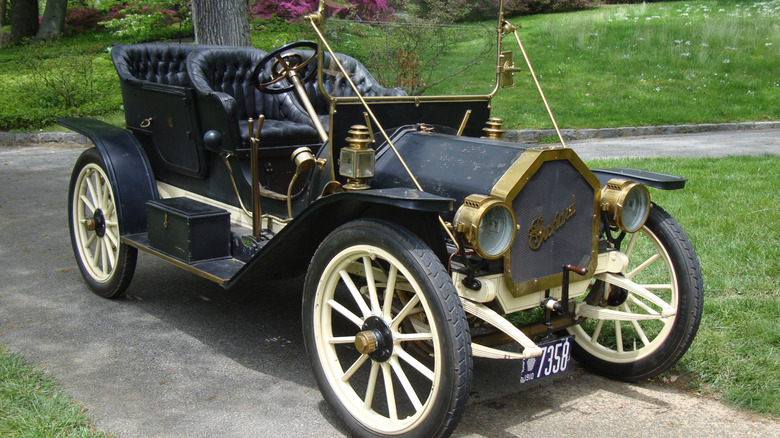
Long before the U.S. government ordered automakers to install a pair of 7-inch round Sealed Beam headlights, a standard that began in 1940, the first mass-produced cars, such as the Ford Model T, came with carbide or acetylene headlights. To make them work, the system needs two things: grayish chunks of calcium carbide and plain water. Mixing the two creates acetylene gas, and igniting the gas produces a bright flame.
The most basic acetylene headlight unit has an upper tank to store water, while the lower tank is for the calcium carbide. There is a valve on top to adjust how much water drips under the carbide tank, and the subsequent chemical reaction produces acetylene gas that enters the lens assembly.
Before overnight driving, the tanks had to be filled with water and calcium carbide and the valve adjusted to allow the water to drip. Drivers then had to swing open the front of each headlight lens cover and light the fuse with a match. Some vintage cars have acetylene generators on the running boards and the necessary pipes to pass acetylene gas through, but the basic concept is the same.
The disadvantages of acetylene carbide headlights

As you can probably imagine, acetylene headlights were not without risks. Calcium carbide is highly flammable and leaks in the system can be bad news. Improper handling can also lead to explosions, and the lower tanks need to be cleaned regularly to keep everything working properly.
Moreover, you have to get out of the car to turn them on, which is not very practical in bad weather. You also have to physically adjust the water valve if you need more light, which again is not the most convenient method compared to automatic high beams. The tides began to change when C.A. Vandervell patented the first variable speed alternator for automobiles in 1904. Real progress came in 1912, when Cadillac introduced the Model 30, the first car with an electric self-starter, electric headlights and electronic ignition.
Then, in 1960, Chrysler debuted its first dynamo car, the Plymouth Valiant, prompting automakers to switch from dynamo generators to dynamos. Since then, vehicle headlights have shifted from Sealed Beam to halogen, to HIDs and LEDs, but there’s no denying that acetylene headlights and their warm glow have a charm of their own, for better or worse.
#light #bulb #cars #headlights #Heres #worked #Jalopnik