

In motorsport you hardly ever think about how fast you are going, until it all goes wrong. Even Max Verstappen doesn’t think about the 350 km/h he often drives; he is focused on the speed difference between him and the car in front of him, and any gap it creates. However, when the object in front of you is not another fast-moving vehicle, but rather a stationary object such as a tire wall, that lack of speed awareness quickly changes. It’s a rude awakening. Wow, I’m going Real quickly.
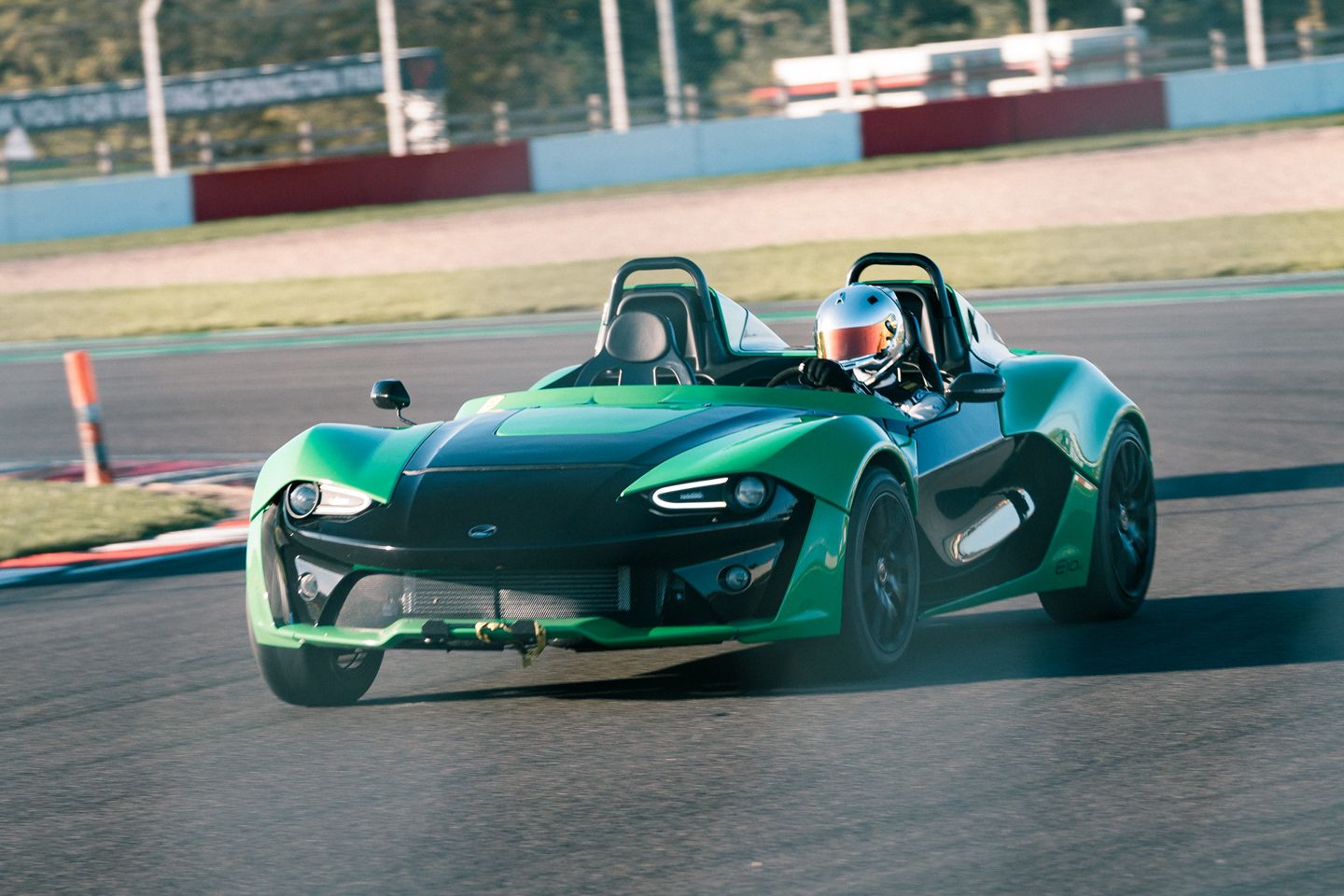
So welcome to the thrill of locking up both front wheels in Zenos’ E10 RZ prototype at Goddards, the final hairpin at Donington Park. Fortunately, this clumsy moment in the first round results in nothing more jarring than a quick jump across the grass and a moment of clarity. It’s cold. The newcomer achieves 500 hp/ton on semi-slicks. It’s not a street car for the track; it is a track car that you can drive on the road. And damn, it’s fast.
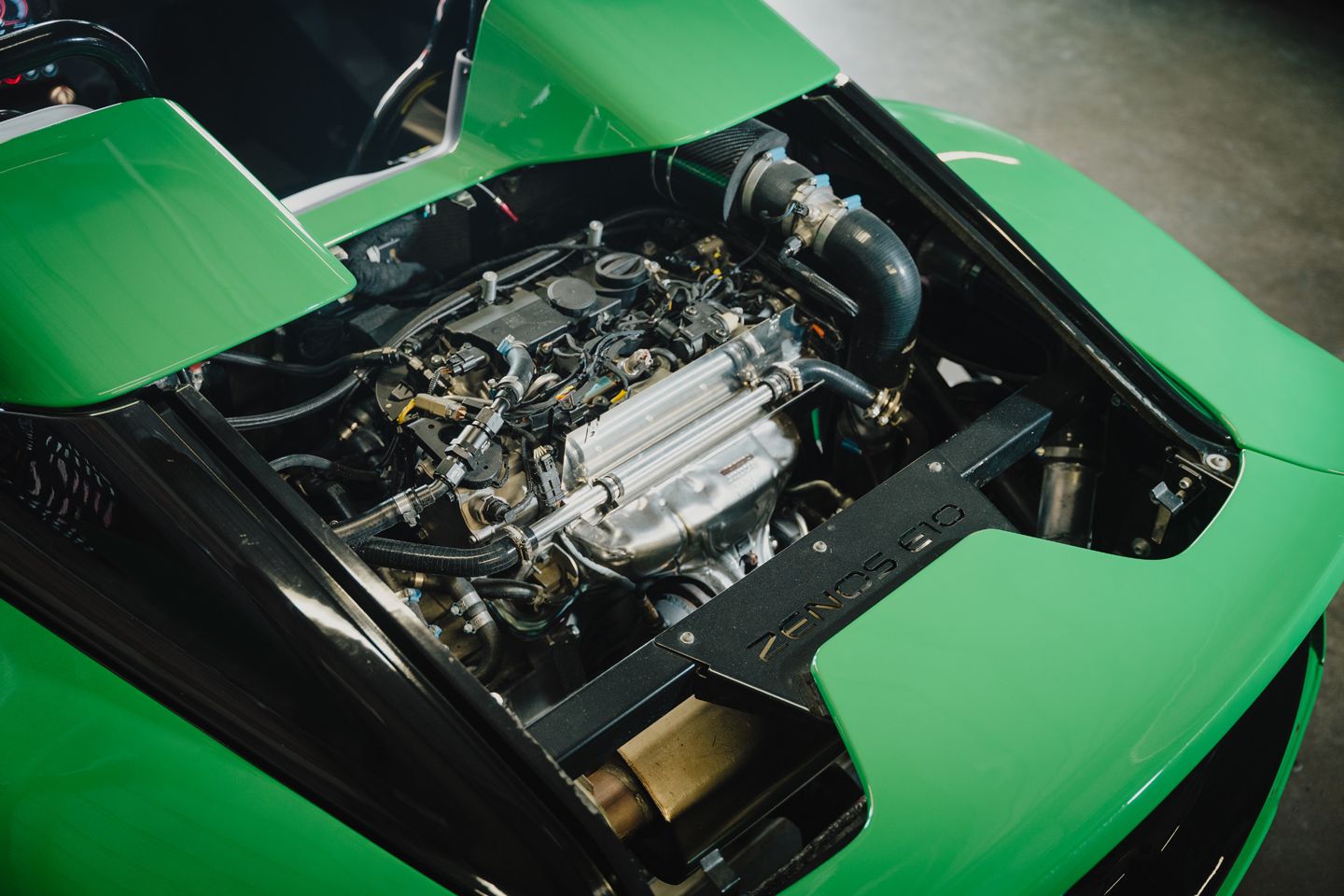
The 3.8 meter long RZ is significantly more powerful than the E10 launched in 2014 in the original Zenos era. Where that car – which Dan T drove in 2015, just two years before the company went bankrupt – had 250bhp and 295Nm of torque from a Ford Ecoboost unit, the E10 RZ being developed by a revived AC-owned Zenos has 380bhp and 376Nm from a Volvo-supplied 2.0-litre engine. In a package of 780 kg, this is almost equal to what a McLaren 750S Spider produces per tonne. But there are a few key differences between a roadster that can drive on the track and what is essentially a race-spec car that you can drive on the road.

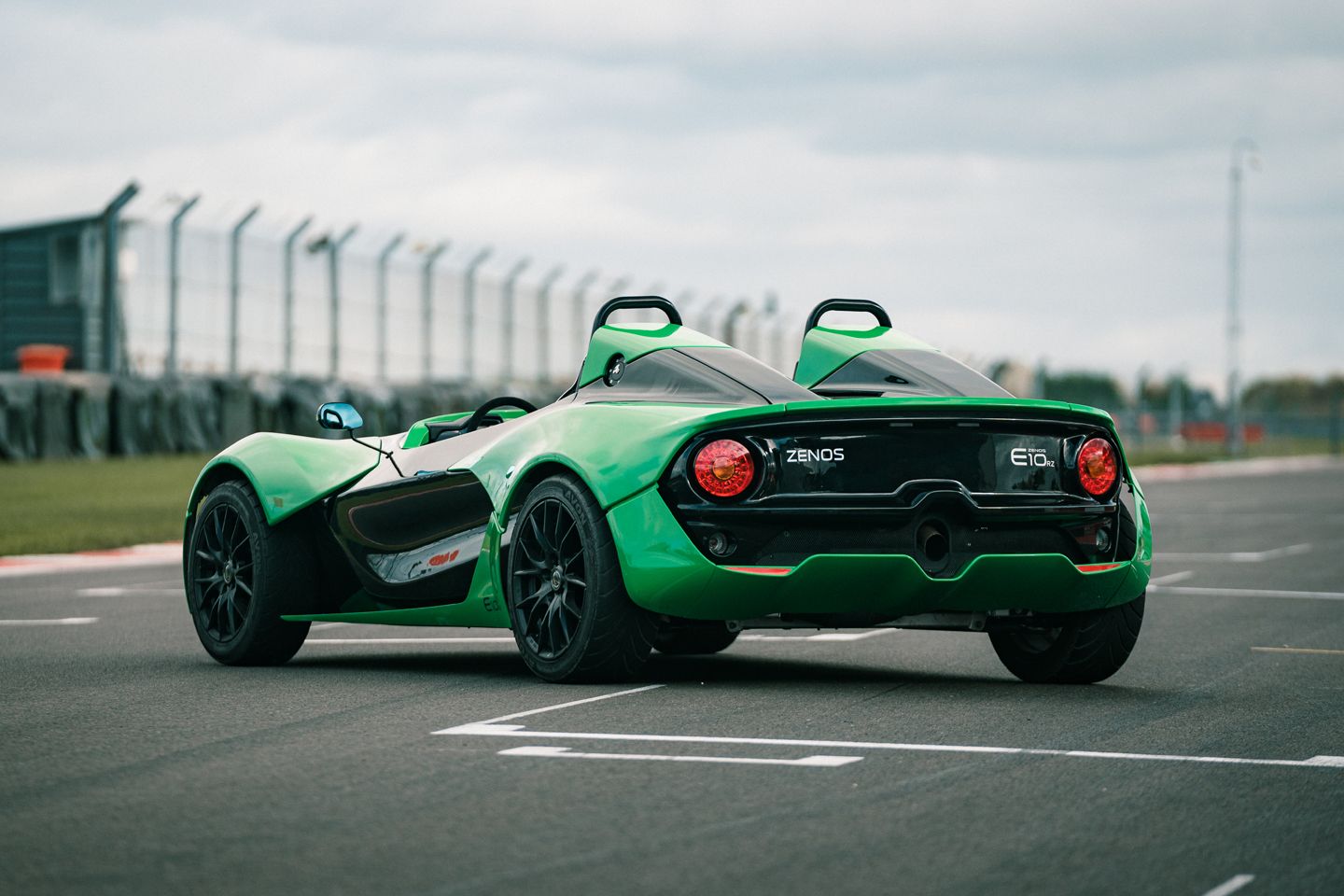
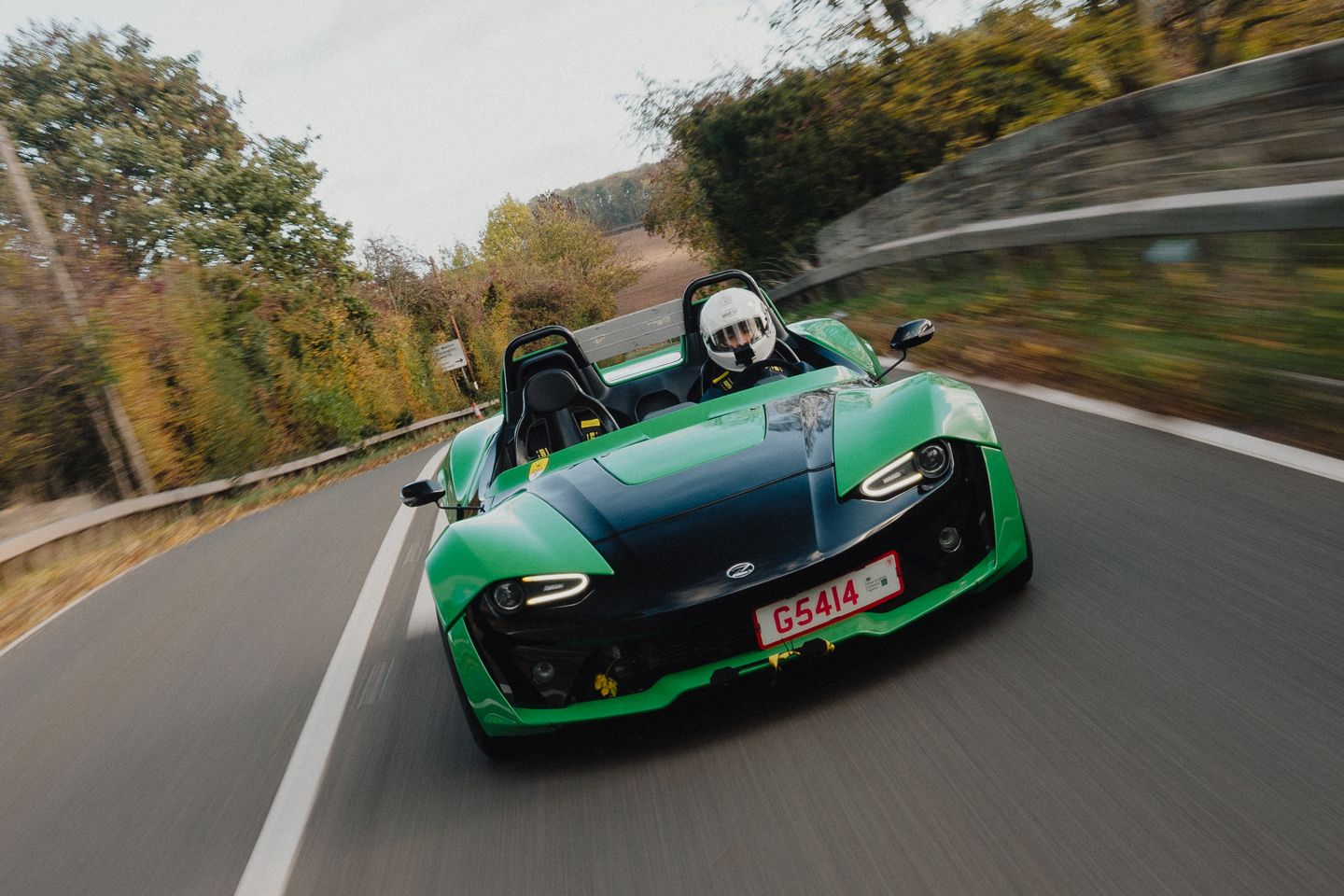
Take for example the absence of ABS, power brakes and any form of electronic driving aids, making warming up the tires essential on a four-degree day in Donington. And remember, the mid-engine Zenos is based on an extruded aluminum chassis that uses double wishbones all around, a push-rod front suspension and – when development is complete – a carbon fiber body. It is clear that the E10 RZ is better suited to motorsport than a supercar built by the current F1 constructors’ champion. The E10 was always a serious package; the new owner has tried to do even better.
That’s reflected in the price, because where the first E10 (one of which is for sale on PH) was developed by former Lotus and Caterham engineers and sold for what ended up being a loss-making £29,995, the E10 RZ will cost around £140,000. It will therefore target a very different type of buyer when it launches in the second quarter of 2026. The increase is partly attributed to the performance upgrade and a general increase in parts costs in recent years, but also due to what the team suggests is a significantly greater attention to detail applied to the final stages of development.
That’s where rising Deutsche Tourenwagen Masters star Ben Green comes into the picture, as the 27-year-old Briton (who is so fast he put his Ferrari 296 GT3 on pole twice in his first DTM year) provides setup input to fine-tune the E10 RZ with “good handling characteristics” both on and off the track. The prototype I’m driving is an unfinished example of his and the team’s hard work, but once I get some tire temperature in the front end and a new pair of underpants on, it’s clear the direction of travel is promising. The RZ has some fantastic underlying qualities.

The non-power steering is packed with feeling, allowing you to enjoy an open dialogue with the front axle from the moment you set off. The non-power brakes are strong and brilliantly precise thanks to the lack of inertia and a reassuringly firm pedal under your foot. The chassis is supple and forgiving over bumps and curbs on the track, making the open-top Zenos drive as good as a Lotus Elise (and therefore better than most hot hatches) when you’re on public roads. But what really makes the Zenos experience stand out is when these things are combined with its superior pacing.
Even if it had a drama-reducing dual-clutch gearbox, the E10 RZ’s new engine would still feel like a bat out of hell. So with the thrust-shift-thrust-shift motion of a six-speed manual transmission, broken bursts of power only serve to emphasize the level of boost sent to the rear wheels. Step on the gas and your rear end becomes good friends with the RZ’s hip-hugging racing seats and their slim cushions.
As you’d expect, that power is a useful tool when it comes to fiddling with the E10 RZ’s underlying poise, which likes to engage with the brakes applied before tiptoeing mid-corner, allowing you to follow the throttle and encourage the car to dance out of corners with a dose of easily controlled oversteer. Everything feels very natural. Although you’re well aware of the prototype’s lack of a limited slip differential, given the tendency of the inner rear tire to succumb to wheelspin. Ben would like to emphasize that this is something that will be fixed in the next update with a Quaife ‘diff.
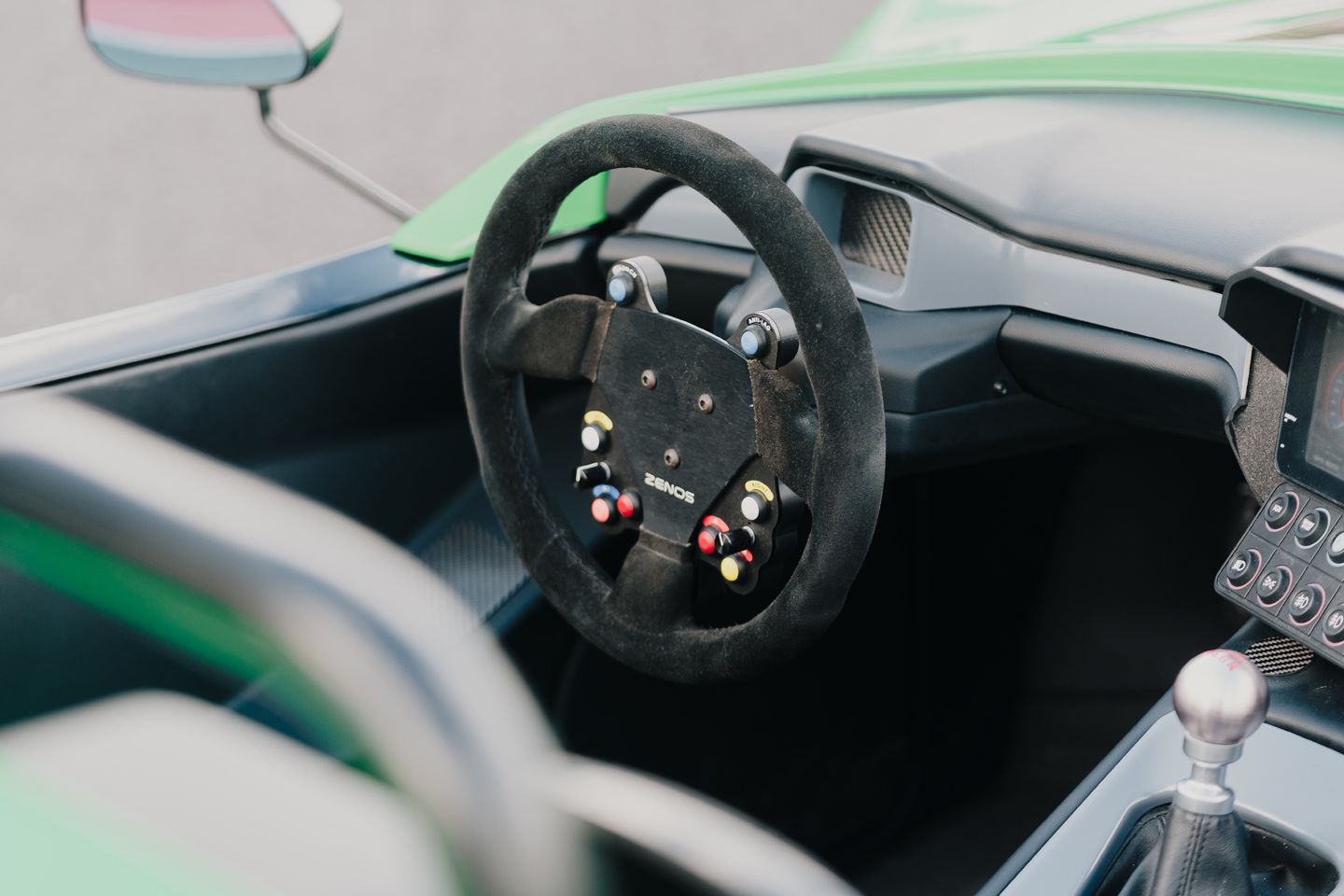
Of course, there’s still more sorting to be done in this prototype before it’s finished. The rear could use a stabilizer bar to reduce squat under power, which currently makes the steering light when accelerating out of fast corners. Volvo’s only slightly modified manual gearbox has a throw that definitely needs to be shortened for such a senior package, which may require new clutches or a complete gearbox change (Zenos is considering downshifting to a Ford-supplied six-speed). And the digital screen, located in the center of the dash, is a bit out of your line of sight, so a new arrangement is being developed to put everything directly in front of the driver. A windscreen option for cold days in Donington wouldn’t be out of place either.
But these are all things to come, guided by the feedback of a professional driver and the insider knowledge of former Lotus engineers who have returned to the project. With their expertise involved, I have no doubt that these shortcomings will be addressed in due course and then hopefully blended together to create something as cohesive as they come quickly. Led by Alan Lubinsky’s AC Cars, Zenos has seriously high ambitions for its E10 base, so much so that the company plans to launch two more lower-powered variants after the RZ, with the first using a Ford Ecoboost four-cylinder like the old E10, albeit with more power, amounting to around 400 hp/ton.
None of the models will be as cheap as Zenos’ previous attempt to penetrate the market, but a higher development ceiling should yield a better end product – not to mention put the brand on a path to financial sustainability, at a time when previous alternatives like the Lotus Elise are long out of production. Despite the new price tag, the ownership proposition isn’t ignored, with the team selecting off-the-shelf components where possible (such as the Ford Mustang’s rear brake calipers), to ensure maintenance doesn’t have to be too expensive or complicated.
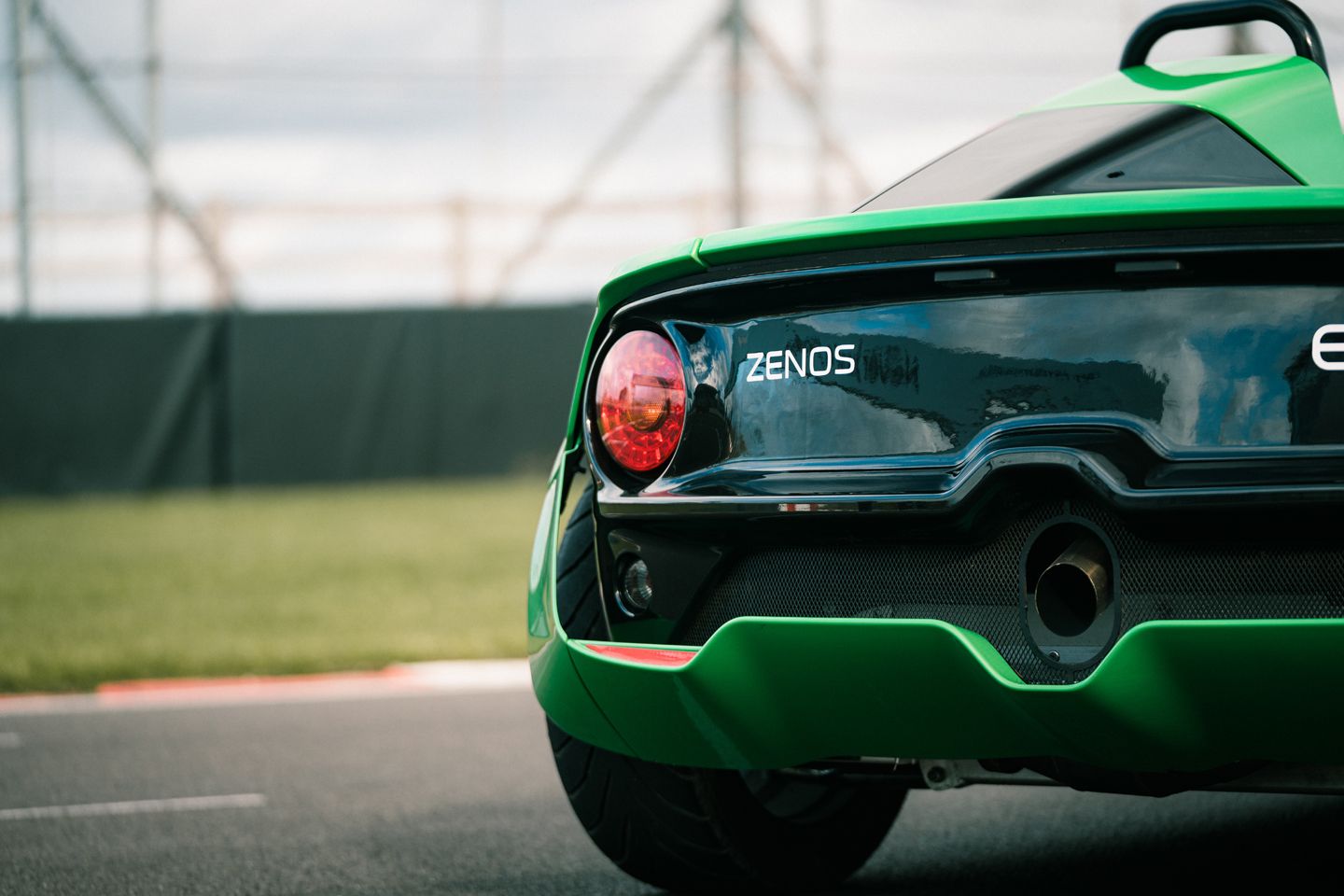
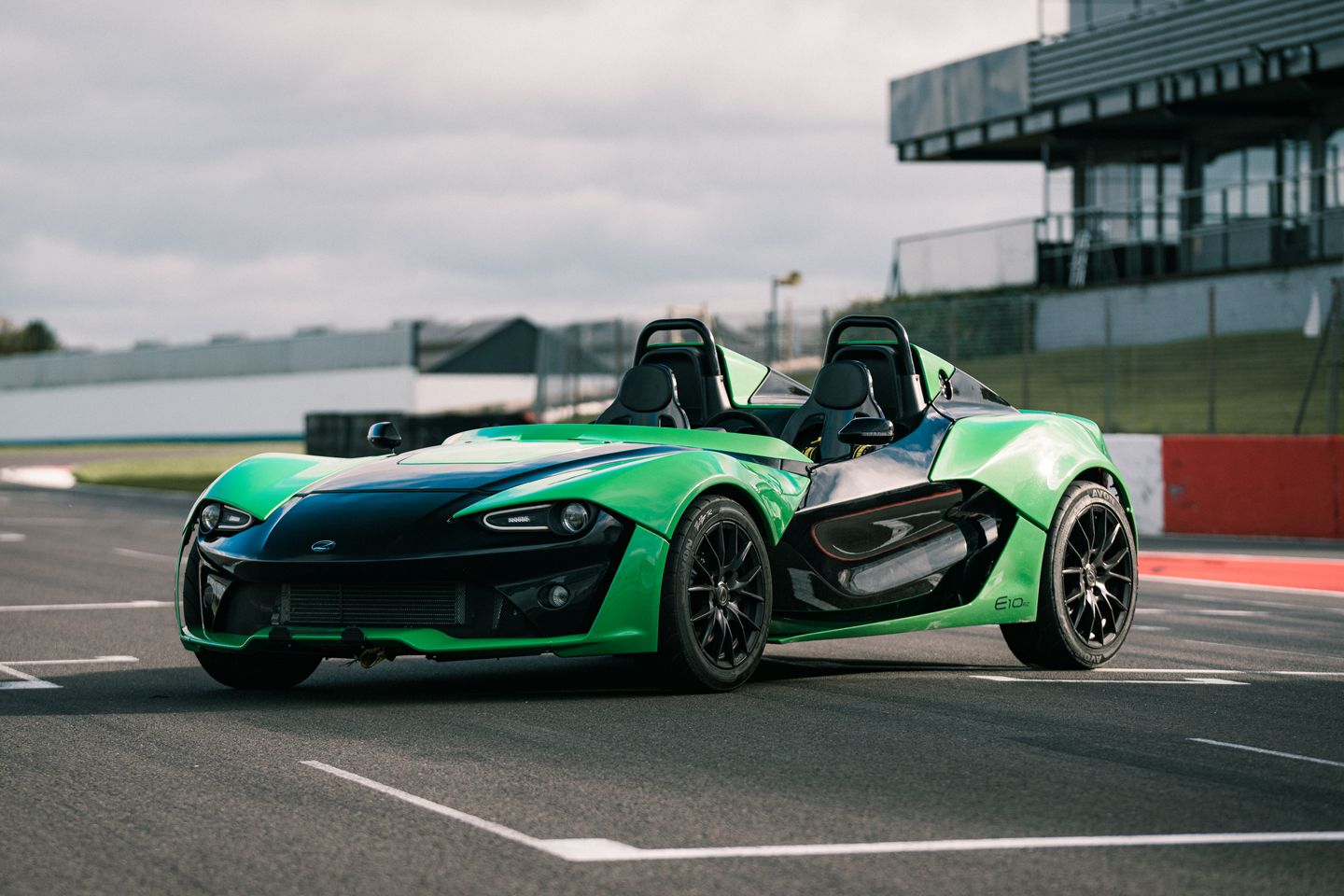
So while it’s no surprise to hear that the E10 RZ can lap Donington Park faster than the oldest GT Porsches (the old one wasn’t far off), or that its compact length and less than a tonne of curb weight make it surprisingly easy to drive on the road, what stands out this time is the idea that the E10 might be better equipped to survive in the long run. Not least helped by an increasingly smaller number of direct rivals and the enthusiasm and support of AC Cars.
If that really tempts you to register your interest in an E10 RZ, I recommend that you a) don’t forget to pack thermals in the fall and winter, and b) whatever you do, don’t assume that one lap of warm-up is enough for those semi-slicks on a near-icy track. Even an unfinished E10 RZ prototype is a serious kit and proof enough that its makers may be on to something…
#Zenos #E10 #prototype #assessment