

Subtle movements with a big impact on pain relief.
(Photo: Andrea Piacquadio | Pexels)
Published on October 20, 2025 4:45 am
Over the years of teaching yoga in corporate settings, I’ve heard many people say that they just don’t have time for yoga on workdays. It’s understandable. Putting a practice into practice usually becomes the lowest priority in a day packed with emails, meetings, and endless tasks. Yet I’ve found that after I guide groups through a yoga session of less than ten minutes at their desk, they are often surprised by how simple, practical, and stress-relieving it can be. The change happens almost immediately: slumped shoulders are lifted, breathing becomes deeper and focus becomes sharper.
After listening to more and more desk workers, I’ve learned that an even bigger obstacle to practicing desk yoga isn’t related to time at all, but to how comfortable people feel doing it. Big, obvious movements can sometimes attract attention and make people self-conscious in a professional environment. That’s why I started teaching subtle desk stretches, or moves that can be done discreetly yet provide powerful relief after hours of sitting, whether you’re surrounded by co-workers or sitting at home in your sweatpants.
10-minute desk yoga that you actually want to practice while at work
This desk-friendly sequence is quick, requires no mat, and targets the hips, lower back, shoulders, chest, and wrists. In other words: all the muscles that are most affected by sitting for long hours. The benefits include not only feeling less pain and stiffness in your body, but also promoting circulation, helping improve posture and gaining mental clarity for a more sustainable workday.
Tip: During the exercise (and your workday), keep your feet flat on the floor instead of crossing them or dangling them from a chair to avoid strain in your lower back.
1. Neck rolls
Have you ever felt a feeling of heaviness in your neck and shoulders, probably due to stretching your head forward while staring at a screen? This stretch helps ease that discomfort.
How: Sit up straight and lower your chin to your chest. Slowly slide your head to the right and pause. Then let your head move to the left and pause, as if following a semicircle. Repeat this for a few rounds.
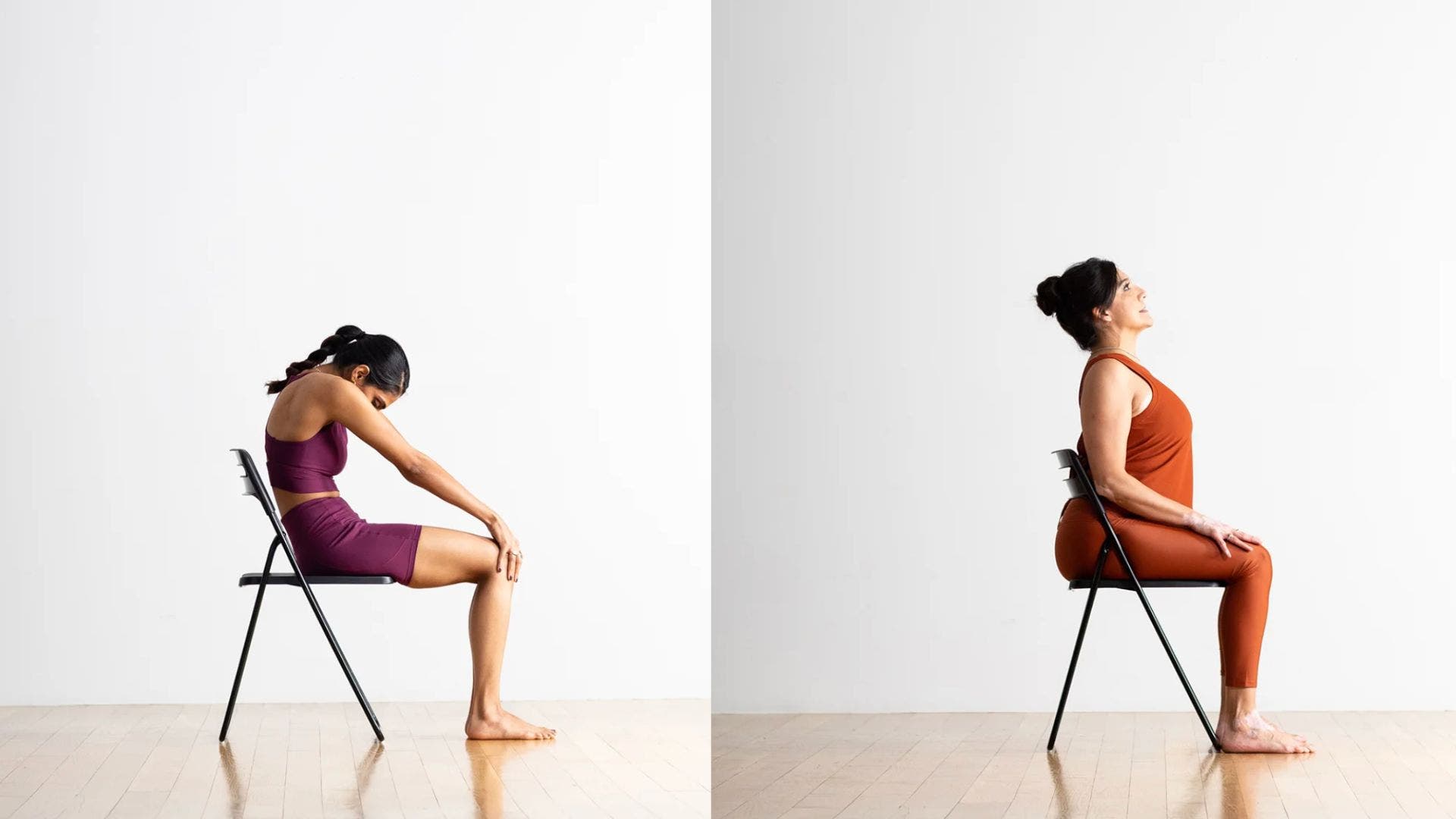
2. Sitting cat cow
These movements help prevent periods of sitting in the same position.
How: Sit high. Grasp the arms of your chair or rest your palms on your thighs. Inhale and arch your back, pull your shoulders away from your ears and lift your gaze into Cow Pose. Exhale and round your spine, lower your chin to your chest and draw your belly button toward your spine in Cat Pose. Repeat this for a few rounds.
3. Wrist and finger stretches
For anyone who types and clicks all day, this simple yet powerful action can significantly relieve tension in the forearm muscles and fingers.
How: Pull your elbows to your sides as your hands reach forward, as you would do in Chaturanga. With your palms facing the floor, spread your fingers wide apart. Pause for a moment to breathe. Then ball your hands into fists and squeeze gently. Repeat this for a few rounds.
4. Chest opener with seat support
This move helps reverse the familiar curve of endlessly bending over a keyboard by stretching the pecs (chest muscles).
How: Sit high. Reach your hands behind you and grab either side of the back of the chair. Pull your shoulders away from your ears and reach your chest forward, arching your back as you begin to straighten your arms (they don’t have to be fully extended). Breathe in here and then release.
5. Side bend
Stretching your side body (obliques) will ensure that you don’t experience pain when you lean over to plug in your laptop.
How: Rest your right arm on the armrest or grip the edge of the seat with your right hand. Lift your left hand toward the ceiling, then slowly raise it above your head and reach toward the right side. Pause here for a few breaths and then release. Repeat on the other side.
6. Seated spinal twist
Practicing twists during the workday can simultaneously provide a satisfying spinal stretch and a welcome mental reset from fencing work.
How: Turn to the left and grasp the left armrest or your outer left thigh with your right hand. Grasp the back of the chair with your left hand. Look over your left shoulder. Pause for a few breaths and then release. Repeat on the other side.
7. Ankle circles
This small movement brings more circulation to the lower legs and combats stiffness in your calves and ankles.
How: Lift one foot off the floor and draw circles with your toes to stretch your ankle. Lower your foot to the floor and repeat with the other foot. For a core-strengthening challenge, draw your belly button toward your spine, lean back in the chair and lift both feet at the same time, roll your ankles, and then lower them down.
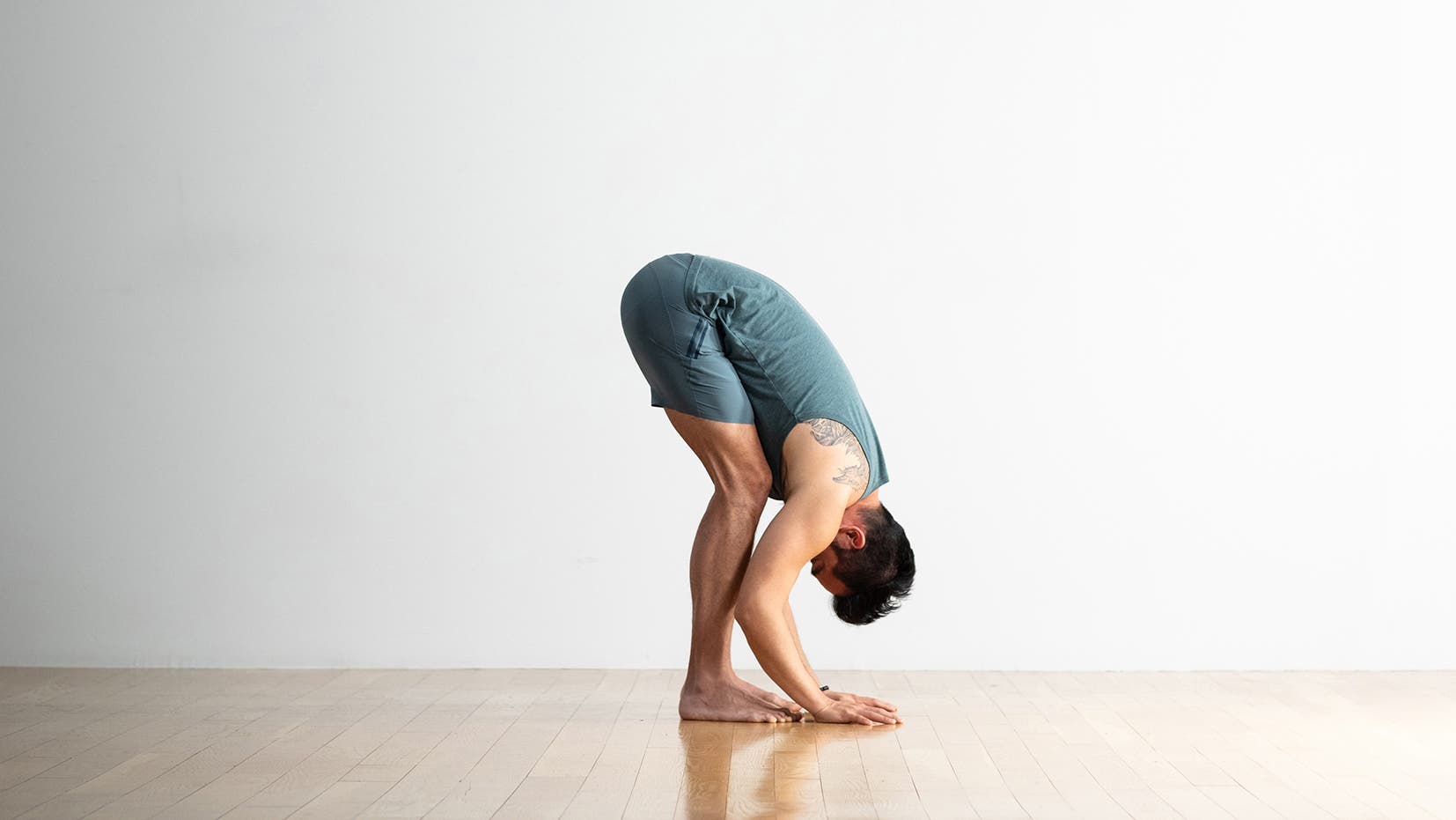
8. Forward fold
You don’t need a desk for this process and it doesn’t take up much space. Practice this regularly throughout the day to reduce tension in your lower back.
How: From standing, bend forward at your hips and lower your hands to your thighs, the edge of the desk, or the floor in the standing forward fold. Bend your knees as far as necessary and release your neck and shoulders, letting your head hang. Pause here for a few breaths and then slowly return to standing.
#10minute #desk #yoga #practice #work