

Editor’s note: GGP+ offers golf industry coverage in conjunction with this week’s PGA Show in Orlando, Florida.
WWhen golfers make a putting stroke, the putter face opens and closes naturally. This is what is known as ‘torque’. However, torque can lead to inconsistencies. Zero-torque putters, the fastest growing putter category, attempt to limit torque by keeping the putter face straight throughout the stroke.
Now almost all the major putter manufacturers, including LAB Golf, Odyssey, Scotty Cameron and TaylorMade, have their own zero-torque putters to capitalize on the popular category.
“The entire putter market has grown and is driven by zero torque within it,” said Jacob Davidson, vice president of Global Tour, Equipment Product Strategy and Category Management at Callaway Golf, which owns Odyssey. “The standard big box retailers have had about 40 percent of their sales to date fall into the zero-torque category.”
It is important to note that zero torque is not really zero torque, but just very low torque. Plus, it’s not exactly a new concept. Zero-torque putters are toe-up putters — the toe of the clubhead points skyward when the shaft is balanced on one finger — which Davidson says have been around for 30 to 40 years.
“Odyssey marketed it as the toe up and it was used on tour,” Davidson said. “Then we got rid of it and LAB brought it back.”
“In my opinion, why [L.A.B. golf was] could achieve so much success using their revealer. It was a visual representation of what the putter actually does, which is the opposite of what traditional putters do.” –Jacob Davidson
When LAB launched its original zero-torque putter in 2018, the company was able to show consumers what made its putter different with its revealer.
“In my opinion, using their revealer was the reason they were able to achieve so much success,” Davidson said. “It was a visual representation of what the putter actually does, which is the opposite of what traditional putters do. That revealer brought it to light in a meaningful way so consumers could understand that something is different.”
The revealer showed that toe-down putters often open and close, making it difficult for some players to keep the clubface level at impact. However, the faces of zero-torque putters remained largely square throughout the stroke.
Soon, almost all major putter manufacturers joined the zero-torque space, fueling market growth.
But is that growth sustainable? Many would say no. Davidson said the average purchase cycle for a putter is about 6.2 years, and growth in the zero-torque category is driven by people trying a “new trend.”
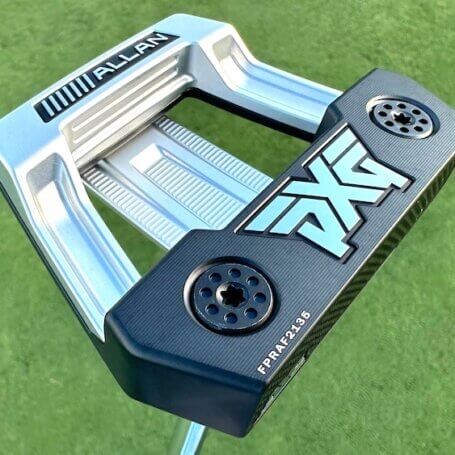
Steve Pelisek is the president of Titleist Golf Clubs, which along with Scotty Cameron are under the umbrella of Acushnet Holdings Corp. falls, a brand that has its own low-torque putters. Pelisek has a similar opinion to Davidson.
“The market has overreacted,” Pelisek said. “We think low-torque putters should suit about 10 percent of golfers. And for that reason, I think it deserves about 10 percent of the market after golfers have had a chance to try them.”
Davidson believes it will reach a point where 20 percent of Odyssey putter sales are zero-torque putters. But there are reasons to believe that growth could continue for a while.
“You’re just starting to see innovation in this area,” he said.
One complaint about LAB putters was that people couldn’t get used to the forward press these putters were supposed to promote. Odyssey has done away with forward pressure and other putter manufacturers are making their own adjustments, such as moving the hosels further back.
“So really, [the market] can become bigger because you bring more innovation,” Davidson said.
The zero-torque category is growing in a way unlike any other putter, Davidson said.
“What’s interesting about it is that it doesn’t come from tour success,” Davidson said. “You really look back on history; every putter that has gotten hot is from the tour and this one isn’t.”
In an age where people are increasingly falling in love with distance, new golfers aren’t necessarily getting into the game because of the putting. They may not develop putter face awareness, so these putters can provide more consistency without too much practice.
While JJ Spaun won the US Open with a LAB putter and a number of other pros have found success with zero-torque, Davidson said that during a week on tour you might see 10 percent of the field with zero-torque putters.
“I think zero torque makes bad putters better,” Davidson said. “I don’t think it makes good putters any better.”
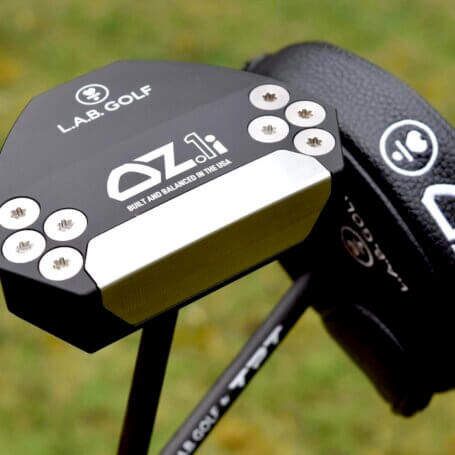
But that’s one reason why zero-torque putters can be popular with the average consumer. In an age where people are increasingly falling in love with distance, new golfers aren’t necessarily getting into the game because of the putting. They may not develop putter face awareness, so these putters can provide more consistency without too much practice.
“The average consumer who picks up the game may have never practiced putting,” Davidson said. “They can warm up putting, but they’re not going to sit on a putting green for 30 minutes and do drills.”
At the tour level, blade-style putters have fallen out of fashion in favor of mallets. At the PGA Tour’s Butterfield Bermuda Championship in November, 79 percent of the Odyssey putters in play were hammers. Ten years ago, the opposite was true in favor of knives, Davidson said.
Callaway and other brands are now putting mallet putters in junior sets. If zero-torque putters show success in competition, that could change.
“Like [top-ranked junior] Miles Russell used a zero torque putter, I guarantee it would be half of the AJGA,” Davidson said.
While club manufacturers have developed game-improving drivers, irons and wedges over time, putters have largely remained the same. Scottie Scheffler and a 30 handicapper can use the same putter. Davidson said zero-torque putters can signal a change.
“I think you could have a future where you almost have better player-style putters and more game improvement putters,” Davidson said.
© 2026 Global Golf Post LLC
#Zerotorque #putters #set #unusual #trend