

Marco Pasqualini (2nd from left) works for UNESCO in Paris.
Ahead of the International Day of Education, with this year’s theme ‘The power of youth in co-creating education’ UN news Charlotte Frantz spoke with Marco Pasqualini from UNESCO and Jacques Bubuka, a Young UN leader from Rwandaabout the importance of youth voices in shaping education systems around the world.
Marco Pasqualini: When it comes to education, young people have a special interest because they are the main beneficiaries of education, and because education priorities and reforms have a direct impact on them.
Co-creating education means giving them a voice to determine their priorities and recognizing young people’s willingness to make meaningful changes.
Jacques remembers: In the past, those who shaped policy in the education sector thought about what they were going to implement, assuming that because they were young once, they already understood what young people face.
But when it comes to co-creation, we don’t just think about young people, we involve them and give them the space and freedom to contribute to the program or policy that is being developed.
It is not just about consulting young people, but about truly involving young people in the decision-making process about the policy, model or system that is being built.
Marco Pasqualini: Despite much progress, inequalities in access to education are still very high. There are still 272 million children and young people out of school, and regional disparities remain large.
In the poorest countries, out-of-school children and youth represent 36 percent of the school-age population, compared to 3 percent in the richest countries alone.
These inequalities are even greater for youth with disabilities, ethnic and linguistic minorities, refugees and migrants, as well as LGBTQ youth.
Jacques remembers: Two categories of challenges stand out to me.
The first is about mentality – the mentality on the part of older people or institutions, especially those who work in education.
They often underestimate the voice of young people. They want to hear what young people think, but without giving them a real opportunity to make a meaningful contribution.
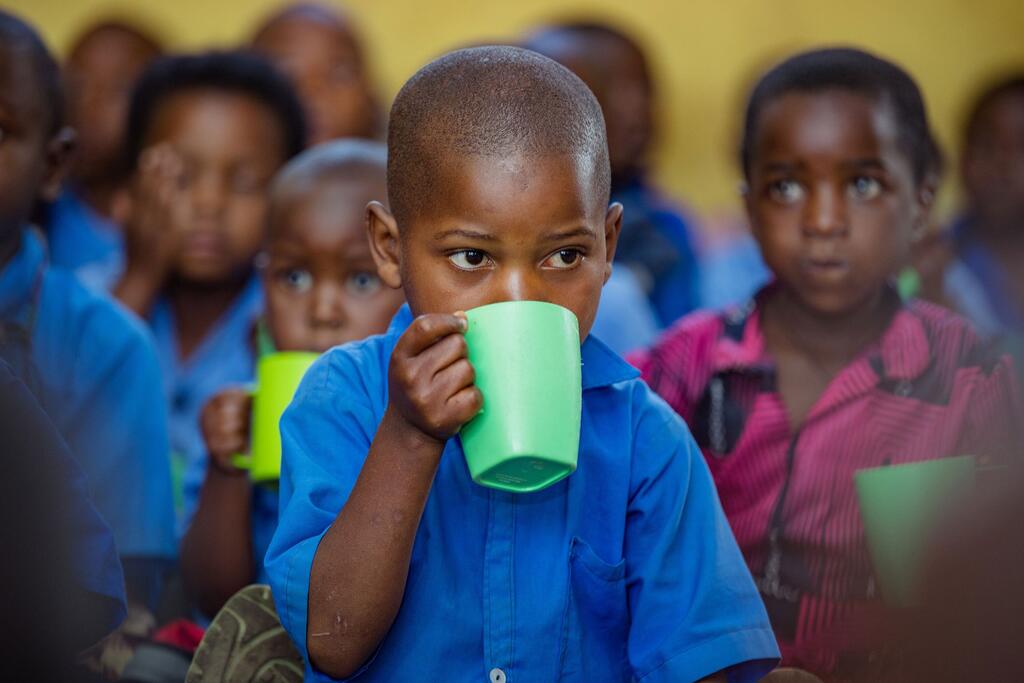
© UNICEF/Habib Kanobana
A young child goes to school in the Burera district, Rwanda.
Another mentality-related challenge lies with young people. Many young people, especially in rural areas, tend to undermine themselves due to low self-esteem or because they think such opportunities are only meant for highly educated individuals. Even when they are given the opportunity to contribute to a policy being designed or created, they hold back and do not speak out.
For organizations like UNESCOthey need to create more open spaces, including online platforms, to demonstrate that when young people – especially children – are meaningfully involved in co-creating education systems, outcomes improve.
When young people are not fully involved in shaping education systems or school environments, this often leads to gaps in learning and misinformation.
Marco Pasqualini: The lack of platforms is also one of the main obstacles.
So what we created a few years ago is a network of young people, I like to call them leaders and
experts, because young people really have expertise in the field of education. It’s called the SDG4 Youth and Student Network. Today we have 110 members from 80 countries, selected from 5,000 applicants.
The opportunity they have through this SDG4 Youth and Student Network to sit with leaders really creates a lot of visibility and interest.
SDG4 is sustainable development goal number four of the Sustainable Development Agenda, which focuses on quality education. It is a global commitment to achieve a certain level of quality education by 2030.
Jacques remembers: I have hope for the future. As technology improves, young people become better informed and meaningfully engaged.
In Rwanda, many young people lead initiatives that support education. With platforms — like those supported by UNICEF — we strengthen each other and strengthen our collective voice.
If this continues, I believe the future will include meaningful engagement of youth and children in co-creating health and education models and systems, in Rwanda and beyond.
Marco Pasqualini: Even though the world is in turmoil and multilateralism is unfortunately at stake, I see a strong interest in education and everyone wants to be part of the conversation.
UNESCO is the leading UN agency in the field of education. Our commitment is very strong. And in my case, I’m very happy to be here. I think this is the right place to be at the center of this process of changing education.
#Young #people #involved #transformation #education