

The first thing you notice is how beautiful it is, but the first thing you notice is Real note is the sound.
It’s Sunday morning at Autodromo Hermanos Rodriguez. In a few hours, Lando Norris will dominate the Mexican Grand Prix and become the first driver in the history of F1’s hybrid era to change the championship lead within the last five races.
Sixty years ago, Richie Ginther gave his own masterclass at the same location to direct the 1965 Mexican Grand Prix from start to finish. It was the first F1 victory in Honda’s then short history. And now, in its special pit box just in front of Yuki Tsunoda’s garage, stands the car in which Ginther did it: the Honda RA272, which looks small compared to the RB21 that sits on its stand just a few meters behind.
Even by the standards of the time, it’s not a particularly complicated-looking car from the outside, and the minimalist vibe is accentuated by the cool Japanese flag-inspired paint scheme, which makes it almost entirely white save for a large red circle across the nose.
In a few minutes, Tsunoda will climb into the small cockpit and drive the RA272 onto the track to commemorate a huge milestone in Honda’s motorsport history, and that means it’s time to set the thing ablaze. A team of dedicated mechanics, decked out in period gear, remove the hood to reveal one of the car’s signature quirks: in an era when V8 engines were considered the norm (although Ferrari sometimes raced a flat-12, including in Mexico ’65), Honda opted for a transversely mounted 1.5-liter V12; a configuration that Honda engineers hoped would deliver more peak power thanks to smaller moving parts and higher rotational speeds. They were right: Honda’s V12 was the pinnacle of the 1.5-litre era in F1.
The mechanics poke around for a few moments, and suddenly the pit lane is filled with a series of loud metallic rattles as the engine – designated the RA272E – clears its throat before settling into a distorted bugle sound. A few mechanics from the adjacent Ferrari garage walk over with their phones to record some video. F1 cars are exponentially more advanced these days, but some things transcend technology.
The hood opens again, Tsunoda sits in place, the engine barks a few times as he accelerates, and then the RA272 heads into the pit lane, following its own wheel tracks from sixty years earlier.
The 1965 Mexican Grand Prix was a strange race. It was the last of the season, and the last for the 1.5-litre engine formula, prior to the move to the three-litre regulations for 1966. The cars on the grid would have been outdated once they crossed the finish line, and with the world championship having already been decided in Jim Clark’s favor two races earlier at Monza (despite Clark dropping out due to a fuel pump problem), a contemporary report from that day suggested that not all teams had their eyes fully on the ball in Mexico arrived.
However, Honda came loaded. Ginther and compatriot Ronnie Bucknam conducted additional practice sessions from 6am to 9am for three days before the first official practice session, as the Honda team – making its first visit to a track 7,000 feet above sea level – tried to wrap their heads around fuel mixtures and tame some problems with their injection systems.
Once the ‘proper’ driving started, the RA272s were fast, with both drivers lapping in the 1:57 to 1:58 second range – lap record territory at the time. At one point the drivers switched cars, and both improved their times in the other car! For the rest of the field, the experience of being dusted down the long straight was a harbinger of things to come.
The next day was warmer, but the Honda’s pace remained strong – both drivers went faster again after a car change – and when qualifying was over, Ginther was third with a 1.56.48s, leaving him 0.31 seconds off Clark’s pole time and just 0.07 seconds behind Dan Gurney’s Brabham. Bucknum started as 10e.
Clark and Gurney’s clear view of the track didn’t even last until the first turn. Ginther passed them both at the start and claimed a lead which he maintained until the checker, although not without some scares. A charging Gurney gradually reduced the lead from seven seconds at half distance to less than four seconds, forcing Ginther to turn up the fuse in response. The pair improved the lap record several times before Gurney finally claimed it at 1.55.84s. But that was a consolation prize: Ginther crossed the finish line 2.89 seconds ahead of his rival, while third-placed Mike Spence in his Lotus drove almost a minute further.
After the race, Honda team manager Yoshio Nakamura sent the message “Veni, vidi, vici” to headquarters in Tokyo, while the New York Times – under the prosaic headline ‘Ginther helps Honda; Mexico City victory thanks to coordination – noted that the driver once described as “a lucky little man with a bright future in motorsport” was now “a lucky little man with an excellent chance of becoming world champion.”
Ginther celebrates after dominating the 1965 Mexican GP. It was the first GP victory for himself, Honda and Goodyear, but in Ginther’s case it would prove to be his only one. Getty Images
The Times’s pioneering motorsports writer Frank M. Blunk was wrong on the last point – Ginther’s first victory also turned out to be his last, although Honda – and Goodyear, which had simultaneously put its first W on the board in Grand Prix racing – had much more success to come. The little white car with the loud scream never raced again, but for its makers on the other side of the world it fueled many dreams for decades to come.
“When Honda was a small company – a very small company! – the founder Soichiro Honda thought that to be present we had to compete in top category races,” said Honda CEO Toshihiro Mibe, who was in Mexico for the 60e anniversary last weekend.
For Honda, which started out as an engine manufacturer, this meant entering motorsport through the famous Isle of Man TT races, debuting its RC142 engine in 1959 and winning the Manufacturers’ Team Award. It won the race two years later with Mike Hailwood.
After making his name on two wheels, Soichiro Honda’s next goal was to do the same on four wheels. In 1962 he decided to enter Formula 1 – a bold choice for a manufacturer that had not even released a road car. (That came in 1963).
“Everyone was surprised by that,” Mibe said. “The employees in the company were surprised, and a year later [Honda’s debut in Germany in 1964]we got our first win here in Mexico.
“Now in 2026 we will participate again as a factory team. [But] we will change teams – we will have a green car.” (Ed: Honda is currently working with Red Bull, but will be Aston Martin’s factory supplier next year).
The word “again” does some understated heavy lifting in Mibe’s quote. Like most manufacturers, Honda’s factory participation in F1 has been cyclical – its last full factory program ran from 2015, when it originally partnered with McLaren, before switching to Red Bull – until 2021.
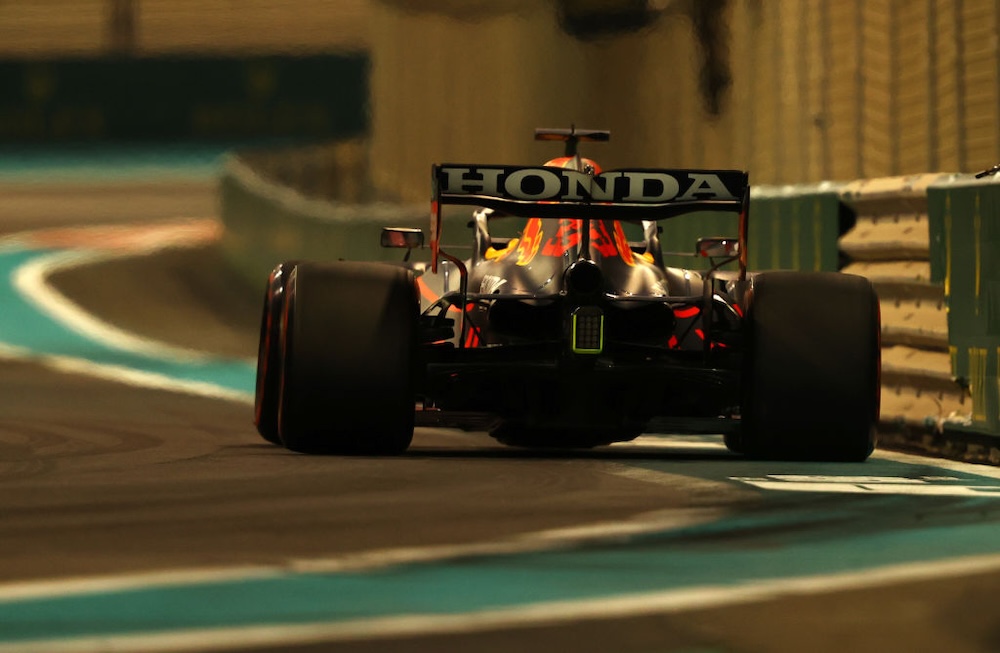
Honda’s last full factory F1 program ended in 2021 (above), although it has continued to work with Red Bull on powertrains in the years since. It will return next year as a factory entry for Aston Martin. Bryn Lennon/Getty Images
The return comes at a time when motorsports programs on a global scale are much harder to justify than in recent years. Soichiro Honda was able to greenlight Honda’s first F1 program on the simple basis he wanted. Today, manufacturers must weigh obvious factors such as cost against broader business priorities (Honda’s latest departure from F1 was driven by a desire to focus on zero-emission technology such as electrification and hydrogen), as well as global considerations such as politics and the environment.
So while racing is in Honda’s DNA, actually doing it has become an exercise in balancing the company’s heritage and ethos against the reality of acting in the broader interests of a multinational.
“Next year we call our ‘fifth generation’ (in racing),” said Mibe. “We’ve competed, stopped and competed again next year… Every generation the CEOs have said racing costs a lot of money, so sometimes we’ve stopped to focus on our business.
“But all employees at Honda are aware that we have this (racing) DNA. That is why we have decided that this fifth generation will participate again in F1. We want this generation to be stable. That is why HRC (Honda Racing Corporation) is working independently to focus on stabilization, and Mr Watanabe (Ed: Koji Watanabe, HRC Chairman) puts a lot of effort into making that happen.”
“The goal,” Watanabe added with a grin, “is not to create six generations.”
Achieving that goal will largely come down to controlling costs. HRC is actively developing its performance parts division, but more will be needed to cover the enormous costs required to be competitive in F1.
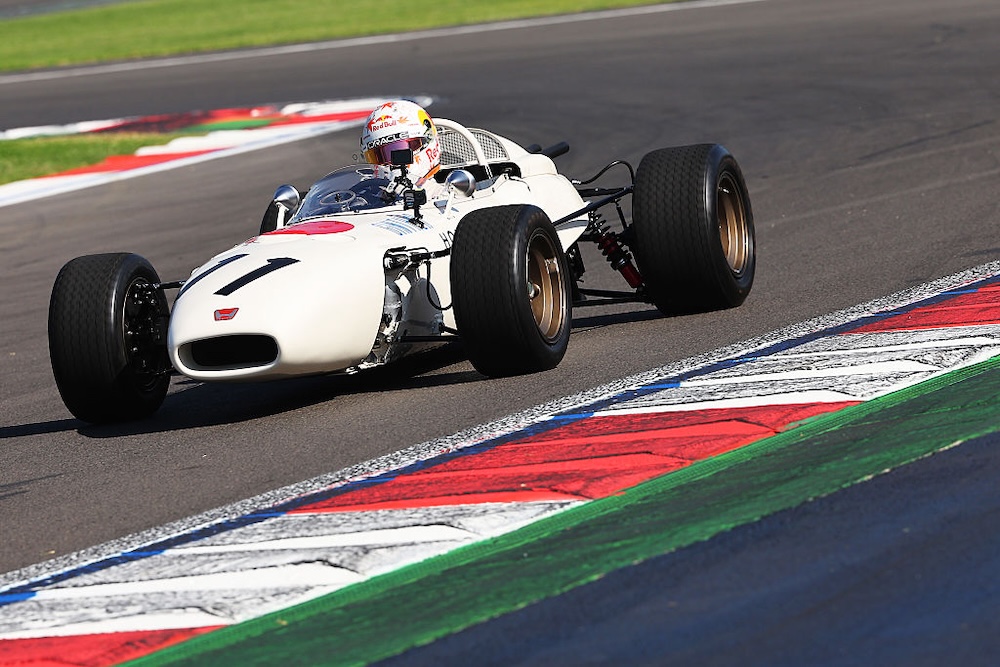
The Mexican GP-winning 1965 Honda RA272 was guest of honor at last weekend’s Mexican GP, the site of its historic triumph 60 years earlier. Colin McMaster/Getty Images
“F1 is the most expensive race in the world,” says Mibe. “But we are discussing regulations to control the amount of money we use. F1 is high-tech, so we cannot cut back much because we also have to keep developing new technology. So we will have to find a balance. It is difficult to meet the cost cap, so we have to manage our resources to ensure that and maintain our competitiveness. I think this will be the new challenge for us.”
On paper, Honda’s fifth generation seems to have all the ingredients to be an exciting one. In preparation for a reset of F1’s technical regulations, Aston Martin has taken a high-profile step by signing Adrian Newey, who has led the development of the 2026 car. His arrival was the sharp end of a much wider upgrade to the team’s design and engineering strength over the past 12 to 18 months.
Then there’s Aston Martin’s recently opened 400,000 square meter AMF1 Team Technology Campus, a three-building facility in Silverstone that houses all of the team’s design, engineering and manufacturing assets, including a new wind tunnel.
You have to take all that into account with Honda itself, and the firepower that as an engine manufacturer has already delivered 89 victories, 223 podiums, six drivers’ championships and six constructors’ titles. (Plus a further three GP wins as a full competitor, with John Surtees following up Ginther’s early success with a win at Monza in 1967 in the Eric Broadley-designed ‘Hondola’ RA300, and Jenson Button giving the RA106 its day in the sun almost four decades later at the 2006 Hungarian GP).
To what extent all that potential on paper translates to the track is a question that will be answered next March at Albert Park, when a story that began with an upstart manufacturer from Asia, a Hollywood-born “lucky little man” known for his testing and development talent, and a cute car with an equally cute but evolutionary engine prepares to stroll into its next chapter as Aston Martin Aramco Honda. The RA272 made Soichiro Honda’s dream come true, but there are many more for the company he built to chase.
#suggestive #nod #Honda #prepares #future #RACER