

Port fuel injection (PFI) was an important milestone in the early 1980s. The integration of PFI quickly changed the way fuel was delivered by increasing fuel economy and improving engine performance. Even with improvements in fuel delivery, such as gasoline direct injection (GDI) on some newer vehicles, PFI remains a valuable player in the way fuel is delivered today. But now that GDI is a newer option, the question remains: why do some engines have both port and direct injection?
The answer is far from simple, but there are important reasons why some automakers use dual fuel injection systems: increased efficiency, better performance and the ability to meet ever-changing emissions standards.
Many engines operate more efficiently when they use a combination of both GDI and PFI. For example, car manufacturers such as Ford, Toyota and Audi, to name a few, all have engines that use a dual-fuel injection system. Some of the biggest benefits of using GDI and PFI in combination are cost-effectiveness and smoother, quieter engine operation. Perhaps the biggest advantage? The combination of both GDI and PFI working in harmony to cancel out each other’s negative aspects.
The pros and cons of GDI and PFI
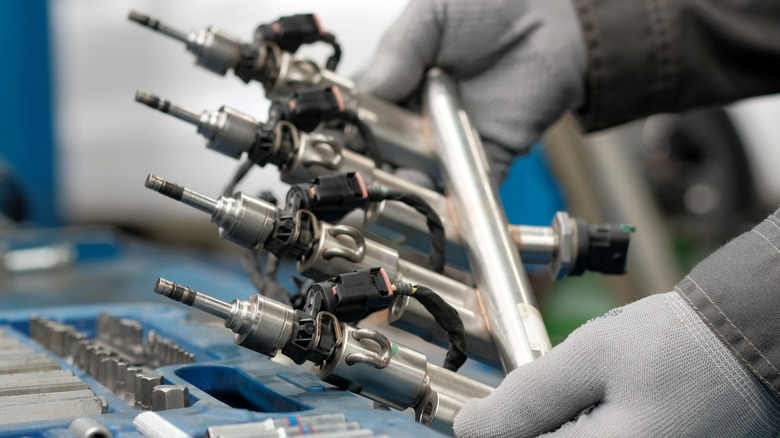
Let’s first look at the differences between GDI and PFI, as each style has its own pros and cons. To begin with, GDI is a fuel delivery system designed to deliver high-pressure fuel directly into the engine’s combustion chamber. On the other hand, PFI uses a dedicated fuel injector (or sometimes multiple injectors) for each cylinder. Fuel injectors are typically mounted via a fuel rail on (or near) the engine’s intake manifold.
Some of the benefits of GDI include better fuel economy, better performance and a cooler cylinder charge. This is achieved by the nature of how GDI works. Because the fuel is injected directly into the engine’s combustion chamber – and often at a more precise level – a cooling effect is created, allowing a higher compression ratio. This results in a much more powerful and efficient engine. However, the disadvantages of GDI can be just as impactful. GDI engines have been known to fall victim to clogged fuel systems and even carbon buildup in the engine. Neither are cheap repairs.
One of the biggest advantages of PFI is the cost. For example, the cost of a single fuel injector can be as little as $40, although this does depend on your specific vehicle. However, PFI also has its disadvantages, especially in low-compression engines. When compression is reduced to eliminate the potential for engine knock, the result is less than favorable efficiency and performance than modern GDI systems.
Combined arms: GDI and PFI
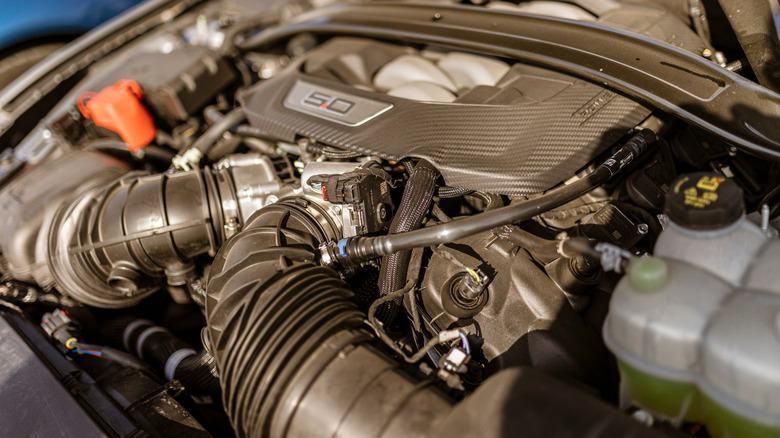
A good example of this is Ford’s vision for dual fuel injection. Ford relies on PFI for a handful of low-stress operations, such as idling and low-speed cruising. But when maximum fuel delivery is a priority, such as under high RPM loads, the system is designed to use both GDI and PFI for maximum effort. Toyota also has its own dual fuel injection system, which is designed to create a cooling (and cleaning) effect on the combustion chamber and the valves themselves. However, in high-speed situations, GDI is key for maximum efficiency.
The future of fuel injection is certainly exciting. As automakers continue to invest in different fuel injection methods, it will be interesting to see how far gasoline engines can be pushed in terms of power and efficiency.
#Engines #Port #Direct #Injection #Jalopnik