

An “important” feature of today’s car keys is that you don’t have to physically touch them to enter or start the car, thanks to developments such as RFID proximity technology (which is short for radio frequency identification). That feature is especially nice because keychains are dirtier than you think. They can cost a small fortune to replace, and they have evolved from simple remote locking and unlocking controls as manufacturers have tried to provide greater convenience and vehicle safety.
Some of the first car keys were developed in 1910 by the German engineering company Bosch. They are designed to complete the electrical circuit required to start a car, preventing theft. In the 1920s, separate key locks appeared for doors, while electric buttons replaced starter cranks. Finally, in 1949, Chrysler gave us the first modern car key. This fitted into an ignition switch and activated the electric starter, replacing the push-button start mechanism that most new cars are returning to.
Mechanical keys were gradually linked to remote controls in the late 1980s and 1990s, with the key fobs themselves becoming part of the keys in the 2000s. Many weird car keys have been produced throughout history, and our expensive, button-filled key fobs perform multi-function wizardry compared to their ancestors. Nowadays, keys come with instructional videos that show you how to use modern features like remote locking, remote start, automatic parking, and remote climate control. Meanwhile, digitally authenticated proximity signals ensure security.
Key evolution in brief
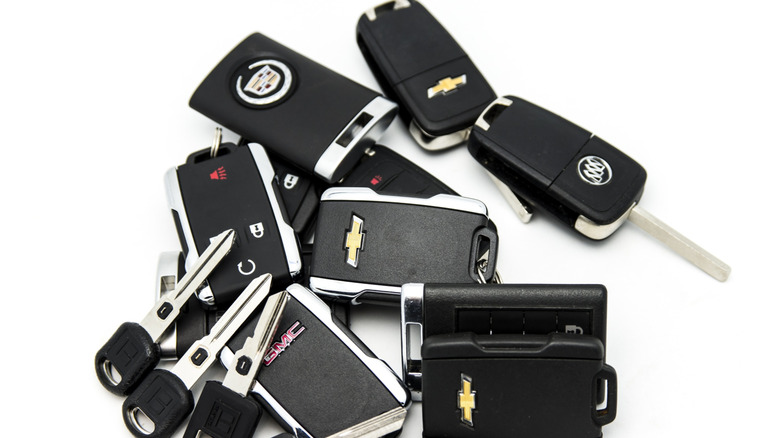
Key fobs and key-based ignition immobilization emerged in the 1980s, when the 1982 Renault Fuego pioneered remote convenience. Chevrolet also integrated resistors into 1986 Corvette keys to thwart theft, and the 1990 Mercedes-Benz SL was the first to combine a key blade and a key fob into a switchblade design. In terms of convenience, General Motors provided remote fobs for sliding doors for minivans in 1993 and offered proximity locking and unlocking on the 1993 Corvette. The 1998 Mercedes-Benz S-Class upped the ante with keyless proximity ignition. While this continued, Volkswagen focused on safety, baking a vehicle-specific transponder into the switchblade keys of the 1999 Golf.
Around the turn of the century, automakers continued to move toward bolder multi-function key fobs, offering greater convenience and security features. A funky Saab key fob for the 2003 9-3 replaced the metal key blade with a core, requiring a turn of the center console ignition to start the car. Mercedes and Lexus designed passive credit card-style keys, while GM made remote start available on the 2004 Chevrolet Malibu straight from the factory. Chrysler made a key fob that combined transponder and proximity capabilities in one device for 2008-2016 vehicles. And today Tesla is offering a key fob that looks like a slightly melted miniature of the car.
Unlocking the future
RFID key fobs allow manufacturers to provide more vehicle security than older designs. Wirelessly transmitted vehicle-specific serial numbers and key codes cannot be replicated like mechanical keys. Yet RFID keys are subject to remote relay hacks that intercept the authentication signal, making theft a breeze. Putting keys in a Faraday box or pouch prevents this, but also blocks the signal for you. Either way, transponders offer a real safety advantage. When it became known that many Hyundai and Kia keys did not have immobilizer chips, thefts skyrocketed in 2021 and 2022. Associated press reported. Having immobilizers can reduce insurance rates, and some international markets outside the US require them.
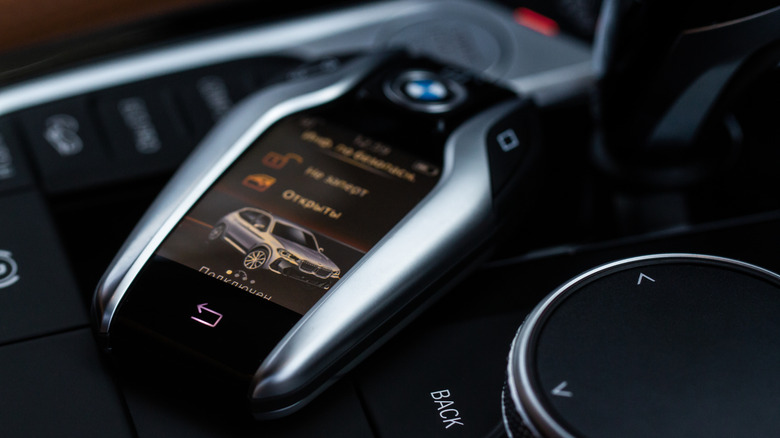
As for the best keychain designs, there are plenty to check out. Volvo offers a small, waterproof key without buttons that active people can use as a replacement for a key fob. BMW has the huge Display Key which is basically a smartphone app and screen, minus the smartphone. This provides the control and configuration that many owners want – and that manufacturers want to provide.
The convenience and security that drove the keychain button craze are now fueling the movement to eliminate keys entirely in favor of digital smartphone keys that rely on passwords and biometrics. Tesla’s Model 3 was the first to go this route, and Apple announced at the 2025 WWDC that more than two dozen brands had signed on to allow owners to use iPhones and watches as car keys. But even if that future does come to fruition, we can probably expect some sort of physical key to back it up to exist.
#electronic #car #keys #evolved #simple #proximity #keys #expensive #buttonfilled #key #fobs #Jalopnik