

The very first air conditioning system available from the automotive factory was found in the 1940 Packard and was called, among other things, the “weather conditioner.” It used R12 and, while revolutionary, was expensive, allowed no fresh air, only recirculation, and reportedly broke down frequently. The system used a compressor, a condenser, an evaporator coil and a fan. Interestingly, the air was blowing out from behind the seats because some of the major components, such as the fan, were located there. However, this design did mean that some trunk space was sacrificed, and the back of your neck would typically get most of the attention from the cold air.
Nevertheless, it fired the imagination of engineers who would eventually make car air conditioning not only more affordable, but also far more advanced than previous versions. Unfortunately, it wouldn’t be until 2023 that tentative agreements were reached for UPS drivers to finally get air conditioning in their trucks.
One of the features of Packard’s AC system that stuck was the use of R12. It was the first widespread coolant used in the automotive industry. However, due to environmental concerns, R12 was eventually replaced by R134a. Although R134a was the best option for many years, it was eventually found to pose a threat to the environment and was replaced by R1234yf, which is used today.
Why R12 was replaced by R134a
R134a was then introduced to replace R12, because R134a, unlike R12, is a hydrofluorocarbon (HFC). HFCs were found not to have the same destructive effect on ozone, solving that problem. However, compared to the cooling power of R12, many felt that R134a was a weak alternative. However, “A comparative study of the thermal performance of R12 and R134a”, published on the Purdue University e-PubsMost of the 88 independent tests showed that R134a actually had a greater cooling capacity than R12. The negativity surrounding the change was largely due to poor conversions and the use of cheap parts when switching to R134a in a system built for R12. Even today, you may find that climate control performance falls short in some situations, but it can help to incorporate these cool tips to keep your AC unit blowing cold.
What is R1234yf?
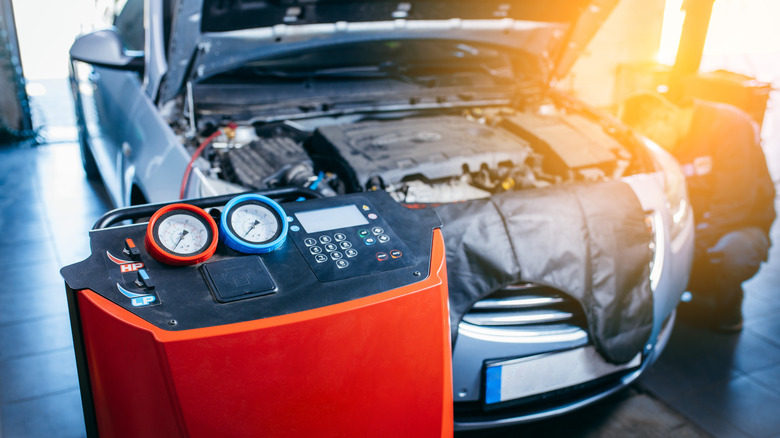
First, unlike its predecessors, R1234yf is considered somewhat flammable. However, extensive testing has not shown any dangerous results regarding its use in cars. Unfortunately, R1234yf, while safe, is also expensive. For example, if you compare prices, an equal amount of R1234yf is more than three times as expensive as R134a. Speaking of costs, 2026 is likely to be a tough year for car sales as prices and market instability could put new vehicles out of reach for many consumers.
#Automakers #Switched #R12 #Freon #R134a #R1234yf #Jalopnik