‘We are with you’: experiences of collective grief after the Bondi terror attack

‘We are with you’: experiences of collective grief after the Bondi terror attack

6 minutes, 31 seconds Read

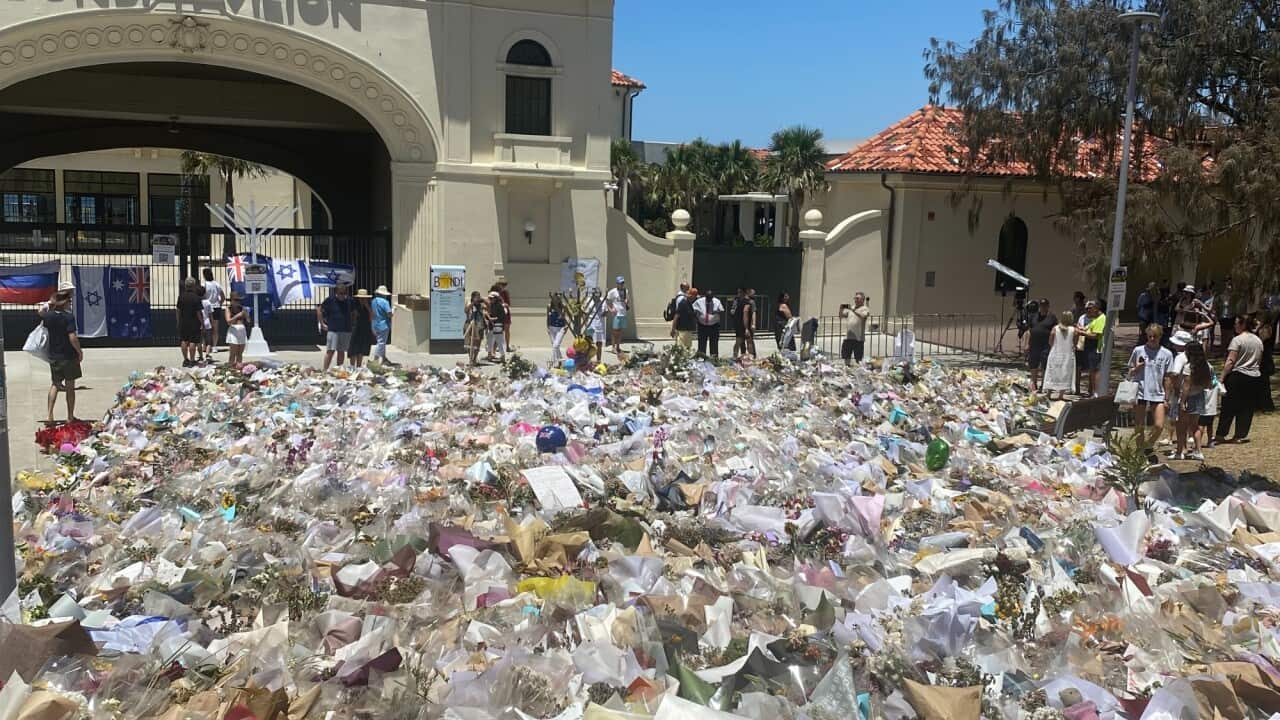
Crowds continue to flock to a floral tribute at Sydney’s Bondi Beach as a shared sense of loss is felt across Australia and around the world following the terror attack on the beach on Sunday, December 14.
This loss is especially felt among Jewish communities that were targeted in the anti-Semitic attack, Cara told SBS News.
“For Jewish people, every person murdered here is just like our brother, just like our sister, just like our mother, just like our father.”
“We are collectively grieving together,” she said.

‘That’s why we come here every night to light the menorah [a nine-branched candle holder] together, which is typically a happy time, a time of light.”

What is collective grief?

The flower monument is just one example of a place for collective grief after the shooting, in which fifteen people died.
Grief Australia CEO Christopher Hall said collective grief is a “shared experience”, with people coming together to “have their own experience of grief recognized and validated”.
“Sometimes it’s a desire to restore that sense of safety and connection,” Hall said.

“Sometimes that coming together can also be an act of resistance, especially in the context of an event like terrorism.”

Hall added that society has moved away from the idea that people move through grief in an “orderly or predictable way.”
He acknowledged that there will be differences in how people cope with grief, but said collective grief is “partly a desire to connect with others and overcome a sense of powerlessness after loss.”
“I think it’s also very helpful for grieving people to grieve often with others, to actually see other people express emotions, to share their suffering,” Hall said.

“It says your pain matters, you are not alone.”

National day of mourning

Prime Minister Anthony Albanese says arrangements are being made for a day of national mourning for the Jewish community in the new year. On Sunday, a week after the attack, there was a national day of reflection for all Australians to honor the victims.
Thousands of people gathered for a vigil at the Bondi memorial and a minute’s silence was observed at 6.47pm (AEDT), the time the shooting began.
People elsewhere had been asked to light a candle and place it in the window before observing a minute’s silence at 6.47pm.
Rabbi George Mordecai is from the Emanuel Synagogue in the Sydney suburb of Woollahra, not far from Bondi.

He said the Jewish community is not monolithic and that while they grieve collectively, people express their grief in different ways.

Mordecai said while there was “a lot of anger, sadness and fear”, there was also an “outpouring of warmth” from the wider Australian community.
“It really warmed my heart,” he said.
“I was walking on the street and people saw my yarmulke on my head and they came up to me and said, ‘We are with you'”.
In an effort to rebuild a sense of safety and hope, Mordecai organized a listening circle this weekend, where Jewish people and others could come together to share their grief.

Before the event, Mordecai said, “We should not interrupt that person while that person is speaking and expressing his sorrow. And we witness their grief and listen even across differences, even when it may be difficult for us to hear.”

‘Love that can’t go anywhere’

Hall said rituals are an important part of the grieving process because they provide a sense of purpose and agency.
He said people can have conversations with others, participate in activism or engage in charity work, as evidenced by the thousands of people lining up to donate blood after the mass shooting.
“I often describe grief as love that has nowhere to go,” Hall said. “It is this energy that seeks expression.”
Hall said our Western culture “lacks robust rituals for traumatic loss,” and that people coming together is an important act as “social beings.”

“This is where we see this often overwhelming desire to meet together, to create these temporary and sometimes permanent memorials, which serve as a kind of emotional landscape in which the living encounter the memory of the deceased,” Hall said.

Communities lament ‘sense of security’

It’s not just the Jewish community in Bondi that is reeling from this tragic event.

A Hanukkah celebration in London turned into a vigil for the victims of the Bondi attack on Tuesday evening, while a celebration in Jerusalem united Jewish organizations to honor the victims.

Professor Nicole Sadler is the CEO of Phoenix Australia, a post-traumatic mental health centre.
She said traumatic events can create layers of grief across multiple communities, especially around the loss of a “sense of safety and security.”
Sadler said some people will mourn the loss of what Bondi meant to them, while others will be struck by the impact of this event at the start of a religious celebration. The shooting took place on the first night of Hanukkah, the Jewish festival of lights, which is celebrated for eight days.
“All of that can contribute to a sense of loss, and we could think about that in collective ways,” she said.
Sadler said social support is one of the most helpful measures for recovering from the trauma of these events.

“So anything that’s about rebuilding a community, bringing the community back together, recognizing what happened to the community.”

‘Reclaiming the beach’

In an effort to restore that sense of community, hundreds of people gathered for a memorial swim at Bondi beach on Wednesday morning to honor the victims and express their solidarity with the Jewish community.

Courtney Moran is a member of the Bondi Fairy Penguins swimming club, one of the groups behind Wednesday’s swimming event.

She told SBS that Bondi locals wanted to “stand alongside the grief of the Jewish community.”
“We really want to reclaim the beach and move forward and recreate the memories of Bondi Beach as a safe and happy place,” Moran said.
“I think rituals give grief a bit of structure, especially when the words fail.”

“The ocean holds many people without judgement. “It allows emotions to be felt physically through breathing, movement, cold and silence, rather than having them explained.”

Mourning rituals in Judaism

In Judaism, the first seven-day period of mourning is known as shiva and involves a host of rituals while mourners remain at home to mourn the deceased – including reciting the Kaddish, a song of praise to God, and preparing a meal for mourners upon their return from the cemetery.
Rabbi Yossi Friedman said that the typical custom in Judaism is to lay a stone in honor of the deceased because this “represents permanence.”
Standing in front of the floral tribute, Friedman said the flower memorial is a moving show of solidarity from non-Jewish Australians.

“It’s nice that we have here, we have rocks, we have flowers,” Friedman said. “Each personalized by people truly touched by this tragedy.”

Rabbi Mordechai said it is also important that grief not be politicized, especially during this sacred season of mourning.
“I want to say that it is really disturbing to me to see our grief now being politicized in the general community,” he said.
“For us right now, the seven days after a funeral of a loved one are a very sacred time in Jewish tradition.”
Mordecai said the power of dialogue and listening “cannot be overstated,” pointing to his involvement in interfaith dialogue with Palestinian, Arab and Muslim communities.
“Let Australia mourn too, and not just the Jewish community,” Mordecai said.
“I have no doubt that we will get through this as Jews, and also as a community in general.
“We need to form a circle of love to support those who are grieving until they are ready to step out of that grief, and that can take a long time and we need to take that into account.”

#experiences #collective #grief #Bondi #terror #attack

Similar Posts

Leave a Reply

Your email address will not be published. Required fields are marked *