

The 1970 FIFA World Cup was held in Mexico. It was the first World Cup to be televised in color, held outside Europe or South America and to allow substitutions during the match. Red and yellow cards were introduced for the first time during the World Cup. However, the tournament did not result in a single broadcast. The referees were stricter than the last few tournaments, and that encouraged more measured challenges and promoted attacking play. Pele, with an invisible but tangible crown on his sacred head, inspired Brazil to glory in what remains football’s most pompous summer. The record of almost three goals per match from the 1970s has never been surpassed since. This was the last World Cup tournament with 16 teams divided into four groups, with the top two teams from each group advancing to the knockout rounds, starting from the quarter-finals.
It was a star-studded tournament. Besides Pele, most attention goes to Beckenbauer, Gerd Müller, Rivera, Cubillas, Rivellinho, Carlos Alberto and Jairzinho. One of those who is somewhat overlooked is Tostao, a striker who was widely regarded as Brazil’s second-best footballer in the late 1960s and early 1970s, when Brazil had an abundance of world-class talent.
In this series, which goes through all twenty-two FIFA World Cup tournaments, we will attempt to tell the story of a player who played an important role in the tournament, but barely figures as one of the first few names that jump out when you hear the tournament mentioned. Today we look at the Brazilian Tostao in the ninth version of the series.
When Tostao was dubbed ‘the new king’ after his Cruzeiro defeated Pele’s Santos in 1966, he noted that such an idea was absurd because he could never execute what Pele could, but he admitted that he had a similar vision, imagination and quick thinking. Tostao was a left-footed striker with unique skills. In the successful World Cup campaign, he played mostly with his back to goal, constantly lurking and offering his teammates passing opportunities. His understanding of space and positioning was as crucial as his accurate passing. While Pelé was the hero of the piece, Tostão more often than not wrote the script. Despite his prolific scoring record, he took on the role of chief facilitator during the World Cup, both on and off the ball. He was deployed as a centre-forward, but his reinterpretation of the role is, in retrospect, regarded by many as one of the earlier examples of someone playing as a false nine.
Tostao’s inclusion in Brazil’s squad for the World Cup was in doubt for a long time due to an eye injury he suffered, which later forced him to retire at the age of 26. Not long before the World Cup he had to undergo retinal surgery. He was phenomenal in the qualifying rounds, where Brazil won every match and Tostão scored ten goals (including two hat-tricks) in six games. His omission would have seriously hampered Brazil’s chances. In the context of his struggle with a detached retina, the fact that Tostao’s vision became one of the key factors in Brazil’s World Cup victory reads like a fairytale.
Despite winning all three matches in the group stage, Brazil’s defense was far from assured. Brazil’s fierce five of Pelé, Rivellinho, Jairzinho, Tostão and Gerson were too overwhelming for a mediocre Czech side, who were defeated by a 4-1 margin despite opening the scoring.
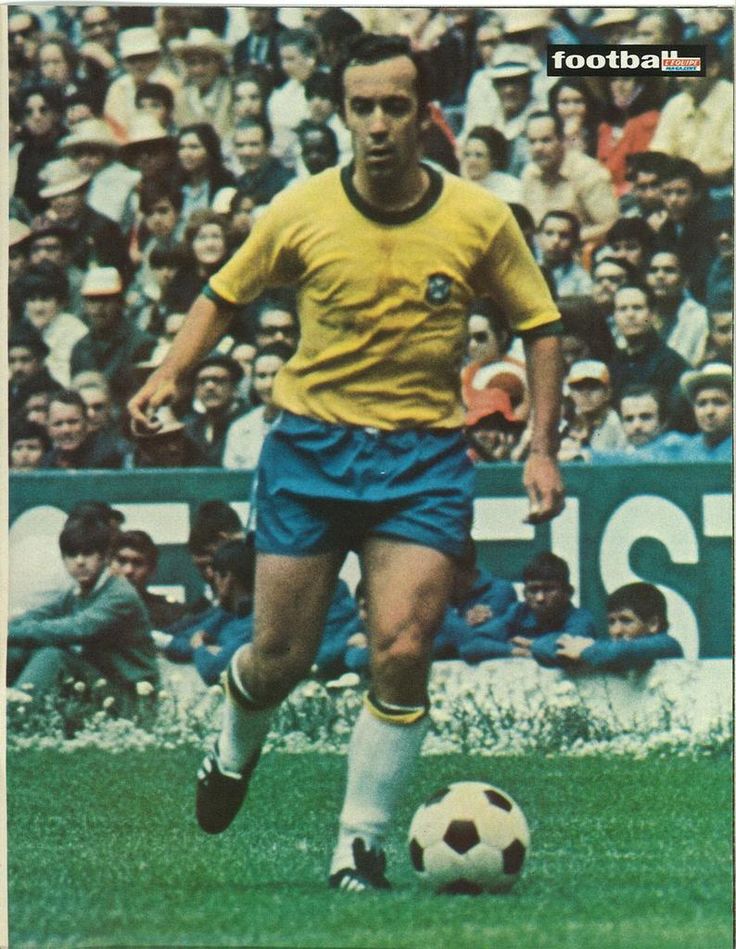
The next match is a World Cup classic. England had one of their best ever performances in a World Cup match. They showed tremendous discipline and unfazed concentration, keeping Brazil at bay for most of the match. But Brazil made perfect use of this opportunity. It was an exciting battle between tactical soundness and imaginative dynamism. The only goal of the match was a testament not only to Tostao’s ball skills, but also to his perseverance and hard work. He managed to keep possession under intense pressure and passed a cross to Pelé, who passed the ball to Jairzinho, who finished from six yards out.
Romania was no match for a Brazilian team that rested a few starters. Still, the Europeans had enough to continue to test Brazil’s defense and helped give the score a flattering gloss. Tostao, who often drifted to the left, played part winger, part centre-forward and constantly contributed to sharp passing movements.
In the quarter-finals, Brazil faced a Peruvian team that had ‘neutral favorites’ written all over it. Peru fought well with their young Talisman Cubillas, but their defense was barely adequate. Brazil didn’t have to get out of first gear and easily scored four, with Tostao finding the net twice. His first goal came via a rehearsed corner kick. His shot was taken from an unexpectedly acute angle and had power, but should still have been saved. In his second, he showed a striker’s instincts when he smashed home a deflected cross. Brazil won 4-2.
Brazil didn’t start convincingly in the semi-finals. They conceded a completely preventable goal and Uruguay were ahead until the end of the first half. After scoring in the 44th minute through an inspired Clodoaldo, Brazil returned to play the second half with a confident look. But Uruguay would not be undone easily. They only conceded the second goal fifteen minutes before the end and it is difficult to say what else they should have done to prevent that. The goal was the result of quick and instinctive attacking play, which had seen Jairzinho, Pelé and Tostão combine skilfully, with the former initiating the attack and ultimately finishing it off. Rivellinho added a third, processing a pass from Pele. Brazil then played the final at Estadio Azteca against an Italian team that had just eliminated a West German team, who looked a little more worthy as an opponent for Brazil, in one of the most memorable matches in World Cup history.
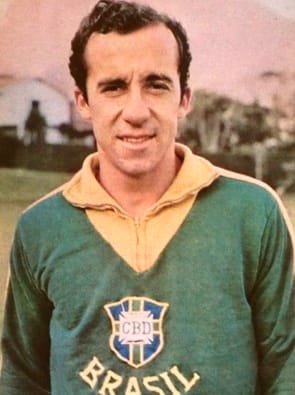
This Italian team was nothing special and they were almost exhausted in the semi-final. Tostao was attacked in the final by Rosato, a brilliant defender, but that allowed Pele to enjoy more freedom. Pele opened the scoring with what would be his last goal of the World Cup. Italy equalized in the 37th minute and kept the score level until the 66th, but they were never really in the driver’s seat. Gerson scored with a wonderful long-distance runner. Jairzinho scored a nasty goal to effectively end the match five minutes later. There was still plenty of time for the goal most often cited to sum up the magic of this legendary Brazilian team. A topic of countless paragraphs, it needs no further description. I would like to point out a subtle detail. When Pelé stole a moment of electrifying silence as skipper Carlos Alberto ran to the right, it was Tostão, opposite Pelé, pointing to Alberto’s run. To me, his finger-pointing almost seems like a spoiler, without which the pass would look even more unexpected. Still, it’s just a reminder that Tostao read the game as quickly and well as Pele. Brazil won the World Cup for the third time and finally took home the Jules Rimet trophy.
If his World Cup was a fairy tale, it is worth remembering that fairy tales rarely last long. He had to quit before the next World Cup arrived. An intellectual and university-educated medical professional, Tostao became one of Brazil’s most outspoken and incisive football writers in his later years.
Related
Discover more of
Subscribe to receive the latest posts by email.
#Unsung #heroes #World #Cup #Tostao #Mexico