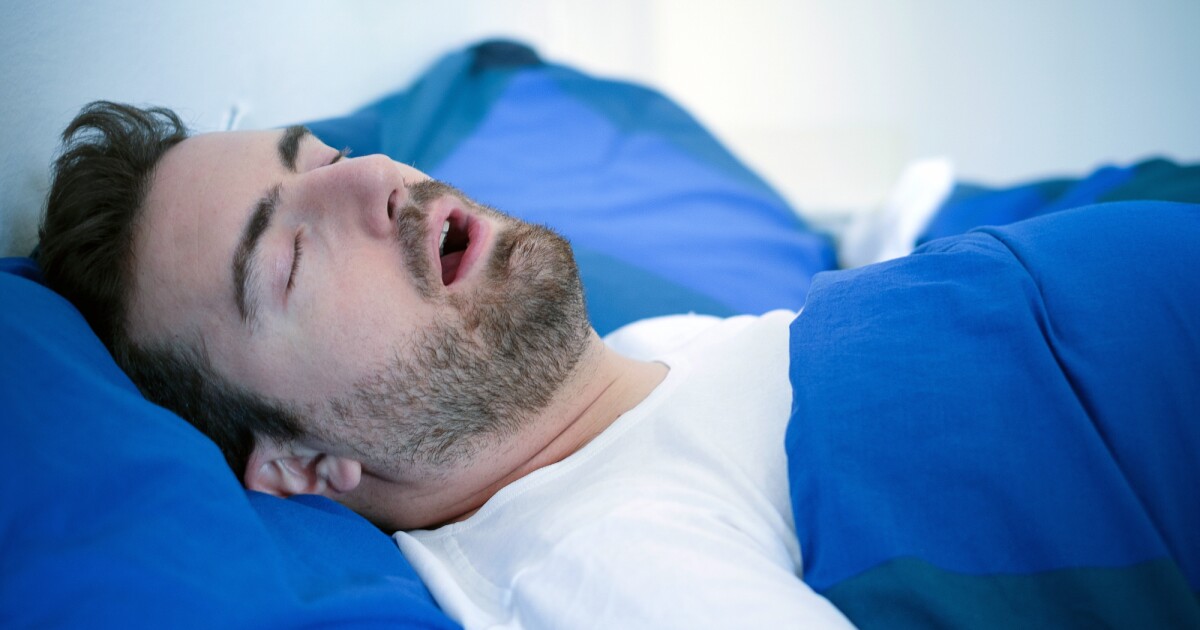

For the first time, researchers have shown that tackling the two main causes of obstructive sleep apnea at the same time, using both oxygen and a device that moves the jaw forward, can dramatically reduce breathing interruptions during sleep.
WorldwideObstructive sleep apnea (OSA) affects approximately one billion people. The condition is caused by two main problems: the throat muscles collapse too easily (‘pharyngeal collapse’) and the brain’s control over breathing is unstable (‘ventilation control instability’).
While there are many studies on the effectiveness of treatments that target one of these problems, few have examined how effective combining treatments is to address both. A new study led by Monash and Harvard Universities has done just that.
“We did this because we know that OSA is due to a combination of anatomical and non-anatomical causes,” says lead author of the study. Associate Professor Brad Edwards, PhDfrom Monash University School of Psychological Sciences. “The M.A.D [mandibular advancement device] targets the anatomical cause, while oxygen helps address an important but underappreciated non-anatomical cause.”
Similar to a mouthguard, a MAD holds the mandible (lower jaw) and tongue forward, keeping the airway open. It is often used as an alternative to continuous positive airway pressure (CPAP), which some people find difficult to tolerate. The current study tested whether treating both aspects of OSA using supplemental oxygen to stabilize breathing control and a MAD to keep the airways open would work better than using either alone.
Forty-one adults with moderate to severe OSA (average approximately 49 breath interruptions per hour) participated in the study. It was a randomized crossover study, meaning each participant tried all four treatment options in random order, each on a different night. The four options were: sham (air only), the control condition; oxygen only (breathing 4 l/min of oxygen during sleep); MAD only; and a combination of oxygen and MAD.
“Mandibular appliances are often used to treat OSA, while supplemental oxygen is not commonly used; it is often used for other breathing disorders such as COPD and emphysema,” Edwards said. “This is the first time this combination has been tried in patients with OSA.”
The researchers used overnight sleep studies (polysomnography) to record the following measurements: apnea-hypopnea index (AHI), the number of breathing interruptions per hour; arousal index, how often sleep was disturbed; and subjective sleep quality, assessed on a visual scale. They also analyzed physiological characteristics to see which types of patients benefited most; that is, those with more “collapsible” airways or unstable respiratory control.
Compared with no treatment, oxygen alone reduced the AHI by approximately 33%, MAD alone reduced the AHI by approximately 54%, and combination therapy reduced the AHI by approximately 68%, a statistically significant effect. Combination therapy improved both sleep quality and arousal compared to sham therapy, but not enough to be clearly better than MAD alone. The greatest improvements were seen in people whose OSA was caused by both airway collapse and unstable breathing control.
The study findings indicate that this “two-pronged” approach to treatment could help patients who cannot tolerate CPAP and whose OSA has multiple underlying causes.
“Now we need larger studies focused on selected patients, but this is the first compelling evidence that identifying multiple causes of OSA simultaneously could have real benefits for patients,” said the study’s senior author. Scott Sands, PhDan assistant professor of medicine at Brigham and Women’s Hospital and Harvard Medical School. “If applied on a large scale, it could be a bit like people with high blood pressure taking 2-3 drugs to control blood pressure, each targeting different biological pathways.”
The research was published in the European Respiratory Journal.
Source: Monash University
#Twopronged #approach #reduces #sleep #apnea #interruptions