

Donald Trump made a few more appeals to Democrats who spoke out against illegal orders for the military to go to jail late Saturday night, as he battles a sinking public image and unprecedented resistance within his own party on the Hill.
The president issued his final statements in the form of all-caps rants on Truth Social, defending the supposed legal basis for accusing members of the opposing political party of treason or seditious conspiracy. But even as he did so, he appeared to explicitly back away from calls for their executions, something he had made as a threat just days earlier.
But the president was clearly irritated by Republicans in Congress’ refusal to join him, and used a Truth Social feature to insist that America’s legal scholars were on his side — without naming anyone. The episode marked just his latest crash to emerge from the original release: a video, posted by Democratic members of Congress serving in the military, urging armed forces commanders to follow their constitutional duty to refuse illegal orders from the White House or Defense Department.
“MANY MAJOR LEGAL SCHOLARS AGREE THAT THE DEMOCRATIC TRAITORS WHO, AS PRESIDENT, TOLD THE MILITARY TO OBEY MY ORDERS COMMITTED A CRIME OF SERIOUS PROPORTION!” he argued.
In a second message 10 minutes earlier, just before midnight, he wrote: “THOSE TRAITORS WHO TOLD THE MILITARY TO VIOLATE MY ORDERS SHOULD BE IN PRISON NOW, AND WILL NOT BE ROAMING THE FAKE NEWS NETWORKS EXPLAINING THAT WHAT THEY SAID WAS OKAY. IT WASN’T, AND NEVER WILL BE!”
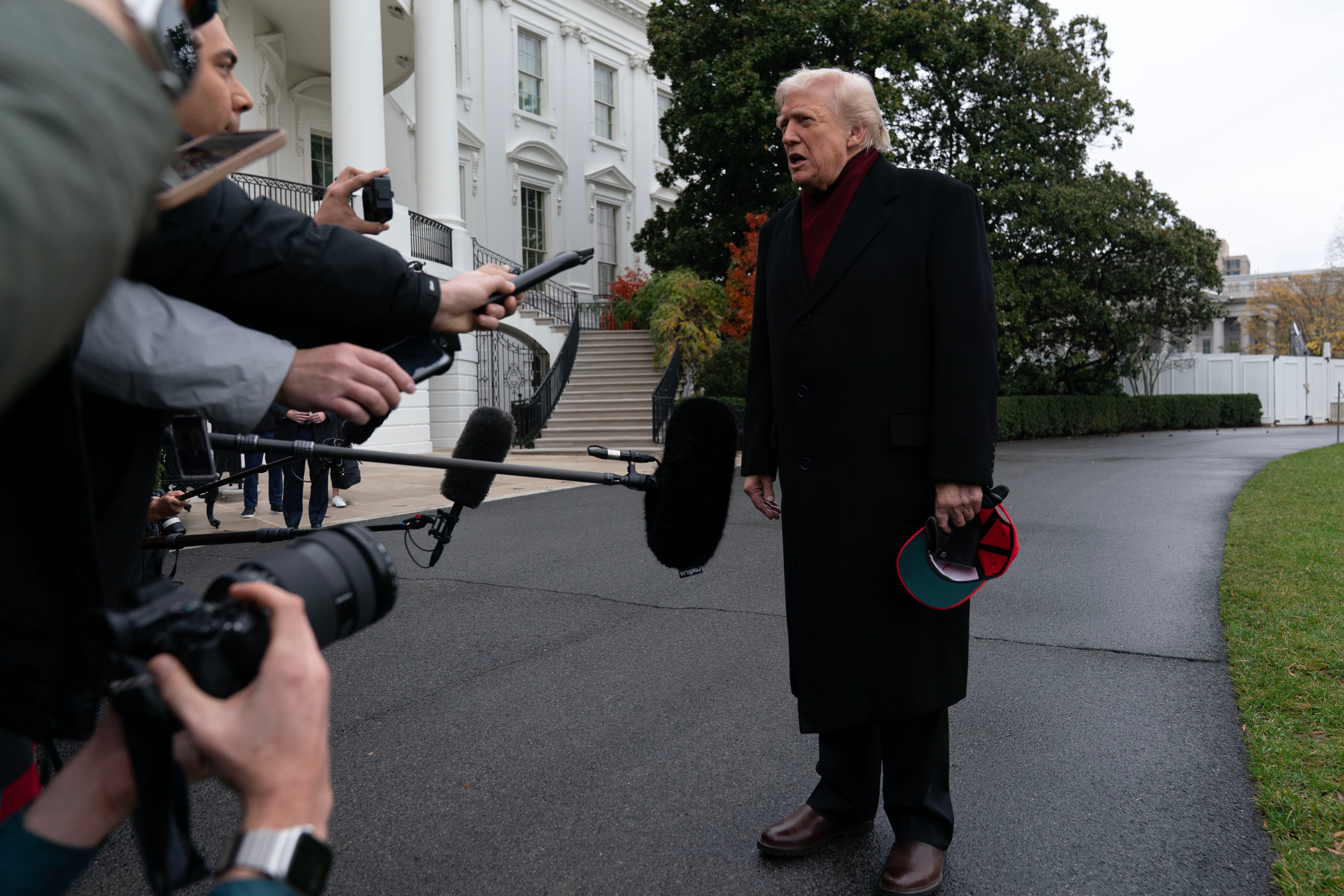
He added that Democrats like Sen. Elissa Slotkin and Rep. Chris Deluzio, who appeared in the video, had committed “sedition at the highest level,” before incorrectly noting, “AND sedition is a major crime.”
Sedition itself is not a defined crime in the United States Criminal Code. The applicable charge is seditious conspiracy, a similar-sounding charge that requires prosecutors to prove an organized conspiracy aimed at overthrowing or otherwise harming the federal government.
And legal scholars generally agree that the First Amendment to the U.S. Constitution’s Bill of Rights generally protects a wide range of speech and expression against the government, including calls for its abolition. In general, statements or expressions against the government are protected unless they actively call for threatened violent criminal acts against the government or its representatives.

Nothing in the video message released by Democrats would fall outside these protections, except in the view of Trump’s closest loyalists. In fact, some constitutional law experts have already discussed the fact that the video does not call for any use of force to oppose the president or his actions; merely telling officers to refuse orders they believe are illegal falls far short of that standard.
“Encouraging the military to disobey unlawful orders is not an agreement under the seditious conspiracy statute,” Carlton Larson, a constitutional law scholar at the University of California-Davis, told Politifact.
More telling, however, is the fact that even Trump’s allies in Congress do not support him.
Speaker Mike Johnson declined to support Trump in his explicit calls to accuse Democrats of seditious “conduct” last week, suggesting the president was merely providing a legal definition of the term to excuse the president’s apparent insistence that those members be put to death. Johnson’s half-hearted defense of the president’s words ignored that there was very little in his original statements that matched reality, including his continued failure to actually mention the name of the corresponding criminal charge in his posts.
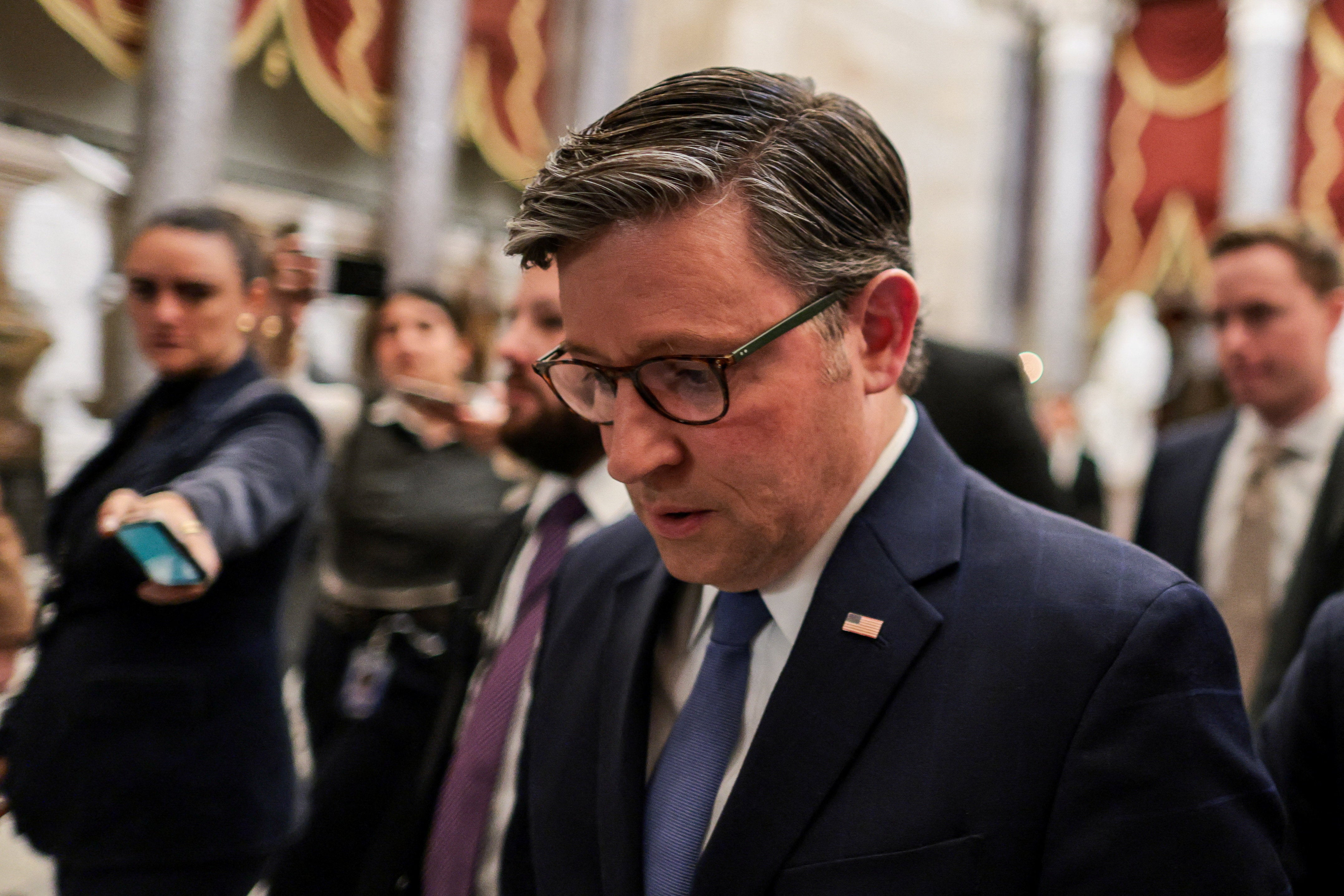
Johnson told reporters Thursday that “the words the president has chosen are not the words I would use,” while insisting Trump was merely “defining the crime of sedition,” which he did not do and is not in itself a federal crime.
He had no response to the barrage of death threats and even bomb threats Members of Congress said the president had called for his execution because Republicans have weakly argued that political violence is a left-wing problem that is not widespread on the right. Meanwhile, Indiana Republicans who opposed Trump’s demand that the state begin redistricting by mid-decade in hopes of changing the results of the midterm elections are also facing death threats from some of the president’s followers.
Republicans eagerly condemned the political violence in the wake of Charlie Kirk’s murder last summer, but the push to punish Democrats for it quickly fell apart on evidence of Trump’s own infatuation with the same concept.
The president called for protesters to be beaten by other attendees at his 2016 rallies. His latest call to kill Democrats for “seditious behavior” is just the latest example in a long line of cases in which Trump or his followers have apologized or joined calls for violence or state repression of his political enemies.
In another Truth Social post this past week, Trump shared a follower’s message demanding that members of Congress be “hanged.” The post could have been taken as outright support for lynch mobs; The US government has not put a prisoner to death by hanging since 1996, and has used the method only three times since the 1960s.
Even Trump’s own press secretary would not directly endorse the legal basis for accusing Democrats of seditious conspiracy last week. She also denied that Trump wanted to see members of Congress executed, despite claiming their actions were “punishable by death.”

“The sanctity of our military rests on the chain of command, and if that chain of command is broken, it could lead to people getting killed. It could lead to chaos,” Karoline Leavitt said.
“That’s a very, very dangerous message, message, and it may be punishable by law. I’m not a lawyer. I’ll leave that up to the Department of Justice and the Department of War to decide,” Leavitt continued.
#Trump #latenight #rant #social #media #demanding #Democrats #jail