

The spark plugs in a gasoline engine are not universal, one-size-fits-all components. Plugs are made from a variety of materials with different electrode arrangements and wire configurations, and knowing the right spark plug type for your car can help maximize your engine’s performance and efficiency. Most should work effectively between 30,000 and 100,000 miles, but if you need to replace your spark plugs more frequently, it could indicate that the spark plugs you are using are too hot or too cold for your engine. There is nothing to be gained by using a plug that is hotter or colder than the owner’s manual calls for, but you will likely run into problems if you deviate from this recommendation.
For example, using a spark plug that is not hot enough for your engine will lead to carbon fouling, while a spark plug that is too hot can cause fatal damage to the engine or its valves. Therefore, we strongly recommend that you stick to the recommended spark plugs in the owner’s manual unless you have made any modifications to the engine. Changes to the air and fuel intake systems may mean you need a hotter spark plug to prevent fouling, and the same goes for retarding the ignition timing. Advancing the timing will increase internal combustion temperatures, which may also require a switch to different spark plugs. The same applies to changes in the compression ratio; higher ratios mean higher combustion temperatures in the cylinder. Whether or not an engine uses forced induction and how you drive also plays a role in spark plug temperatures.
How to tell a hot spark plug from a cold one
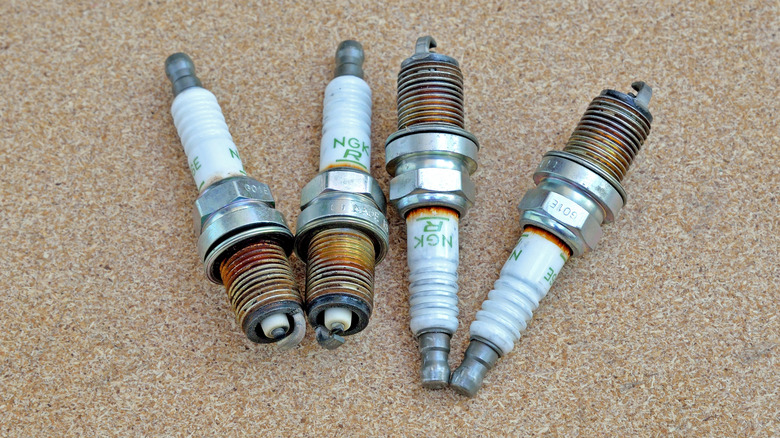
How to identify a plug’s temperature range varies by manufacturer. NGK spark plugs have a numbered heat rating, with 1 indicating the hottest spark plugs and the temperature decreasing as the heat rating number increases. For example, a 2010 Mitsubishi Galant used NGK LZFR6AI Lazer Iridium Spark Plugs with a heat rating of 6. This indicates a colder spark plug suitable for engines with higher compression ratios, such as the 9.5:1 ratio on the Galant’s 2.4-liter four-cylinder. Using a different plug may result in poor fuel economy and poor acceleration.
Regardless of the manufacturer, you can tell a cold plug from a hot one by the length of the insulator nose, the white ceramic collar that covers most of the center electrode. Hot plugs have longer insulator noses that help retain heat for more efficient fuel/air combustion, while cold plugs have shorter noses to allow more heat to escape.
If the tip of a spark plug gets too hot, the fuel-air mixture can ignite prematurely. This is called “pre-ignition” and can damage the internal parts of the engine or the valves. Plugs that get too cold do not burn all the fuel and become contaminated with carbon deposits, reducing the intensity of the spark. For most spark plugs, the optimal ignition temperature is between 500 and 800ºC (approximately 900-1500ºC). Before you buy a set of ‘performance’ spark plugs for your car, keep in mind that spark plugs marketed this way will not necessarily increase engine power. They can complement certain engine modifications well, although you may have to experiment with a few different spark plugs before you find the sweet spot between fouling and overheating. You must also ensure that the spark plug gap is correct before installing each plug.
#pros #cons #hotter #Colder #spark #plugs #Jalopnik