

Let’s look at some historical failures and the invaluable, often painful lessons they left behind.
1. The $300 Million Button: Why a Cash Register Should Never Be a Puzzle
The error: In the early 2000s, a major e-commerce site (widely assumed to be a retailer like OfficeMax or Best Buy) saw a huge drop at the checkout. The perpetrator? A single, poorly designed button on the login/registration page.
New customers were presented with two options: ‘Register’ or ‘Login’. Many, who did not want to create an account just to make a one-time purchase, would abandon their shopping cart. The company spent millions on marketing to drive traffic, but lost it at this critical juncture. A UX researcher, Jared Spool, famously quantified the loss: This single design mistake cost the company approximately $300 million per year in lost sales.
The lesson: Never force a commitment before a transaction. Users want to achieve their goals with as little friction as possible. The “solution” was elegantly simple: replace the buttons with “Continue as Guest” next to the option to register. Sales increased dramatically overnight.
The takeaway: Assign user goals, not business goals, to critical flows. Optimize for the primary user action (purchase) before secondary business goals (data collection). Test, quantify, and never assume you know why users leave.
2. The rebranding that destroyed a city: the Gap logo debacle (2010)
The error: In 2010, iconic American clothing retailer Gap replaced its classic, beloved serif logo (which had more than two decades of brand value) with a new design: a generic, boring sans-serif ‘Gap’ on a gradient blue square. The public outcry was immediate, loud and overwhelmingly negative. Social media exploded with parody versions and customers felt a genuine sense of betrayal. The new logo was seen as cheap, corporate and devoid of the legacy that the brand represented.
The lesson: A brand is a shared relationship, not an asset that needs to be changed unilaterally. Gap made the fatal mistake of not involving the community. They traded a distinctive feature with deep cultural resonance for one that felt focus-grouped and anonymous. The backlash was so severe that Gap returned to the old logo after a short time six days.
The takeaway: Understand your brand’s emotional capital. Major visual changes require empathy and co-creation from the user, not just the whim of a designer. If you need to evolve, do it gradually and with clear communication about the ‘why’.
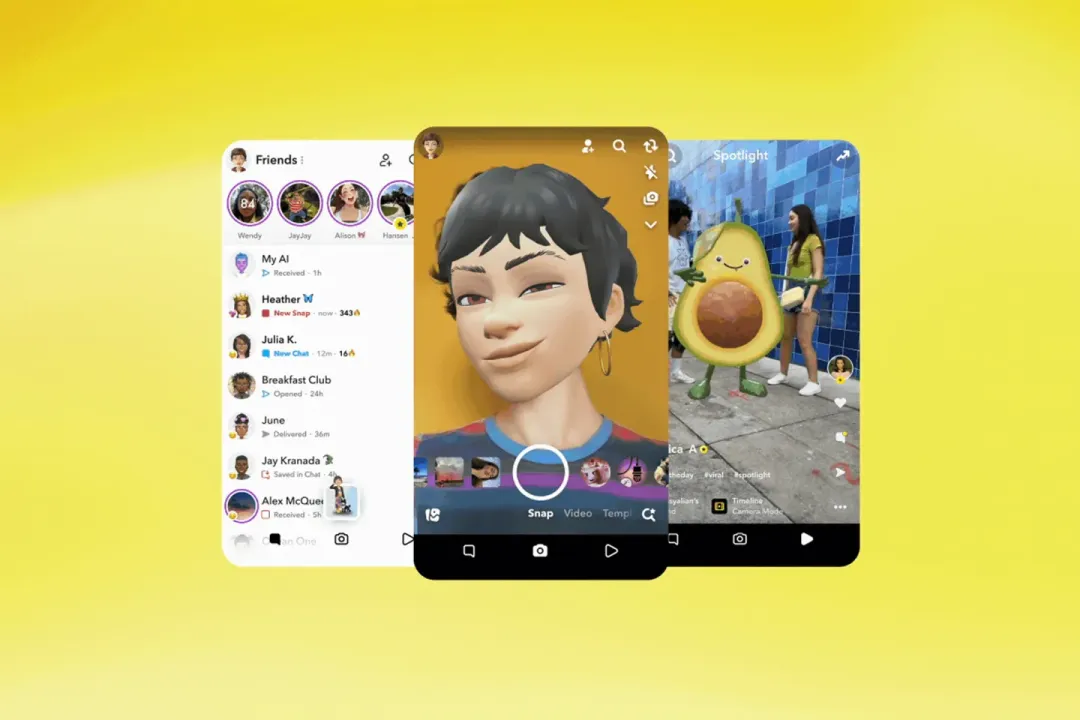
3. The Update That Disappeared a Billion-Dollar Feature: Snapchat’s 2018 Redesign
The error: In 2018, Snapchat launched a radical app redesign which separated social content from publisher content and, most controversially, algorithmically mixed friend stories with direct messages. The goal was to streamline and attract new users, but it alienated the core user base. They found the new layout confusing and frustrating and it broke their established social customs. More than 1.2 million users signed a petition asking for a refund. Snapchat’s parent company, Snap Inc., was estimated to have lost Market value of $1.3 billion in the weeks following the update.
The lesson: Don’t fix what isn’t broken for your most loyal users. The redesign solved a business problem (monetization and growth) but created serious user problems (broken mental models, lost usability). It didn’t take into account how a dedicated community actually used the product.
The takeaway: Major UX overhauls should be validated with your existing power users, not just tested for new user onboarding. Change must be iterative and respect established user behavior. Communicate changes transparently and ensure opt-in periods.
4. The Tone Deaf Algorithm: Apple’s “Bendgate” (2014)
The error: When the iPhone 6 launched, users reported that the larger, thinner phones would bend in their pockets under normal pressure. Instead of a direct, empathetic response, Apple’s initial design-focused response was widely seen as dismissive, stating that the bend was “extremely rare” and suggesting it was a result of abuse. This technical and PR error, dubbed ‘Bendgate’, suggested that the company had prioritized form over basic functionality and durability, damaging its reputation for impeccable engineering.
The lesson: Overconfidence in design is a critical vulnerability. When a physical design flaw affects functionality, technical specifications are not a substitute for responsibility. The fault was not just the thin alloy, but also the inability to anticipate real-world stress and the subsequent inability to communicate humbly.
The takeaway: A user-centered design should include real-world stress testing and a plan for failing gracefully. How a company handles a design flaw is part of the overall user experience. Empathy should extend to customer support and public communications.
5. The Confusion That Collapsed a Market: Knight Capital’s “Power Button” (2012)
The error: In perhaps the most expensive UI mistake in history, a financial company, Knight Capital, implemented new trading software in 2012. The new system had a hidden, unused feature called ‘Power’ switch in the deployment interface. An engineer reactivating old servers accidentally activated this ‘Power’ button on eight production servers. This triggered a rogue algorithm that lost $440 million in 45 minutes, forcing the 40-year-old company into bankruptcy.
The lesson: For critical systems, user interface clarity is a matter of survival. This was a catastrophic failure of affordability and safety design. A button with enormous destructive power was presented with the same casual label as a desk lamp switch, with no confirmation, no undo and no adequate fail-safes.
The takeaway: Design for worst-case scenarios. In high-stakes environments, interfaces require intentional friction (confirmations, permissions), clear signaling of destructive actions, and immutable security protocols. The cost of a confusing button can be existential.
The common thread: a lack of empathy
In these vastly different scenarios, from a payment button to a stock market algorithm, the root cause is the same: a mismatch between the designer’s intent and the user’s reality.
The lessons provide a timeless checklist for disaster prevention:
- Observe, don’t assume: Use data and testing to understand real user behavior, not internal hypotheses. (The $300 Million Button)
- Your brand is not just yours: Respect your community’s emotional investment. (Hole)
- Repeat, do not delete: Develop established UX with care for your core users. (Snapchat)
- Design for reality, not ideals: Test for errors and misuse, not just perfect use. (Bendgate)
- Clarity over cleverness: In critical flows, ambiguity is the enemy. (Knight’s Capital)
These costly mistakes are not just historical footnotes. They are the most powerful curriculum we have. They teach us that good design is not a luxury, but the essential framework that builds trust, enables functionality and ultimately protects value. In a world increasingly based on digital experiences, the price of bad design has never been higher.
About the author

#Costly #Design #Mistakes #Tech #History #Learned