

Here are 10 things you should avoid in 3D printing whenever possible.
Cable clips
Cable clips are available in almost every color and design at a better price than you can print at home. You can find clips that already have adhesive strips attached or pins that are ready to tap into. You can get them in packs of 60, 100, 400 or more (and the more you buy, the cheaper they become).
If you need something sturdier, they are still only a dollar or so each if you look in the right place. The time and material costs usually make it not worth it to do your own printing unless you have a very unique use case in mind.
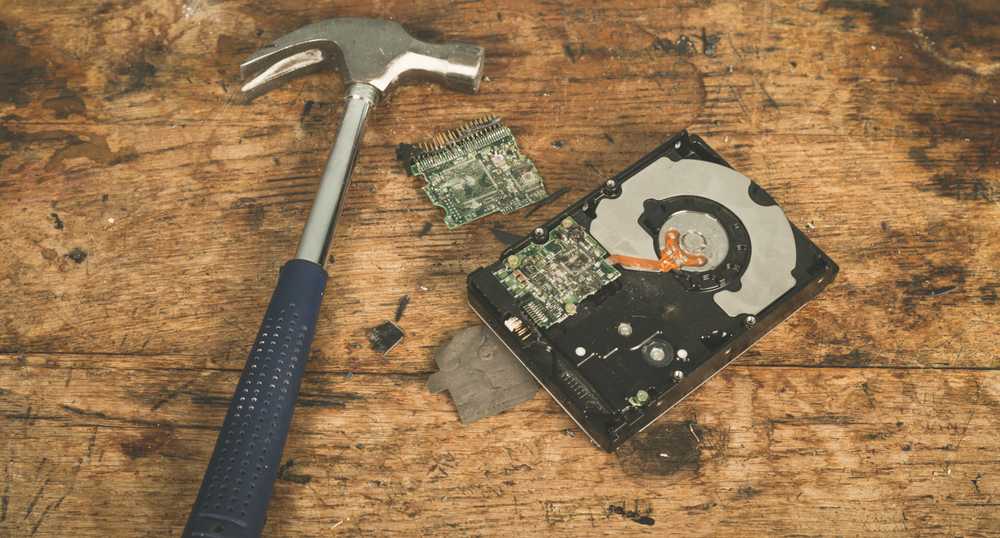
Some tools can definitely benefit from a 3D printer, such as battery holders for power tools and router jigs for getting the perfect cut. That said, 3D printed tools that put pressure on them, like wrenches or hammer handles, are probably not worth it.
A tool is only as strong as the material it is printed with, and the stronger the filament, the more the tool will cost you. Since tools that need to be reliable will use more filament, you’re probably better off going to the hardware store and buying something more affordable that’s made of wood, metal, or injection-molded plastic.
Reinforcement chairs
Rebar seats sit under a piece of rebar so that when you pour concrete on top of them, the rebar sits in the center of the layer. You can find models for this on many 3D printer marketplaces, but to withstand the weight of the reinforcement they need to be quite sturdy.
Since you can buy these chairs for less than a dollar each at hardware stores (with the price dropping dramatically if you buy them in bulk), it’s best to avoid wasting your time or filament on them.
Storage containers

3D printed storage solutions can be some of the most useful things you ever print. Gridfinityfor example, is a modular and open-source storage system that allows you to design custom bins and base plates to keep items organized, regardless of the size of the drawer.
But 3D printing simple storage containers that you can buy for a few cents at the dollar store, or something that is designed to be “rugged” and thus requires a more substantial commitment of filament, is probably not worth it. Pelican brand cases are known for their robustness and water resistance, with a price tag to match, but at hardware stores you can find many similar products at lower prices that will outlast any 3D printed model.
Trinkets that just collect dust
This one might be a little controversial, and I’ll be the first to say that you should print things that you like, that make you happy, and that you want to look at. But it’s no secret that 3D printing has a plastic waste problem. To me, nothing is more blatant than those multi-colored articulated dragons that appear everywhere from shopping centers to market stalls.
The problem with many 3D printed items is that they can look cheap, especially unfinished straight from the printer. It’s one thing to design, prime, and paint miniatures for a specific purpose, but it’s another to dedicate rolls of filament to items that do little other than collect dust that you quickly tire of looking at.
A few thoughtful items from your favorite movies and games? Great. A fidget toy that sits on your desk to curb your doomscrolling? Fantastic. An articulated octopus that shatters into a hundred pieces the first time you drop it? Passage.
Fasteners

Screws, bolts, nuts, washers, and any type of threaded fastener are probably not worth the time or effort of 3D printing. Not only are these cheap, but they are usually made of metal which is much more durable than any 3D printer filament. The wires are also well defined, something that is difficult to achieve with a 3D printer.
Instead, you can 3D print yourself a kind of Gridfinity organizer to salvage, sort, and store any fasteners you buy or from other items for use in your projects.
Everything that comes into contact with food
There are so many reasons to avoid 3D printing objects used for food, but model warehouses are littered with items anyway. Some will point to the fact that PLA and PETG filaments are generally considered food safe, but there is more to it than that.
Filament itself can contain all kinds of impurities, which is one reason why it might not be a good idea to share your poorly ventilated living space with a 3D printer. Because 3D printers work by adding filament layer by layer, it is possible that moisture and bacteria can penetrate these layers, making them difficult to clean and causing bacterial growth over time.
Even the nozzles of 3D printers can be a concern, as many have a non-stick coating that helps prevent clogs. Over time, this coating can wear away and deposit in the prints. Some recommend using a food-safe sealer on any item that will be near food, which further increases the cost and effort.
For safety’s sake, it’s better to just buy something that is already food-safe.
You can buy large items for a few dollars

There are some good arguments for printing small, custom items that are difficult to find in a store. The cost of materials is often worth it to get something that works perfectly. You can pay the shipping costs and wait a few days for an item to arrive, or you can 3D print and deploy the item within an hour.
Larger items have much higher material costs and take much longer to print. I’m talking about wastebaskets, decorative plant pots, vases, and other items that can typically be found in more durable forms for less money.
Solutions where wood is a better choice

The great thing about 3D printing is that you can design completely custom items to solve any problems you may have. Sometimes this is absolutely worth it. Other times there is the appeal of a wasteful model that fits just right can cloud your judgment.
For example, I remember a post where someone had extended the legs of their sofa by designing a print that fit perfectly and reached the desired height. While impressive, the amount of filament required and the potential durability issues left many commenters wondering why they hadn’t just used wood.
The same often applies to thin solutions, such as a riser that can be cut from a thin sheet of plywood.
Banks

A Benchy is a small boat, so called because it was designed as a method to benchmark your 3D printer. While this type of model certainly has its place, it has little practical use for most users and just wastes time and filament. Unless you test 3D printers for a living, you’ll probably never have to print a Benchy.
Resist the urge to make this your first 3D print and choose something useful instead.
Hungry for more 3D printing hot takes? Here are five uncomfortable truths you need to hear.
#internet #telling #print #dont