

The automotive technologies we all enjoy today are evolutions of similar equipment first tested in vintage cars. Before LED, HID and halogen headlights became standard, the first cars had carbide or acetylene headlights that had to be lit with matches to produce light. And while almost all new cars, trucks and SUVs today have touchscreen infotainment systems, in 1956 Chrysler unveiled an in-car turntable system called the Highway Hi-Fi — although having a vinyl record player in a car didn’t work as planned, because the damn thing skipped more than it played tunes, and required special records that played at half the normal 33⅓ rpm.
Likewise, before power windows became mainstream, roll-up windows were first in line, requiring you to manually crank them to raise or lower the glass. Everything changed when Packard unveiled the first power windows in its 1941 model year Custom Super Eight 180 touring sedan.
On the other hand, the Packard’s power windows had hydraulic drive systems with an astonishingly complex web of electrically driven pumps, door pressure cylinders, and hydraulic lines initially designed to operate the power-folding hardtops and power-adjustable seats of convertibles and sedans.
Ford and Cadillac also introduced power windows in 1941
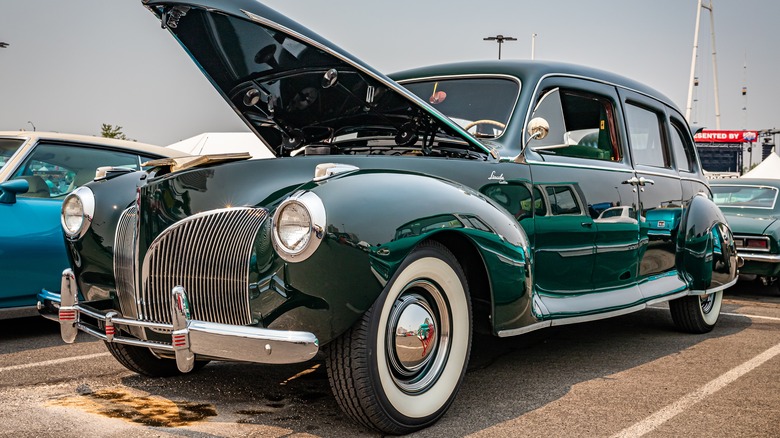
Cadillac wasn’t left in the dark either, being the first to install a power glass window divider to prevent the driver from eavesdropping on the conversations of his deep-pocketed rear seat passengers. Unlike Ford’s electric-hydraulic windows, which worked similarly to Packard’s system, Cadillac’s window divider was all-electric, but the side windows did not raise or lower.
As with many innovations, the Packard’s electric-hydraulic windows were far from perfect. Fluid leaks were commonplace, and the complex installation made the system finicky and unreliable at best. The first true power windows made their debut in the 1951 Chrysler Imperial, which also featured innovations such as Hydraguide power steering, an optional Fluid-Matic Drive automatic transmission on some models and a killer FirePower Hemi V8 engine that produced 180 horsepower.
Crank windows are making a comeback in the Amazon-backed Slate electric pickup, and certain Jeep vehicles like the Wrangler and Gladiator kept them until the 2025 model year. But power windows are here to stay, and we can thank Packard, Chrysler, Ford, Cadillac, and other vintage automakers for testing and refining the high-tech features found in modern cars.
#car #power #windows #older #Jalopnik