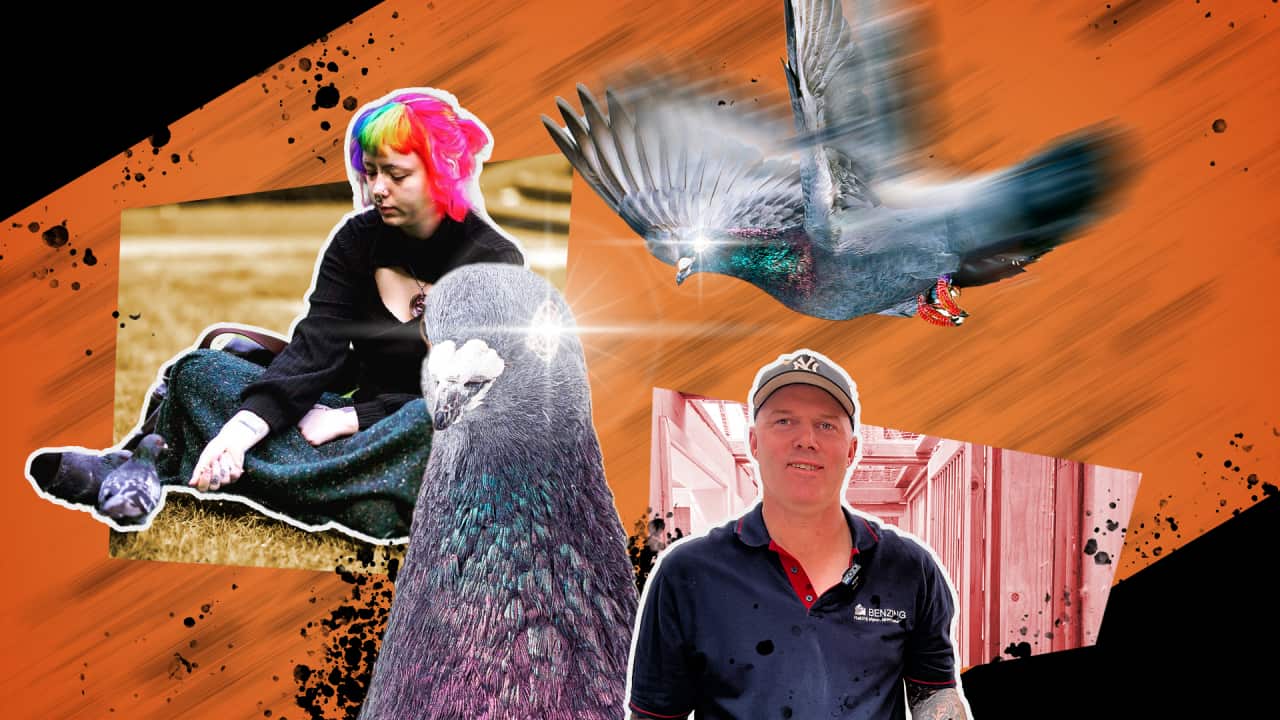
She is a ‘crazy pigeon lady’. He wants to revive a dying sport. This bird is their obsession

She is a ‘crazy pigeon lady’. He wants to revive a dying sport. This bird is their obsession

7 minutes, 57 seconds Read

They may have a reputation for being “rats with wings”, but to some the humble pigeon is an “athlete of the air”. At least that’s how Stevan Gazzola sees them.
He keeps about 2,000 homing pigeons in his backyard, an hour outside Melbourne, and has raced them for more than 30 years.
“I started when I was 16 and have been racing on and off for thirty years now. This year we won the overall championship,” Gazzola told SBS News. “It’s in the blood.”
Still, his Italian family was stunned when he first took up the sport.

“My uncle told me I was hunting the wrong kind of birds,” he says. “It just grew. I’m too far into it. I even bought land just for pigeons.”

The ‘dying’ world of pigeon racing

Hoping to revive a sport that he believes is quietly disappearing, Gazzola launched the Meadow One Loft Race four years ago.

Hundreds of pigeons are entered from all over Australia each year – owners pay $350 per bird – and Gazzola takes them in, vaccinates, feeds, trains and ultimately releases them up to 400km away to race home.

Stevan Gazzola has played with pigeons most of his life. But he fears the sport is dying out. Source: SBS news

“People from all over Australia send me their baby pigeons,” he says. “We pick them up from the airport, vaccinate them, care for them, train them and let them go.”

The training is built up gradually: first short flights around the block, then 10 km, then 50 km, then 100 km, and so on. He has seen top pigeons fly 1,000 km in eight hours.
The final race offers the winner $75,000, with a total payout of approximately $250,000. But abroad it’s a different story.
“They’re racing for a million dollars,” he says. “I can send pigeons to Thailand – it costs $1,000 per pigeon to participate – and they race for $2.5 million in prize money.”

Yet he says it is not a money-making sport because the small amount of money he might win on local flights goes straight back to the pigeons. “You don’t do this to get rich,” he says.

A sport that has run out of time

But Melbourne’s pigeon racing scene is dying.
Membership at Gazzola’s local club has dropped from about 300 to about 90.

Racers get older. Many have a pension. Keeping birds requires space, money, time and physical labor – all of which are becoming increasingly scarce.

A bowl with dried leaves and small eggs in it.

Stevan Gazzola says breeding pigeons is a science, especially if you want them to be racers. Source: SBS news

“They’re just dying out. There’s no young people coming in,” he says. “You do all the hard work and try to keep it going, but as the boys get older they die or give up because they can’t do it anymore.”

Some owners send their pigeons to Gazzola, who becomes a kind of foster carer – feeding, housing and training birds for those who cannot.
Still, he has noticed a small resurgence in young immigrant communities. “Many young Filipinos and Afghans get their money’s worth here,” he says.
‘Forty years ago there was nothing to do. You played football or cricket – or played with pigeons.

“But it’s a dying sport. Who wants to clean up pigeon droppings in their backyard these days?”

Enter: The ‘crazy pigeon lady’

In Melbourne’s CBD the scene couldn’t be more different.
Tahlia – known as ‘Frill’ to her more than 300,000 social media followers – can often be found outside Victoria’s State Library, surrounded by a cloud of pigeons.

The 26-year-old – and her rainbow-colored hair – started posting videos of herself and pigeons in January and within months her content went viral.
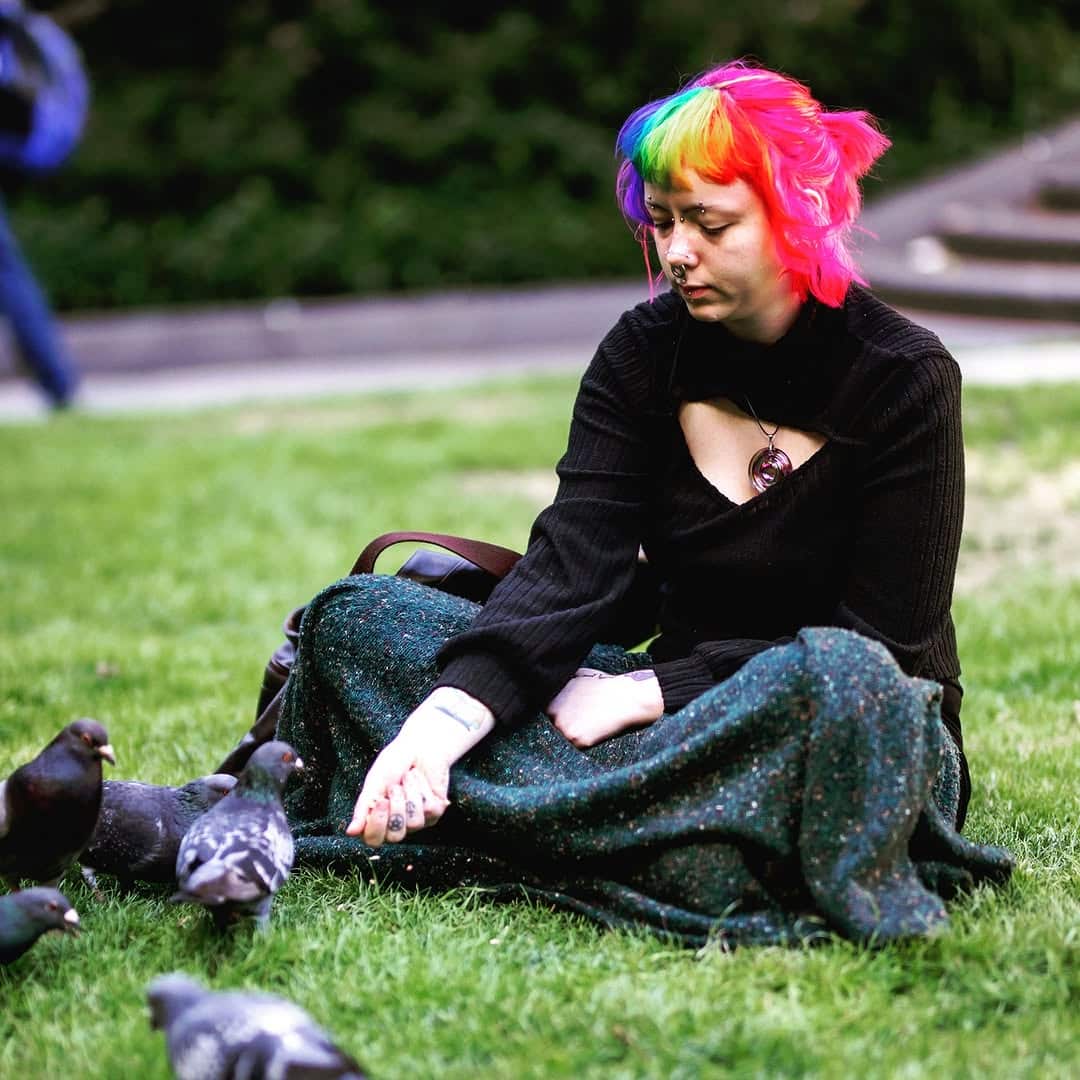
A woman with brightly colored hair sitting on the ground with pigeons.

Frill, 26, finds and treats string-footed pigeons in hopes of changing people’s perception of the humble bird. Source: Delivered / Instagram / Frill_underscore

“I’m the crazy pigeon lady,” she jokes. “It’s nice that everyone is tuning in to the pigeons, but if I’m honest, the hair probably had a lot to do with it.”

In her shopping bag are the tools of the trade: birdseed, disinfectant, nail scissors and a sock she calls “pigeon prison.”
Her mission: to find and treat “string-footed pigeons,” whose toes have been strangled by string, wire or human hair – leading to a painful condition that can cut off circulation and sometimes lead to the loss of toes, or even the entire foot.
To help a pigeon, she gently lures it to her with seed, pounces on it and puts it in the sock so that it cannot fly away. She then cuts the string away from his feet – a task that can take up to twenty minutes.

“This is probably a thread from a garment, that’s quite common,” she says as she unties one. “Often, human and pet hair can also get stuck around their feet.”

She learned these skills from rescue groups in Melbourne, filled with “pigeon enthusiasts”. While she started with cases of wire feet, she now also takes sick or injured pigeons home for rehabilitation. She always carries a box with her when she goes out “just in case”.
“Stringfoot is a small symptom of a bigger problem,” she says. ‘Humans cause man-made problems that affect all the animals around them.
“Even [a person’s] her can do this to them.”
Most days a small crowd gathers to watch her feed the birds. Ask children to hold seeds. Teenagers hover, half curious, half mocking.
“Usually you get a group of people who want to participate,” she says. “Others will make fun of me… I get a lot of people doing drive-by insults.
“But a lot of people are genuinely curious… I’ve had people think I was torturing or kidnapping a pigeon!”
Frill’s favorite birds are Dovey, a gentle white dove who sits on her shoulder, and Chicken Boy, who somehow always attracts another bird to sit on him.
She is also outspoken about the sport: “I think pigeon racing is outdated.”

“Most pigeon fanciers lose part of their loft every year. They die, or they get lost and join other flocks. Very often they collapse from exhaustion… this does not benefit the animal at all.”

A woman wearing a red hat that reads 'Duck Rescue' with her arms crossed.

Georgie Purcell of the Animal Justice Party says the humble pigeon – or ‘rock pigeon’ – is a misunderstood, intelligent animal. Source: MONKEY / Diego Fedele

The RSPCA says pigeon racing poses “many welfare risks”, including susceptibility to predation, high physical demands on their bodies and some birds veering off course and not returning home.

Animal Justice Party MP Georgie Purcell also condemns pigeon racing and says our perception of the bird must change.
“I am strongly against this toxic so-called sport,” Purcell told SBS News.
But Gazzola says that while he understands the views that racing can be cruel, bird welfare is the basis for his activities.
“Our pigeons are bred for endurance and are gradually conditioned with structured training, veterinary supervision and careful monitoring,” he says.

“When the sport is practiced responsibly, with proper health checks, controlled training, safe racing routes and strong supervision, the birds compete in a way that suits their natural instincts to fly, navigate and return home.”

An underestimated bird

Purcell is one of many who make up Team Pigeon – including actress Sarah Paulson, who recently steadfastly defended the bird and called for an end to ‘pigeon hatred’.
“Pigeons are the best example of humanity’s victims,” says Purcell.
‘They are animals that people used and domesticated for a specific purpose, then immediately discarded them when they were deemed no longer useful.
“Now we treat them as if they are a nuisance or something that needs to be eradicated.”
She says people often underestimate the humble pigeon.

“As highly social animals, pigeons mate for life, and they are a true representation of equal care responsibilities, with both female and male pigeons working together to raise their young,” Purcell said.
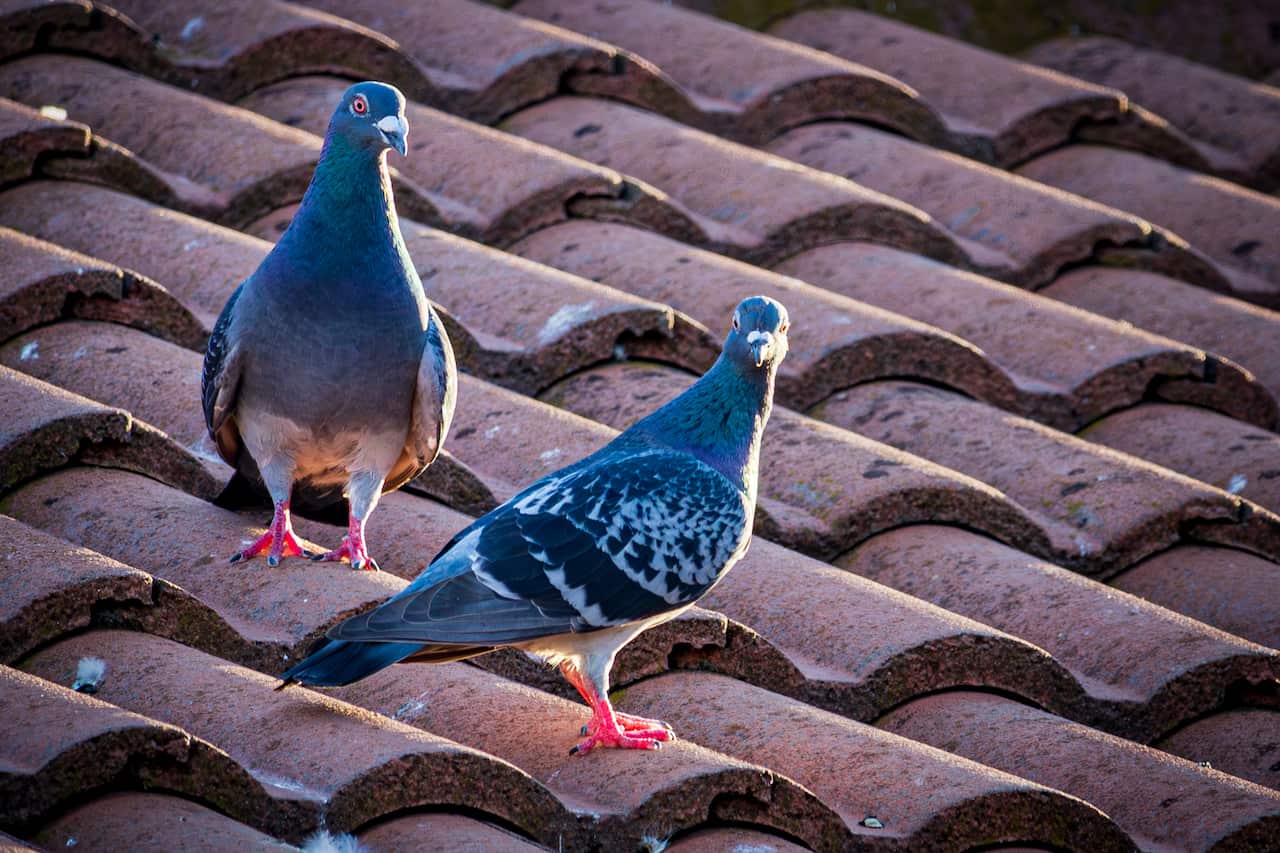
Close-up of pigeons sitting on a roof.

Georgie Purcell says pigeons are the “best example of humanity’s victims”, previously domesticated and then left to fend for themselves. Source: Getty / Alwin Sun

Pigeons can count as well as primates, a Research from 2011 suggestedwith a task that shows they have the ability to count from one to nine. However, they are not fast learners. While monkeys could learn the skill in a few months, the precious pigeon took a year to be trained.

Rats with wings?

Despite their differences, both Gazzola and Frill want people to reconsider the humble pigeon.
“When you mention pigeons, people say they are rats with wings,” says Gazzola. “They think of what we do here as the average street pigeon that picks chips in the city and causes a nuisance.”
But he says his birds are “probably kept better than how some people live.”
“They are climate controlled, heated and the food is spotless. We source the best vitamins from all over the world. There is no stone left unturned that they won’t ingest,” he says.
“They are athletes from heaven.”
Frill agrees that pigeons deserve care, but wants this care to apply to all of them.
“A lot of people say they’re rats with wings – I love rats too, so that’s no insult to me – but it’s a derogatory thing to say they’re dirty and take up space on the street,” she says.
She wants to break that stigma: “They have their own lives and feelings and they have a very complex social life.”
She also hopes her content will make people think more deeply.
‘I want people to appreciate every animal – even little street pigeons that people might not care about.
“I want people to think more about the world around them and other animals, and how we influence them.”

#crazy #pigeon #lady #revive #dying #sport #bird #obsession

Similar Posts

Leave a Reply

Your email address will not be published. Required fields are marked *