
Over the past quarter century Shaktar Donetsk has transformed from mere contenders to all-conquering champions in Ukrainian football. Founded in 1936, Shakhtar won its first trophy in eleven years (and first since the fall of the Soviet Union) after winning the 1994/95 Ukrainian Cup, before claiming two more Ukrainian Cups in 1996/97 and 2000/01. And in 2001/2002, Shakhtar won the Ukrainian Cup and the first-ever Ukrainian Premier League title, ending Dynamo Kyiv’s run of nine straight league titles.
The rest, as they say, is history. Shakhtar has won a record 15 Ukrainian Cups and nine Ukrainian Super Cups, while also winning 15 of the last 24 league titles (two less than Dynamo Kiev). On the continental stage, the club won the 2009 UEFA Europa Leaguereached the knockout rounds of the UEFA Champions League in 2011, 2013, 2015 and 2018, and reached the semi-finals of the Europa League in 2016 and 2020. There are quite a few reasons behind Shakhtar’s meteoric rise, but a major factor is the arrival of Serhiy Anatoliovich Palkin.
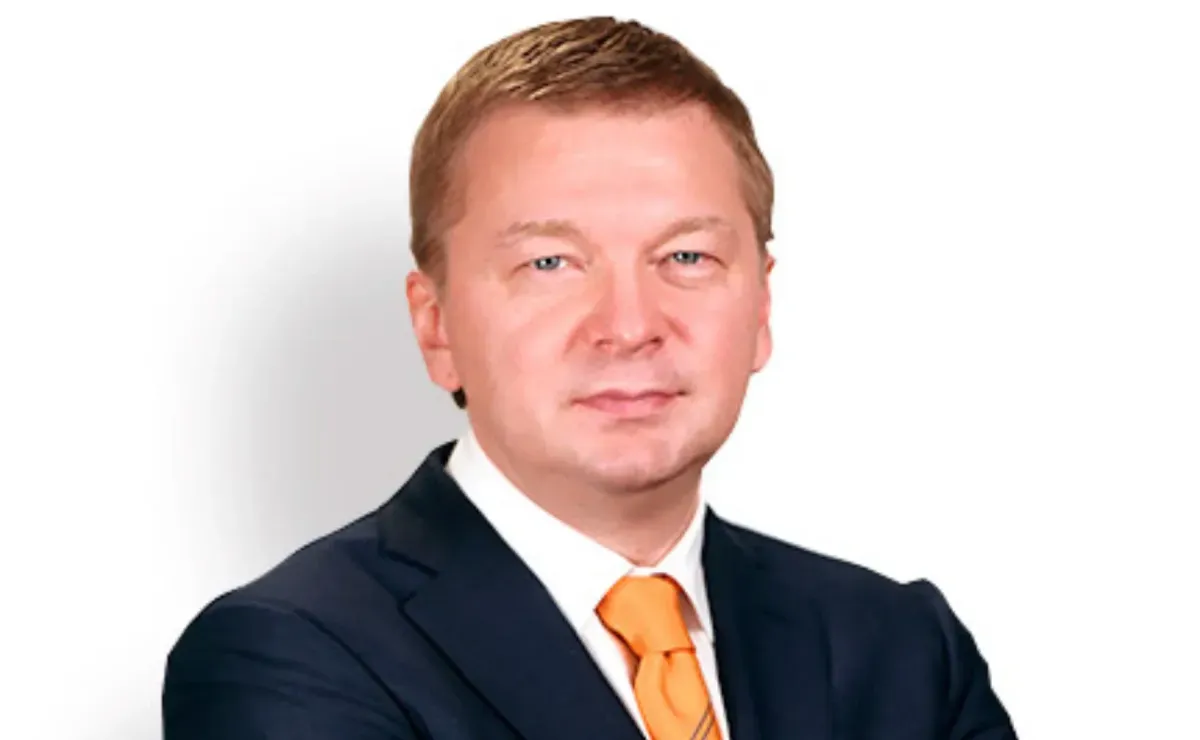
Born on October 22, 1974 in Kryvyi Rih, Palkin graduated from the National Academy of Management in Kyiv and worked as a Senior Accountant for Coopers & Lybrand JV between 1997 and 2001. He then took the position of Deputy CEO for Budgeting and Economics at Kryvyi Rih Cement & Mining Plant JSC in 2001, eventually rising to become Director of Economics and Finance. Palkin made the move into the sport when he joined Shakhtar as Chief Financial Officer on 3 June 2003; a few months later, he was promoted to CEO, a role he has held ever since.
“No two weeks are ever the same. Football is fast-moving: it is not just a sport, it is a social and economic phenomenon,” Palkin stated in an exclusive World football conversation interview. “Of course there are strategic matters that I keep a close eye on, such as our direction and the pace of our development in the long term. But there are also day-to-day operational matters: from results on the field to unexpected problems that constantly arise. It is a job that never stands still.”
Thanks to Palkin’s guidance, the unprecedented prosperity of owner Rinat Akhmetov and the proliferation of Brazilian stars like Willian, Fernandinho and FredShakhtar has managed to consolidate a domestic and international dynasty. However, it has not been without its fair share of difficulties.
In 2009, Shakhtar left the 73-year-old Central Stadium Shakhtar and moved to the Donbas Arena worth $400 millionwhich had a capacity of 52,187 spectators and hosted several matches during Euro 2012. Less than five years later, Shakhtar was forced to vacate its state-of-the-art stadium after Russian-backed paramilitaries seized towns in Ukraine’s eastern Donbas region and declared the Donetsk People’s Republic (DPR) and the Luhansk People’s Republic (LPR) as independent states. As the stadium is destroyed by artillery shelling, Shakhtar is forced to move from Donetsk to Lviv and Kharkov. On the continental front it is more of the same; Since Russia’s full-scale invasion in 2022, Shakhtar has been forced to play its European matches outside Ukraine, from Warsaw in 2022/23 to Hamburg in 2023/24 to Gelsenkirchen in 2024/25. This season the club has had two host cities, starting in Ljubljana before moving to Kraków.
“From the first day of the massive invasion, life in Ukraine changed completely. Millions lost their homes, jobs, plans – and many lost their loved ones defending our country. Did Russia pay the price? Not at all. The world must be stronger and more united in resisting their ideology of destruction and aggression. International law must mean something – otherwise humanity itself is in danger.”
The seemingly endless war has not only led to increased violence and bloodshed in Ukraine, but has also caused Ukraine’s domestic competition to decline. Shortly after the invasion, FIFA announced that foreign players from Ukrainian and Russian clubs could unilaterally suspend their contracts and leave, allowing the likes of Manor Solomon and Tetê to leave Shakhtar for a bargain, or not at all. Shakhtar claimed £43 million in damages from FIFA, but ultimately lost the case at the Court of Arbitration for Sport. As a result of this player exodus, the majority of Ukrainian Premier League clubs are in a financially precarious position and are doing everything they can to stay afloat.
“In 2021, Ukraine ranked twelfth in the UEFA coefficient table – now we are 28th. For the first time in modern history, we do not have a team in the group stages of the Champions League or the Europa League. Some clubs have even stopped their activities. Many Ukrainian Premier League teams have recently been promoted from lower divisions. Ukrainian football is surviving, but is in crisis mode due to the ongoing war.”
Despite being a refugee in his own country, and despite having to play his ‘home’ UEFA matches in seven different cities in three countries since early 2014, Shakhtar has been able to maintain themselves as one of the country’s top teams thanks to an increased reliance on homegrown players like Mykhailo Mudryk, Anatoliy Trubin and Georgiy Sudakov. This year, Shakhtar expanded its world-renowned youth production to the United States after launching an academy in Horsham, PA, on June 18, open to children ages 3 to 15.
Shakhtar is not only looking for the next great footballer from Pennsylvania after Christian Pulisic, Jason Shokalookand Cavan Sullivan; The club is also making a name for itself in the Garden State after opening an academy in Clifton, NJ, on September 7. Shakhtar connected with Ukrainian communities in the United States who wanted to bring their passion for the miners to the U.S. to essentially franchise the brand and youth development abroad. Both academies offer a free first session and various training methods for children aged 3 to 14, with franchisees buying in for a starting fee of $20,000, and paying in installments depending on the success of the academy.
“Our franchise model is very flexible and affordable: approximately $20,000 to start. There is also the option to pay in installments depending on the success of the school. That makes it low risk and attractive for partners looking to join the Shakhtar network. The goal, of course, is for each franchise to become profitable over time. Right now the focus is on brand development and building local expertise. We are not looking for the first team yet, but once we have established ourselves and the market better understand, the identification of talents will Of course, we become part of the process. Each country has its own specificities. Setting up the school did not take long: as in other countries, our American academies are managed by Ukrainians who share our vision.’
After missing out on a fourth consecutive title in the 2024/25 season after finishing eight points behind Dynamo Kyiv and five points behind second-placed Oleksandria, Shakhtar have bounced back impressively in the first half of the 2025/26 season with 42 goals scored so far, seven more than any other team in Ukraine. They sit second in the table, on 35 points equal to leaders LNZ Cherkasy and five above third-placed Polissya, while they also sit second in the UEFA Conference League with 12 points from five games so far.
#Shakhtar #CEO #Serhiy #Palkin #Ukrainian #football #surviving #crisis #mode #due #ongoing #war