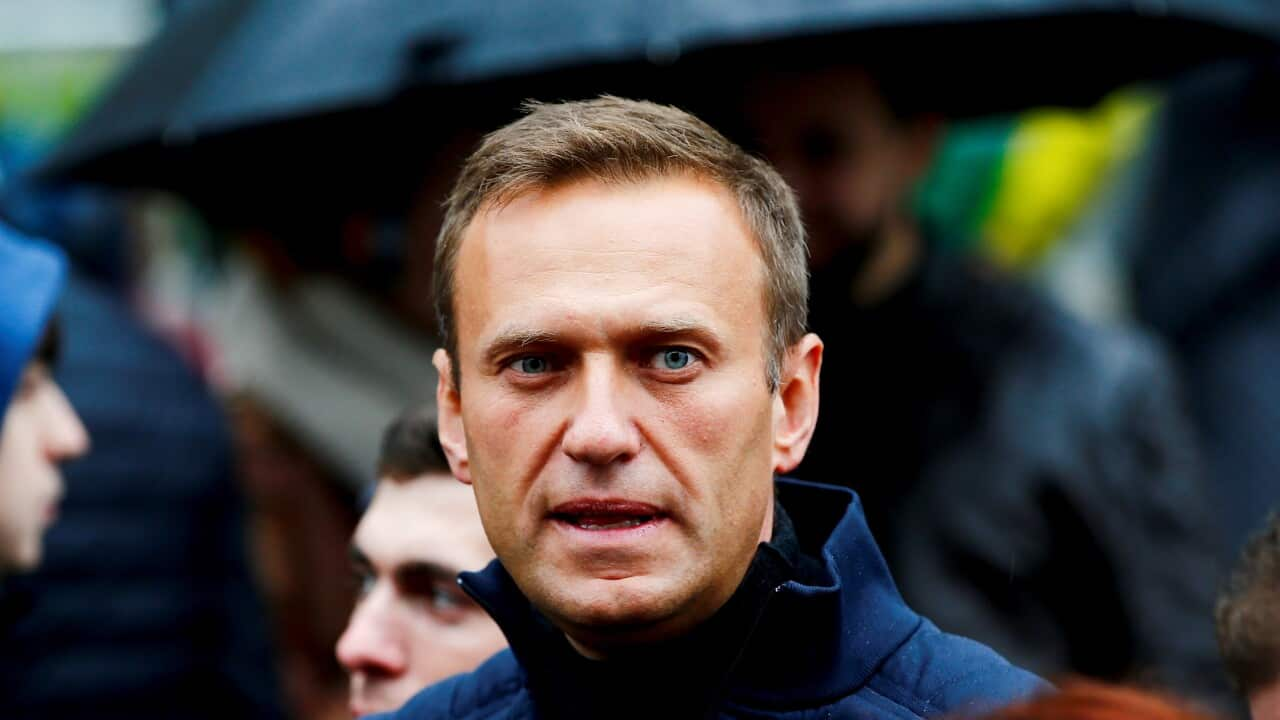

Five European countries, including Britain, France and Germany, said on Saturday that Russian opposition leader Alexei Navalny was killed by a “rare poison” from a dart frog and that the Russian state was the main suspect.
Navalny, a staunch critic of Russian President Vladimir Putin, died in a Russian prison on February 16, 2024 while serving a 19-year sentence.
“Britain, Sweden, France, Germany and the Netherlands are confident that Alexei Navalny was poisoned with a deadly poison,” the countries said in a joint statement released at the Munich Security Conference.
According to European states, laboratory analyzes of samples from his body found a toxin in the skin of South American dart frogs known as epibatidine.
“Russia claimed that Navalny died of natural causes. But given the toxicity of epibatidine and the reported symptoms, poisoning was most likely the cause of his death,” the statement said.
“Navalny died while in prison, meaning that Russia had the means, motive and opportunity to administer this poison to him,” the countries said.
The British Foreign Office said separately that “only the Russian state had the means, motive and opportunity to deploy this deadly poison.” It added: “We are holding fast [Russia] responsible for his death.”
British Prime Minister Keir Starmer praised Navalny’s “courage in the face of tyranny” in a social media post, decrying “Putin’s murderous intentions.”
The Kremlin has not yet responded to the allegations. The spokeswoman for the Russian Foreign Ministry and Moscow’s embassy in London dismissed the Western report.
Putin said in 2024 that Navalny had “died.” The opposition leader died shortly before the presidential elections in Russia.
Navalny’s widow responds
Navalny’s widow, Yulia Navalnya, said it was now “scientifically proven” that the Kremlin opponent had been killed.
“Two years ago I came here on stage and said that it was Vladimir Putin who killed my husband,” Navalnaya said on the sidelines of the conference in Germany.
“Of course, I was sure it was a murder… but then they were just words. But today these words have become scientifically proven facts,” Navalnaya added.
Navalnaya said last September that laboratory analysis of smuggled biological samples showed her husband had died from poisoning.
“Today, standing alongside his widow, Britain is shining a light on the Kremlin’s barbaric plot to silence his voice,” British Foreign Secretary Yvette Cooper, who met Navalnaya while attending the Munich conference, said in a statement.
French Foreign Minister Jean-Noel Barrot “paid tribute” to Navalny after the findings.
“We now know that Vladimir Putin is willing to use biological weapons against his own people to stay in power,” Barrot said in a post on X.
Swedish Foreign Minister Maria Malmer Stenergard said: “I am proud that together we have been able to contribute to uncovering the truth and that the evidence is now available to hold Russia to account.”
Moscow has never fully explained Navalny’s death. He has only said that he became ill and collapsed while walking through his prison colony in the Arctic. Navalny and his foundation were deemed “extremist” by Russian authorities.
Russia reported to the chemical weapons watchdog
The European countries said they had reported Russia to the global chemical weapons watchdog – the Organization for the Prohibition of Chemical Weapons – over the findings.
We are further concerned that Russia has not destroyed all its chemical weapons,” the countries said, accusing Moscow of violating the Chemical Weapons Convention.
Navalny was previously poisoned in 2020 with the Soviet-era nerve agent Novichok while campaigning in Siberia and was flown on an emergency evacuation flight to Germany, where he spent months recovering.
Upon his return to Russia in January 2021, he was jailed and convicted on a range of charges, including ‘extremism’, but continued to campaign against Putin and Russia’s invasion of Ukraine behind bars.
Putin’s main political opponent, Navalny, was the only opposition leader who could spark major protests in Russia.
Public displays of opposition to Putin within Russia have become exceptionally rare since Russia invaded Ukraine in February 2022 and pressured dissenters and critics of the war.
For the latest news from SBS News, download our app And subscribe to our newsletter.
#Russia #poisoned #Alexei #Navalny #frog #poison #British #European #allies