‘Punish trauma’: Experts say proposal to fix ‘crime capital’ could have opposite effect

‘Punish trauma’: Experts say proposal to fix ‘crime capital’ could have opposite effect

4 minutes, 59 seconds Read

Experts warn the Victorian government’s ‘Adult Time for Violent Crime’ scheme for youth offenders could have a ‘catastrophic’ impact on disadvantaged young people and question whether it would prevent crime in the community.
Kathryn Daley, a former youth worker who has become deputy director of the Social Equity Research Center at RMIT, said the proposed reforms risk long-term social harm “at the cost of giving in to a media storm in an election cycle”.
“It will have a catastrophic effect on some people’s lives,” she told SBS News.
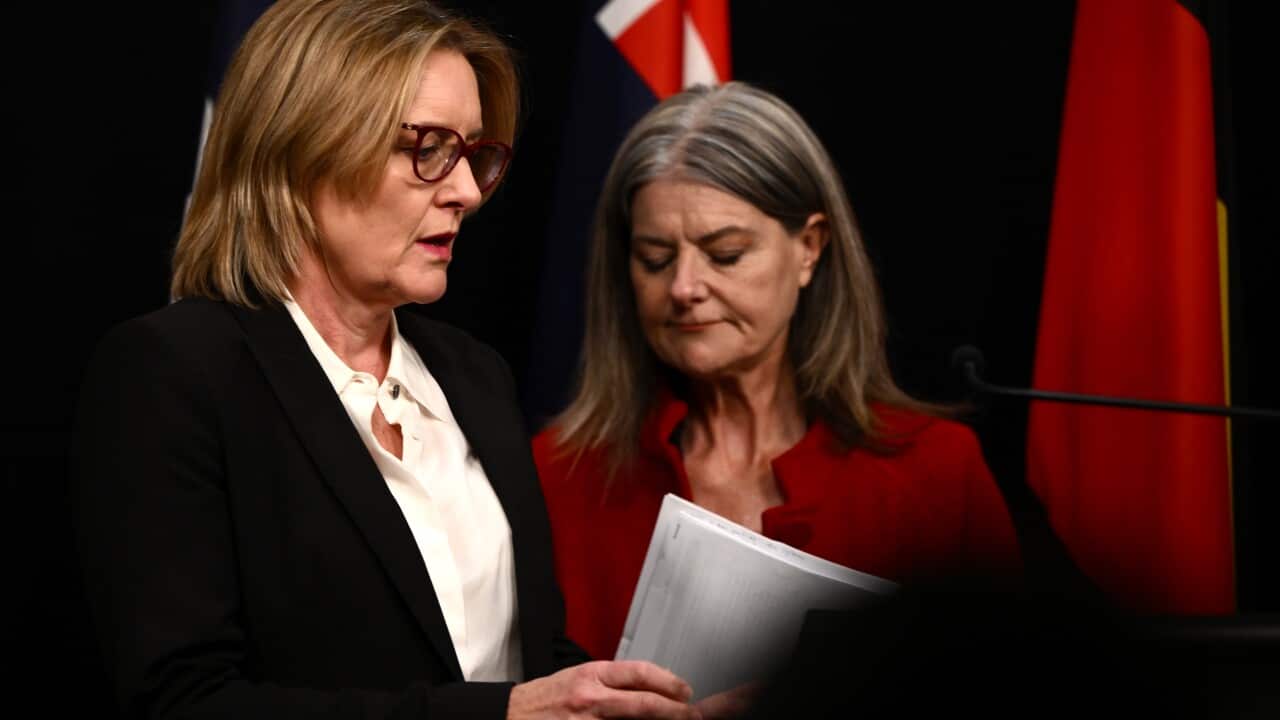
Unveiled on Wednesday by Prime Minister Jacinta Allan and Attorney General Sonya Kilkenny. the plan would allow alleged violators as young as 14 to bypass the Children’s Court and receive harsher sentences for crimes such as home invasions, carjackings, burglaries and machete attacks.

Seemingly based on a policy adopted by Queensland Premier David Crisafulli in 2024, the Victorian reforms could see some young offenders face life imprisonment and scrap the policy of using prison “as a last resort”.

Frontline advocates and justice experts have condemned the move as politically driven rather than evidence-based, warning it could widen the gap and put vulnerable teens on a path to lifelong incarceration.
The Victorian Opposition said Allan could not be trusted to reduce crime rates.
“Today’s announcement is the Prime Minister chasing a new headline, with no plan to see it through and deliver,” said Opposition Leader Brad Battin.

“Victoria is in a crime crisis because Jacinta Allan is weak on crime.”

Following the example of Queensland

Queensland’s ‘adult crime, adult time’ policy – ​​a key election promise from Crisafulli before being introduced in late 2024 – has faced strong criticism from international human rights organizations.
By October 2025, data from the Queensland Police Service (QPS) showed almost 3,000 children had been charged under the new laws. The same data initially reported a 10.8 percent drop in crime across nine major offenses during the first nine months of 2025.

But Police Minister Dan Purdie admitted in state parliament a week later that the figures were incorrect, and that the actual reduction was 6.5 percent. According to the Australian Broadcasting Corporation, he attributed the error to human error.

Mindy Sotiri, executive director of the Justice Reform Initiative, said a “tough on crime” often results in a drop in crime in the short term, but rates eventually recover.
“It kicks the can down the road,” she said.
“In jurisdictions that have adopted ‘tough on crime’ policies, there may be some short-term declines as a result of incarcerating people,” she said.
However, when people are released from detention, the likelihood of recidivism increases dramatically, Sotiri added.
“If we don’t invest in support programs that we know dramatically reduce crime, if we don’t invest in early intervention and prevention, then we have the wrong policy settings.

“It’s about winning elections, rather than actually looking at what the evidence is.”

Small groups cause spikes in youth crime, experts say

Experts are questioning whether the rise in youth crime in Victoria justifies the government’s new punitive response.
According to the Victorian Crime Statistics Agency, the number of criminal incidents recorded by Victoria Police in the year to June 30, 2025 was 483,583, compared to 408,930 the year before, marking an increase of 18.3 per cent.
Announcing the plan, Allan said: “There are too many victims, not enough consequences. That’s why we’re introducing Adult Times for Violent Crimes.”

She said the plan will be implemented in 2026.

However, Daley cautioned against taking the figures at face value, noting that police data does not necessarily reflect actual crime rates.
‘These are not conviction figures, but figures from the police. That doesn’t mean [crimes] That’s not happening, but that’s something very important that the community needs to understand,” she said.
She said the increasing incidents of youth crime were largely committed by a small group of repeat offenders.
“And those young people have very complex psychosocial issues in their lives. Crime doesn’t come out of nowhere; it comes from poverty, homelessness and a lack of mental health care,” she said.
Sotiri said while children should be held accountable for their actions, prisons do not keep the community safer.

“Prison does not address the reasons why children come into contact with the justice system, and the experience of incarceration makes it more likely that someone will reoffend,” she said.

‘Punishing trauma is not the solution’

The Children’s Court can impose a prison sentence of up to three years. However, proponents argue that bypassing this court for certain violent crimes amounts to “punishing trauma.”
Under the proposed reforms, young people aged between 14 and 17 who commit serious crimes could be tried in the County Court, where they face the possibility of life imprisonment.

The organization warns that further reforms could have a “similarly devastating impact”.

Mindy Sotiri, executive director of the Justice Reform Initiative, said that while children should be held accountable for their actions, prisons do not keep the community safer. Source: MONKEY / Con Chronis

VALS CEO, Nerita Wright, said: “Moving children to adult courts will only achieve one thing: further entrench criminalisation.”

“Specialized juvenile courts are part of the solution and recognize the unique needs and rights of children in the courtroom,” she said.
“Punishing trauma is not the solution.”

Daley agrees. “The reason we have a separate juvenile justice system is to do as much as we can in the lives of these young people early on,” she said.

What is the solution?

Sotiri said there is little doubt about what works in reducing crime.
Early intervention initiatives, bail support programs and local First Nations approaches all have a significant impact on reducing crime rates.
“These all exist in Australia and have been evaluated. There are examples of post-release programs for children coming out of prison that can reduce the risk of reoffending by almost 60 percent,” she said.
The problem, however, is the lack of financing.
“Instead of these services, programs and supports being adequately funded, we are pouring a lot of money into prisons, which we know don’t really address the causes of incarceration.”

#Punish #trauma #Experts #proposal #fix #crime #capital #effect

Similar Posts

Leave a Reply

Your email address will not be published. Required fields are marked *