

EntoPedia is a wearable product design that rethinks the way people interact with the natural world. Designed by Junfei Teng and recognized as a gold winner at the French Design Awards 2026turns everyday insect encounters into documented digital specimens – no net, no pot, no harm.
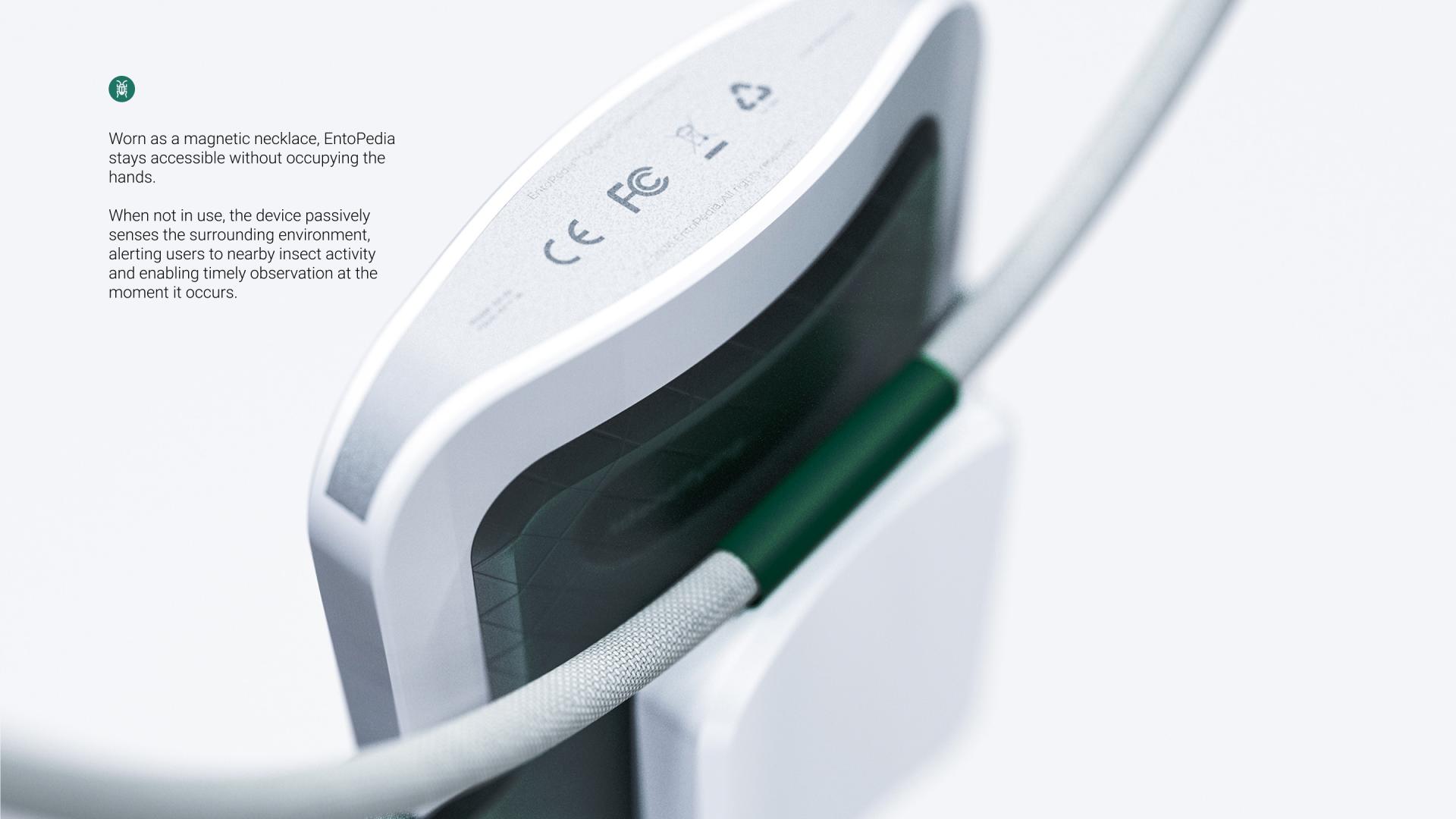
The device is worn as a magnetic pendant. Its body sits on a clean warp thread and the shape is deliberately understated. There are no bulky sensors or exposed electronics visible from the outside. The case uses a forest green, diamond-quilted surface texture that looks more like a fashion accessory than a scientific instrument. That choice is important: it means someone can wear it to school, on a walk or to a park without it announcing itself as equipment.
Portable product design that deploys on contact
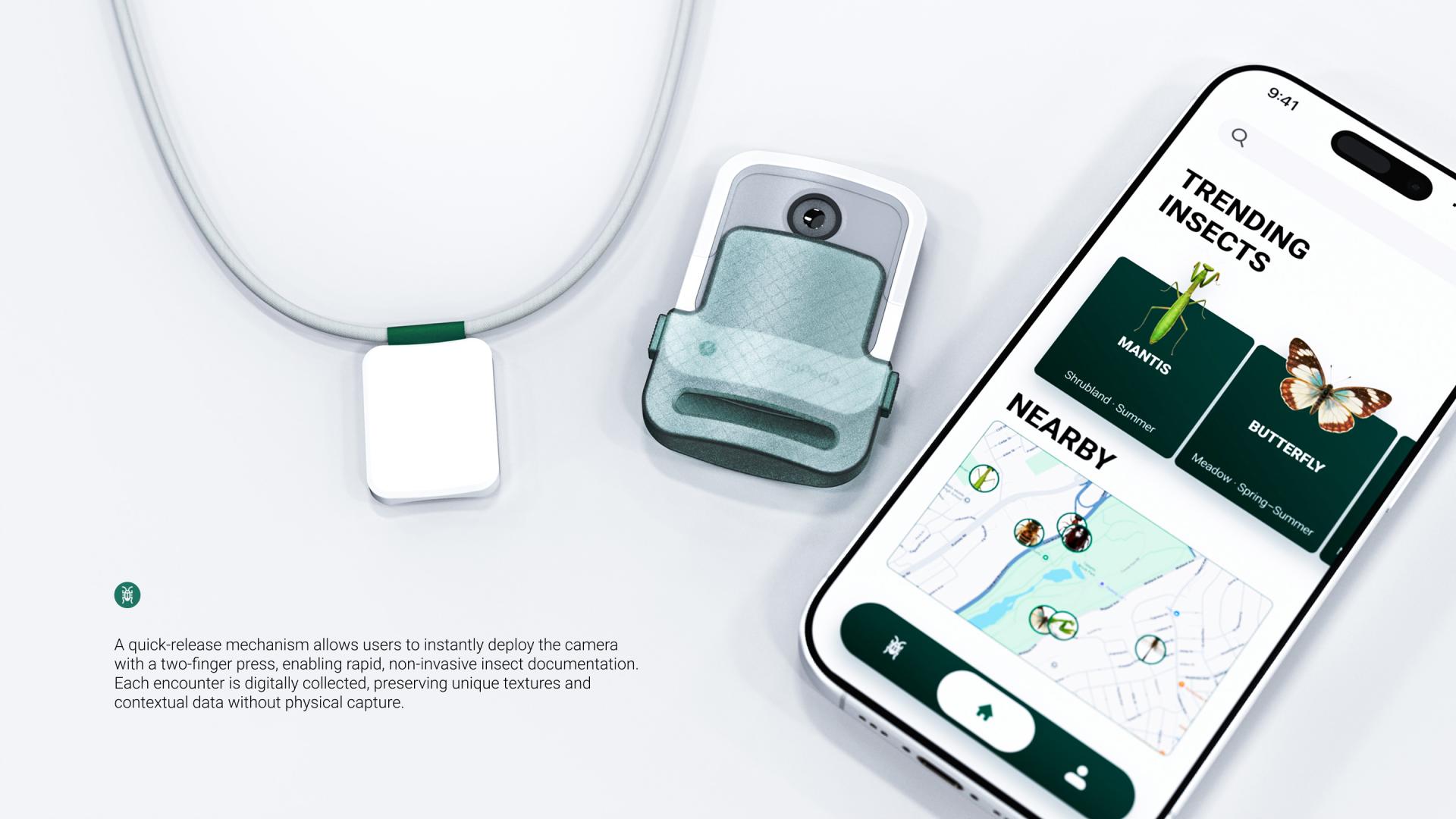
The interaction model is direct and physical. When an insect is spotted, pressing the double-sided recording buttons with two fingers mechanically activates the camera module. The imaging unit swings out of the hanging body and immediately goes into recording mode. There is no app to open first, no menu to navigate. The friction between noticing and documenting is reduced to one gesture.
Built-in lighting supports documentation in low-light and outdoor conditions. The camera records each insect as a unique digital specimen, linking the visual record to contextual metadata: time, GPS location and environmental context. This data is not stored in silos; they are entered into a shared local dataset to which all EntoPedia users jointly contribute.
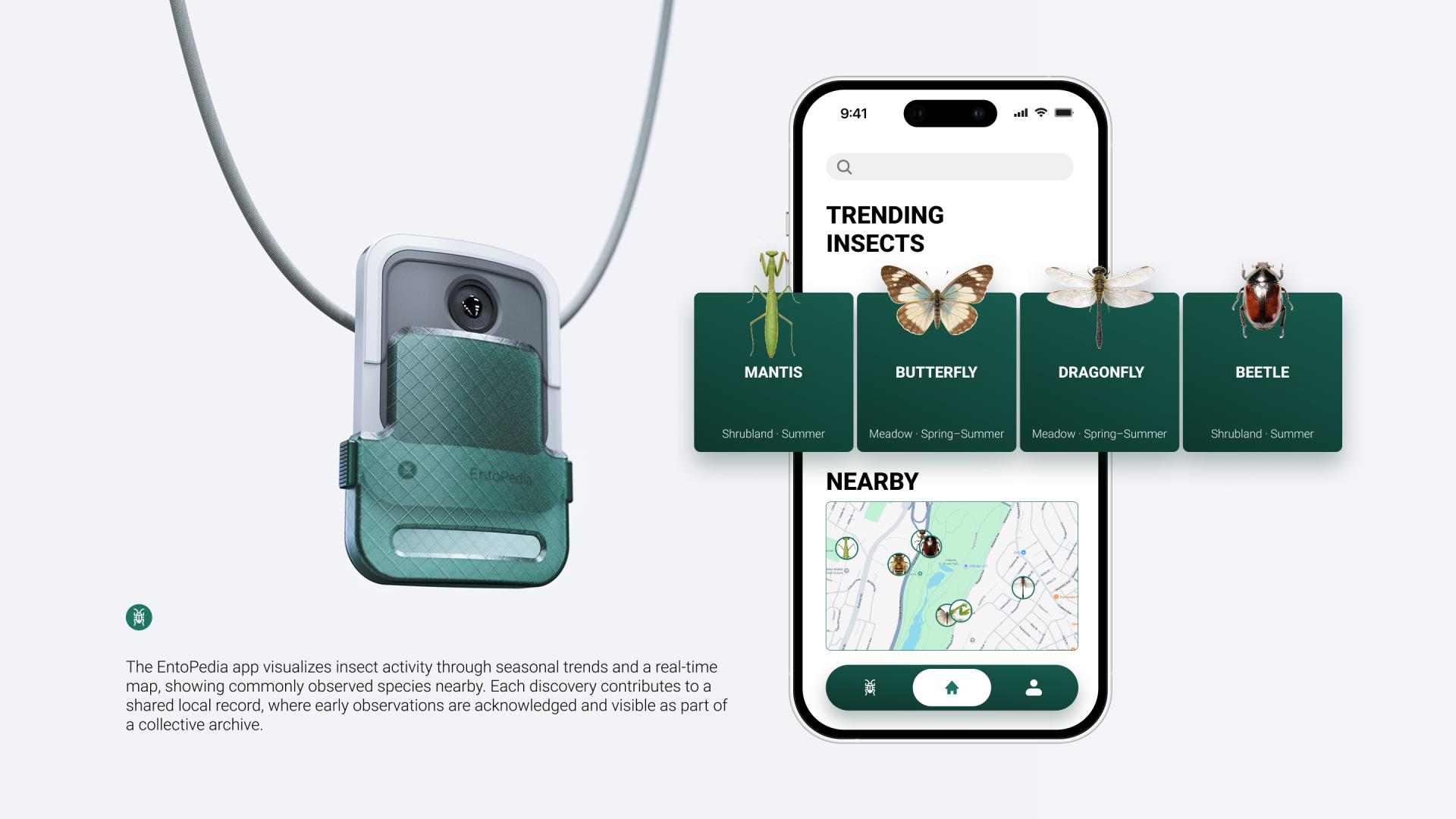
The companion app neatly conveys the visual identity of the project. The interface uses the same forest green palette as the hardware. A ‘Trending Insects’ screen shows species cards – Praying Mantis, Butterfly, Dragonfly, Beetle – each tagged with habitat and seasonal occurrence data, such as ‘Meadow, Spring-Summer’. A separate ‘Nearby’ map view displays recent insect sightings as circular photo thumbnails pinned to a street-level map, giving users a live view of what’s currently active in their area.
A cumulative layer is built into Discovery. When a user documents an insect species that has not previously been recorded at a specific location (for example, the first sighting of a particular butterfly in a neighborhood), that record is marked as a first sighting. Later records of the same species in the same area retain a visible reference to that original find. Early observers are recognized by the system. It shows that knowledge is built up over time and not passed on by an authority.
The design discipline of wearable products often grapples with the question of purpose: what does a wearable actually do that a phone cannot? EntoPedia answers this with a specific use case and a specific physical limitation. A phone needs two hands, a conscious pause and a camera app. This pendant requires one gesture, stays on the body and disappears into a personalized style when not in use. The result is a device that changes the relationship between the wearer and their environment – not by adding a screen, but by reducing the cost of paying attention.
Junfei Teng’s approach positions the user not as a collector, but as a contributor. Possession is replaced by documentation. The specimen is a record, not a trophy. For a generation of designers thinking about how objects can promote ecological awareness without preaching, EntoPedia is a clear model of how form, interaction and data can work together on a human scale.
#Portable #product #design #meets #nature