

Have you driven in Paris lately? Probably not, but if you hate endless stop signs while driving through large city blocks, Paris might feel a little less frustrating in comparison, if a little chaotic. It turns out that Paris city planners think there are more effective ways to manage traffic than just rudimentary stop signs. As of 2016, all stop signs within the city limits were removed by the Paris Police Prefecture.
In addition to banning car traffic through the city center and discouraging larger, heavier vehicles in Paris, the removal of stop signs was motivated by the need to improve traffic flow and reduce the number of fines for motorists. After all, police checks for traffic violations hinder traffic and ultimately worsen the problem. Research here in the US has shown that stop signs can prompt drivers to ignore the right of way, or to accelerate from a stop to make up for lost time. These factors can contribute to increased danger to both pedestrians and other drivers.
Other measures have proven to be more effective than stop signs
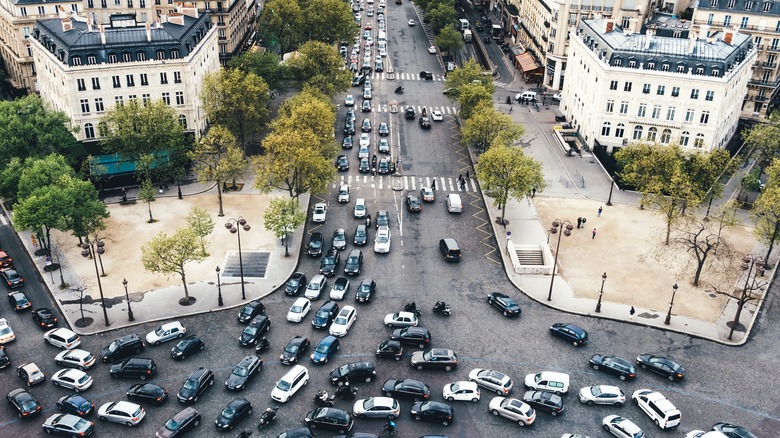
To keep traffic moving safely, Paris uses a combination of roundabouts, priority signs and the generally accepted rule of ‘priority on the right’. Traffic lights are implemented to manage traffic at major intersections with high traffic flow. With traffic constantly moving through most of Paris’s streets, this encourages drivers to pay more attention to their surroundings. When drivers stay alert, it improves the safety of all drivers as well as pedestrians.
Roundabouts are becoming increasingly common here in the US, creating a constant flow of traffic at an intersection where every driver must yield to vehicles in the roundabout. France has more roundabouts than any other country in the European Union. The most famous roundabout is located on Place Charles de Gaulle (historically known as Place de l’Étoile) in Paris.
Priority signs indicate that there is other traffic and that the driver must pay close attention before continuing. Due to the lack of stop signs or traffic lights at other intersections, drivers must allow the vehicle to pass on the right side.
A better sense of safety and community is paramount
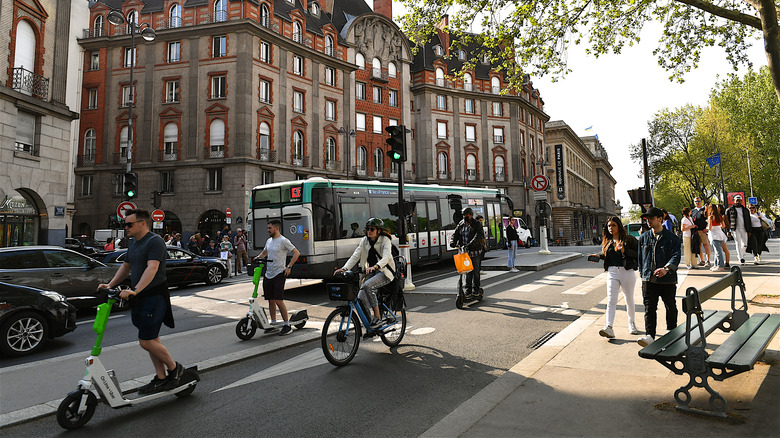
The design of most European cities is in stark contrast to that of the United States, and Paris is no exception. Narrow, often winding roads and busy intersections put safety first. Vehicles, bicycles and pedestrians must share much smaller spaces than is typical in American cities. While the absence of stop signs allows everything to move more freely, there are additional factors that improve overall safety in much more intimate public spaces.
Smaller spaces and narrower roads generally require lower speeds. Raised crosswalks and sidewalks increase pedestrian safety in the presence of vehicles, increase the legal right of way that pedestrians have, and provide a better sense of shared space in close proximity. If you ever get the chance to drive in European cities like Paris, pay attention to the differences in city design and traffic flow, while spotting your favorite French cars. Make sure you pay attention to all the chaos around you.
#Paris #stop #signs #Jalopnik