

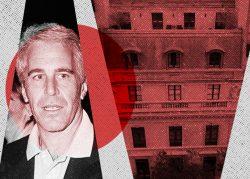
Newly released Justice Department documents show how Epstein tightly controlled access to the sprawling, off-market mansion, demanding names of buyers, rejecting offers he deemed too low and raising suspicions of ulterior motives. Without access to one of the city’s most notorious properties, agents dangled the names of billionaires, oligarchs and financiers in hopes of landing a showing. The bar for who gained access to the mansion — which later turned out to be the site of much of Epstein’s abuse of young women — was not only high, but often arbitrary, shaped as much by Epstein’s ego as by any realistic prospect of a sale.
Real estate agents paraded a procession of ultra-wealthy potential buyers in an attempt to unlock the front door, but to no avail. Even Ben Ashkenazy, the billionaire developer behind a roughly $10 billion portfolio, was dismissed as “not rich enough.” Others tried to name-drop foreign oligarchs — including one pitch that promised “my very rich Russians.” And when hedge financier and Mets owner Steve Cohen showed up in brokers’ paperwork, Epstein responded not with a display, but by suggesting a “sting.”
‘My very rich Russians’
The correspondence documents a strange audition process, as agents cycled through names and pitches as Epstein and his assistants decided who was worth letting in.
In 2016, when Jed Garfield, who runs the boutique real estate brokerage Leslie Garfield, approached an Epstein associate to show the house at 9 East 71st Street to Ashkenazy, Epstein wrote back: “Tell Jed [sorry] not rich enough.”
Epstein also appears to have rejected Michael Lehrman, who heads Newmark’s European group, and former Stephens CEO and current ambassador to the United Kingdom Warren Stephens, emails show.
“Mr. Epstein can only assume that the buyers are merely tire kickers,” Epstein’s assistant wrote to Garfield when he tried to bring in Stephens in 2010. “Your previous customers never bid, so we’re quite wary.”
On rare occasions, Epstein allowed Garfield to show the house to some of his wealthy clients. In 2014, Garfield arranged a show for one of the ‘Candy Brothers’, believed to refer to real estate moguls Nick and Christian Candy, and in 2015 for Chinese billionaire Guo Wengui, also known as Miles Kwok, who was later arrested in the United States for tax fraud.
A spokesperson for Nick Candy confirmed that he toured the house in 2014, but that the visit “did not result in any relationship, business transactions or subsequent contact of any kind.”
Agents rarely communicated directly with Epstein, but kept in touch with his cadre of advisors and assistants who relayed his thoughts on potential buyers and viewings. Epstein also issued specific instructions for preparing the house ahead of showings, including taking photos on the third floor – later identified by a New York Times research as the location of his bedroom and massage room, which were filled with images of naked women.
“YOU just informed me [that] Jed Garfield will be showing the 71st to someone on Friday at 11am… Can we please make sure the photos on the 3rd floor are removed as well,” read one e-mail related to a screening in December 2011, with the sender redacted.
Garfield declined to comment on the emails.
Other officers also tried to get involved. In 2010, Serena Boardman of Sotheby’s International Realty emailed an Epstein assistant claiming to have “two good prospects,” presumably referring to buyers for his mansion. Epstein responded to his assistant: “not interested.”
Boardman did not respond to requests for comment.
In some cases, brokers tried to circumvent the process by relying on name recognition. In 2016, Richard Steinberg of Douglas Elliman emailed Epstein’s accountant with a “longshot” proposal to show the house to two separate Russian oligarchs, Abramovich and Alexi Kuzmichev.
“Would Mr. Epstein consider showing two of my very wealthy Russians to whom I sold two of the most expensive mansions in New York,” Steinberg wrote.
But eight years later, Steinberg said those names were probably nothing more than a ploy to get in.
“I wanted to give myself credibility because I thought he would have gotten calls from a hundred real estate agents trying to get access to the house,” Steinberg said. TRD.
“They never looked at it, they were never interested,” he said of the Russians.
‘Let’s set up a sting’
One curious interaction involved another billionaire put forward as a potential buyer: Steve Cohen.
A document dated May 5, 2010 shows “Steven A. Cohen” as a potential buyer in a right-to-sell agreement sent to Epstein by Brown Harris Stevens. The document, which does not include Epstein’s co-signature, allowed BHS agent Brian Manning to show the property to Cohen until June 2010.
Nearly everyone involved in the emails surrounding a possible showing for Cohen denied that he was interested in the property.
“At no time did Steve or any authorized representative visit the property or express any interest in purchasing it,” a Cohen spokesperson said in a statement.
Hall Wilkie, then president of Brown Harris Stevens and whose name appeared at the bottom of the document, said he never knew Cohen was a potential buyer of Epstein’s mansion, and that he never personally toured the house. But Willkie’s signature appears on an earlier right of sale agreement for the property, sent on April 30, 2010, which does not reveal Cohen’s identity.
Epstein didn’t seem to believe Cohen was a real buyer. “Have Brian man up [confirm] in writing that his buyer whom he represents is Steve Cohen,” Epstein wrote to his accountant, Richard Kahn, on the morning of May 5.
Epstein even went so far as to suggest the tour was a ploy for “thieves or investigators trying to get into the house” in another email copying Kahn that day. When Kahn asked if he should schedule a showing of the house if Manning confirmed Cohen’s identity, Epstein replied “No, let’s set up a stitch.” He gave no further details about what a sting would entail.
A house that is not for sale

Epstein never sold the property while he was alive, likely because he was looking for eye-watering prices of more than $150 million, according to emails and interviews with agents familiar with the discussions. It wasn’t until his death in 2019 — and when the full extent of his abuse became public — that the estate placed the house with Adam Modlin of the Modlin Group for $88 million. The mansion ultimately sold to financier Michael Daffey for $51 million in 2021, after the asking price was reduced to $65 million.
Epstein, who committed suicide in 2019 while awaiting trial on sex trafficking charges, appeared to take over the home of his longtime friend and mentor, Les Wexner, in the mid-1990s.
Who Epstein would approve to view the house and what offers he would consider seemed to be an ever-changing threshold. When Steinberg proposed showing Abramovich and Kuzmichev the house for $150 million in 2016, Epstein told his accountant: “[Tell] him, that Roman, has already seen the house and I turned 250 meters.”
Epstein has repeated similar claims over the years.
In 2012, James Meiskin, then head of real estate consultancy Plymouth Partners, told Epstein’s assistant that Russian financier Andrei Vavilov could write a check “for about $100 million” for the house. Epstein responded by saying, “I have already rejected three bids out of TWO hundred.”
The following year, Epstein got Garfield relay told Nick Candy that he had ‘rejected 240 yards’. And in 2015, Garfield arranged a showing for Guo Wengui after offering to “show him the house for 250 million.” Although Garfield later hinted that Candy might consider making an offer, Candy never made an offer on the property, according to his spokesperson.
But in 2009, Epstein quoted Garfield a price of $120 million for a screening, half of what he asked a few years later. Agents who showed Epstein’s home said there was no chance he had received offers of more than $200 million.
“That’s probably absolute BS,” one agent said in response to questions about offers of that size. “That’s not true,” said another.
Multiple sources confirmed that Epstein received an offer of approximately $125 million around 2010, which he turned down.
“With Epstein it was always a higher number,” said one of the brokers familiar with the offer. The broker said Epstein pushed back a counter of about $175 million, making it “pretty clear he wasn’t a seller. It was already an above-market transaction in every respect.”
Despite Epstein’s apparent aversion to selling, other emails reveal a fixation on the Upper East Side housing market.
Epstein’s associates sent him articles from TRDCurbed NY and other local media about mansions in the area, including a story about art heir David Wildenstein selling his mansion for a then-record $79.5 million in 2017 and a $48 million mansion listing in 2012. In 2014, one of Boardman’s team members compiled a list of off-market mansions for Epstein to review.
Epstein also seemed to be particularly interested in Cohen’s real estate dealings. In 2017 Kahn sent Epstein one TRD article about Cohen cutting the price of his One Beacon Court apartment by 50 percent.
In 2019, just five months before Epstein’s arrest, Kahn shared another article about Cohen once again cutting the price.
“Waited too long,” Epstein responded.
Read more

Jeffrey Epstein was a Core Club member, confidante, connector: “My guardian angel”

Inside a financier’s renovation of Jeffrey Epstein’s former mansion
Jeffrey Epstein’s UES mansion is under contract for approximately $50 million
#Rich #Russians #Brokers #Dropping #Frenzy #Gain #Access #Epsteins #Mansion