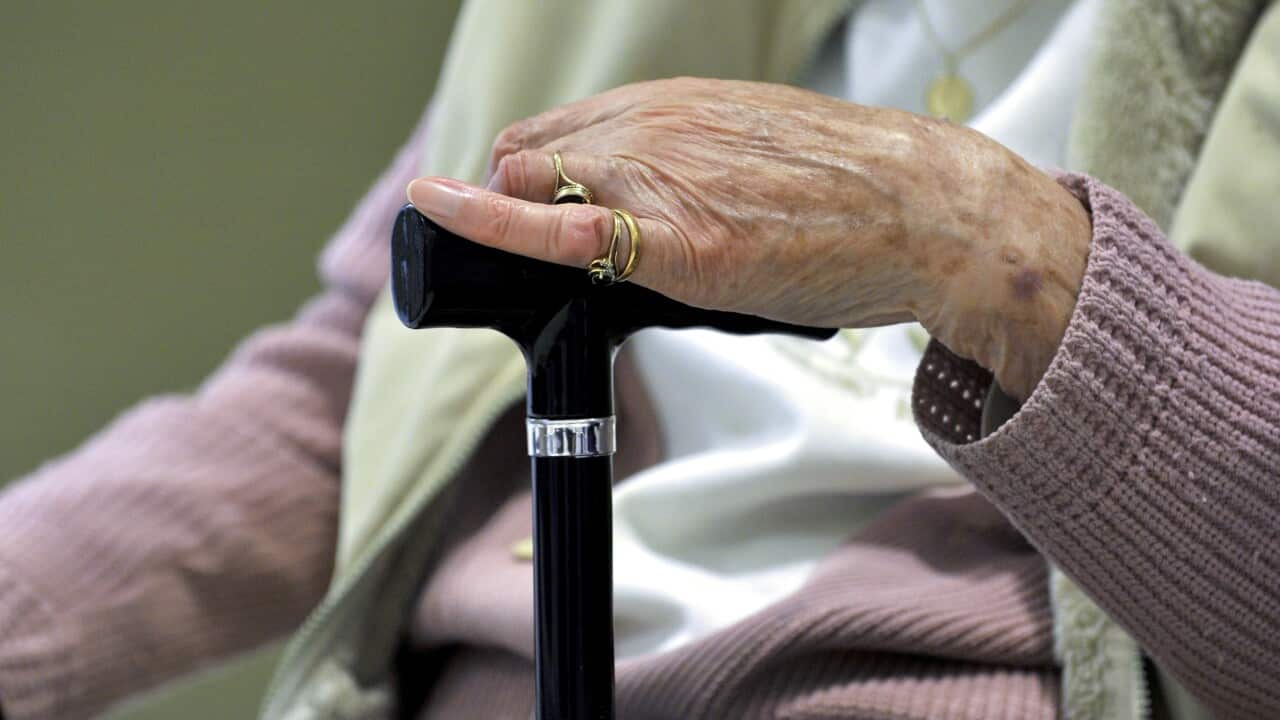
More than a million Australians could live with dementia in 40 years. These are possible risk factors

More than a million Australians could live with dementia in 40 years. These are possible risk factors

More than a million Australians will live with dementia in 40 years – more than double the current number – according to a new report from the Australian Institute of Health and Welfare (AIHW).
The report of dementia in Australia predicts that by 2065 the number of Australians with dementia more than doubles and reaches 1.1 million of slightly less than 425,000 in 2024.
The AIHW warns that these estimates must be interpreted with caution, because demography is inherently uncertain in the long term.
Nearly 266,000 women and 159,000 men lived according to the report with dementia in 2024, but it says that it is “the exact number” unknown because “there is no authoritative data source for distracting dementia prevalence”.

The estimated more than doubling people who live with dementia will also take place as the population of Australia grows and get older.

The AIHW partially uses the Australian Bureau of Statistics’ (ABS) population projections to determine its prevalence rates.
In 2024, the Australian population was about 27 millionand the ABS projects that could reach between 33.96 million and 43.61 million in 2065.
“This trend is driven by the projected continuous growth and aging of the Australian population, because dementia is increasingly common in old age,” says the report.
The report also showed that in 2023 dementia was the most important cause of death of Australia, which made 9.5 percent of all deaths – around 17,400 people. It is different from ABS estimates for that year, which has set Ischemic heart disease as the main cause, because AIHW has counted a small number of deaths from forms of dementia that the ABS does not include in its report.
AIHW found the second most important cause of death that year coronary heart disease.
“Between 2009 and 2023, the number of deaths due to dementia was more than doubled, from 8,500 deaths to 17,400 deaths,” says the report,

“The number of deaths due to dementia also increased from 39 to 65 deaths per 100,000 population.”

‘Must double everything’

Dementia is not one specific disease, but is an umbrella term for a group of symptoms caused by disorders that influence the brain.
Dementia and reduced brain function can affect memory, speech, thought, personality, behavior and mobility. It is a degenerative, terminal disease.

There are many forms of dementia, where the most common degenerative brain disease Alzheimer’s is Alzheimer’s disease.

Lee-Fay Low, a professor in aging and health at the University of Sydney, describes the new projection of a million people who live with dementia as a “scary number”.
“Dementia influences a person and how well they can live life, but it really influences their entire family because they have to give that person more support,” she told SBS News.

“If we really wanted to diagnose and treat a million people in the right way, we should double our capacity in our memory clinics. We should double our capacity in our nursing homes. We should double everything,” said Low.

What are the risk factors?

Assistantial teacher Lyndsey Collins-Praino of the University of Adelaide, whose research specializes in neurodegenerative diseases, said: “The number one risk factor for dementia is older age.”
“In a relatively small number of cases there is a clear genetic call. This would be about five to 10 percent of the cases. And this would include where there is a specific genetic change that leads to dementia,” she said SBS News.

“That does not mean that genetic factors may not play a role in other cases, but that the genetic change in those cases is not causal. Instead, there are various environmental risk factors involved.”

These include limited education, hearing loss, high blood pressure, smoking, obesity, depression, physical inactivity, diabetes, excessive alcohol consumption, traumatic brain injury, air pollution, social isolation, high cholesterol and untreated loss of vision.
These risk factors relate to three different phases of life: live early, middle and later.
“In early life, having a lower level of education is one of those risk factors,” said Collins-Praino.
“In the middle of life this includes things like hearing loss, with high LDL [Low-Density Lipoprotein or ‘bad’] Cholesterol levels, physical inactivity, type 2 diabetes, high blood pressure and obesity, with many of these linked to heart factors. “

“When we move to later life, things like social isolation and not a kind of actively involved in leisure activities and social involvement, and also not corrected visual loss are some of the risk factors that emerge,” Collins-Praino said.

Some academics have praised the Lancet study, but say that it is not possible to definitively link these risk factors to dementia.
“It is also important to note that when the report refers to the proportions of dementia -cases that can be prevented, this is notional and based on observational evidence,” said Charles Marshall, a professor in clinical neurology at Queen Mary University of London, after the release of the report.

“We do not really have evidence that cases of dementia are prevented by tackling one of these risk factors.”

The hidden workforce

According to the AIHW report, it is estimated that in 2024 there were at least 102,000 unpaid primary carers of people with dementia in the community in the community.
Dementia Australia also estimates that around 1.7 million people are involved in their care, from recent reports in 2025.
“It is expensive for both health and elderly care in terms of diagnosing and, hopefully, treatments on the horizon, but also because people who live with dementia need more support for daily life,” Low said.
The report states that almost $ 3.7 billion of total health care expenditure and outdated care was spent directly on dementia in 2020-2021.

#million #Australians #live #dementia #years #risk #factors

Similar Posts

Leave a Reply

Your email address will not be published. Required fields are marked *