

Candle NgcobboJohannesburg
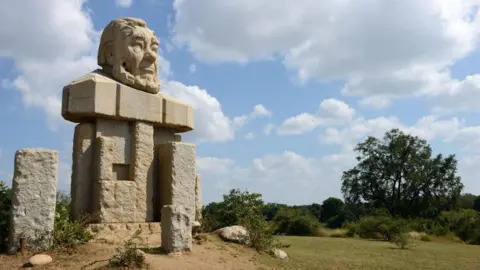 Corbis via Getty Images
South Africa’s world-famous Kruger National Park could be known by a new name if some local politicians get their way.
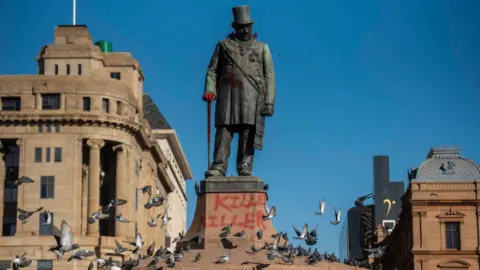
The vast nature reserve, then called the Sabi Game Reserve, was renamed in 1926 in honor of Paul Kruger. He was president in the late 19th century of what was known as the South African Republic, part of what is now eastern South Africa.
For Afrikaners, descendants of 17th century European settlers, Kruger is revered as a hero who led the resistance against British colonialism.
But for the majority of South Africans, he is seen as a relic of the country’s racist past, as he was one of those responsible for driving black Africans from their lands and excluding them from having a say in the republic’s governance.
Many South African cities, towns, roads and other major infrastructure have been given new names since the end of the legalized system of racial discrimination known as apartheid and the beginning of the democratic era in 1994. Although sometimes controversial, the decisions have been justified as a way to break with what came before: both the apartheid and colonial eras.
But Kruger’s proposed name change is not just about history, it could also impact the country’s fragile economy.

 AFP via Getty Images
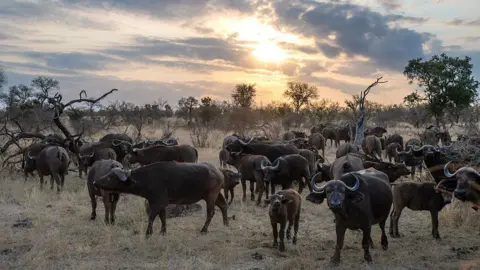
Home to elephants, lions, hippos, leopards and many other animals, the national park attracts almost a million visitors a year and is a jewel in the crown of South Africa’s tourism industry.
Some argue that changing Kruger’s name could threaten that.
Part of the park is in Mpumalanga province and in September, as the country celebrated Heritage Month, representatives of the opposition Economic Freedom Fighters (EFF) submitted a proposal to the region’s legislature to change Kruger’s name.
“How do we celebrate our heritage as South Africans when our beautiful national parks are still named after the architect of apartheid Paul Kruger,” said EFF representative Rhulani Qhibi in a moving speech. Although not historically accurate, the rhetoric reflects the way some view him, as apartheid in its legal form was introduced decades after Kruger’s death.
The EFF also proposed renaming other major landmarks in the province, including the Kruger Mpumalanga International Airport.
But in their haste to remove Kruger’s association with the park, the EFF, whose national leader the firebrand MP Julius Malemabrought up another problematic name: Skukuza.
Skukuza, meaning “he who sweeps clean” in the Tsonga language, was the nickname given to the park’s first director, James Stevenson-Hamilton, who was known for evicting poachers and black communities, among others, who lived in the park in its early days.
The EFF leader in Mpumalanga, Collen Sedibe, was quoted in South African publication Sunday World as admitting the party’s blunder.
“We are still talking to the land claimants in the Kruger National Park and the people who stayed there because they said Skukuza is not the right name. He was the man who kicked them out of the park,” Sedibe said.
 Gallo images via Getty Images
The Afrikaner lobby group AfriForum condemned the EFF’s proposal as “cheap politics and proof that the thirst for political power in the province outweighs informed or responsible decision-making”.
The group vowed to mount legal challenges to any attempt to rename the park without due process, and denounced the EFF for criticizing its namesake.
“The Kruger National Park came into being because of Kruger’s vision [and] ignoring Kruger’s contribution to the creation of the country’s most important national park… is opportunistic and blatantly spreads lies,” AfriForum’s Marais de Vaal said in response to the news.
The motion to change the name was passed by the provincial legislature after receiving support from the largest parties, the African National Congress (ANC), which is in power nationally, and uMkhonto weSizwe.
Despite not being legally binding, as there is a national process that any name change must go through, opponents have warned that if it is approved, it could hurt the tourism sector, which contributes almost 9% to the country’s economy.
It could have “serious consequences… it could even dilute the international recognition of this park and South Africa as a tourism destination that we have built up over so many years,” tourism expert Prof Elmarie Slabbert told the BBC.
There would also be costs associated with the park’s rebranding.
The academic, who is director of research at North West University’s school of tourism management, did acknowledge “that we need to honor indigenous heritage”.
“But the effect on the economy will be so great that we have to decide where to spend our money. We have such high unemployment right now that I believe that’s where the money should go.”
More than 30% of the working-age population is unemployed – ranked by the World Bank as one of the worst unemployment rates of any country – and youth unemployment is even higher.
But economics is not the only basis on which name change decisions have been made.
The need to tackle the country’s past inequalities is seen as essential.
 Getty Images
For example, the name of former Prime Minister Hendrik Verwoerd, a key figure in the implementation of apartheid, has been removed in many places.
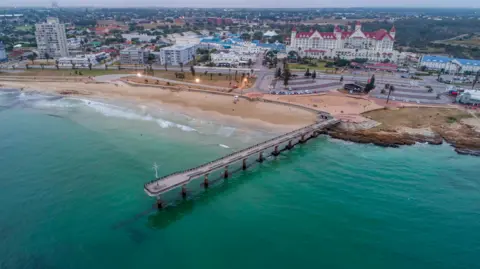
Other changes include the city of Port Elizabeth. Named after the wife of a 19th century British official, it is now called Gqeberha, the Xhosa word for the river that flows through it. King William’s Town, after William IV, is now called Qonce, also referring to a river.
Johannesburg’s international airport, once known as Jan Smuts – in honor of a former prime minister – is now called OR Tambo, after the anti-apartheid leader and former president of the ANC.
Some cities, such as the capital Pretoria, have retained their names, but the local government areas under which they fall have been renamed.
Numerous other renaming ideas have been floated, including changing the name of the Eastern Cape seaside resort of Port Alfred, which commemorates Queen Victoria’s second son. Some have even suggested changing the country’s name to Azania.
Many of these proposals have divided public opinion, and to ensure that changes are not simply made on a whim, an extensive legal process must be completed.
It is administered by the South African Geographical Names Council (SAGNC) and begins with an application from individuals, communities or institutions to the body’s provincial branch.
The proposal is being discussed and may lead to a public consultation. After this is completed, the name change plan is sent to the national office.
If it is deemed to meet “all the requirements”, a recommendation will be made to the Minister of Sports, Arts and Culture for a final decision, SAGNC chairman Dr Nkadimeng Mahosi told the BBC.
“What’s happening here [in Mpumalanga’s legislature]does not go according to what the national law says… [and] is politically point-scoring, he said.
As a national landmark and given that several ministries will need to have a say, Kruger is a unique case, Dr Mahosi added.
There are still a number of bureaucratic obstacles to overcome before the name Kruger ever disappears from tourist brochures.
But the debate has exposed the sensitivities that still exist around how to deal with the country’s past and the legacy of those who ruled it.
More about South Africa from the BBC:
 Getty Images/BBC
#Kruger #National #Park #South #Africa #debating #change #worldfamous #reserve