

‘Legitimate’ protests and government response
COP30 director Ana Toni described the demonstrations as “legitimate” and confirmed that the government is listening. Protesters were ordered to meet with the Minister of Indigenous Peoples, Sônia Guajajara, and the Minister of Environment and Climate Change, Marina Silva.
Ms. Toni highlighted that COP30 has more than 900 indigenous participants, a significant increase from the 300 registered at last year’s conference in Baku, Azerbaijan.
“Brazil has a strong democracy that allows for various forms of protest, both inside and outside the conference,” she said, adding that hosting COP30 in the Amazon was intended to ensure that the voices of indigenous people are heard.
© UNFCCC/Diego Herculano
Security officers guard the site of the UN climate conference as the indigenous people of Munduruku protest.
Voices of indigenous youth underline the urgency
For indigenous youth participants, the protest reflects both the urgency of their demands and the value of being present at the international conference.
Amanda Pankará, from the Pankará people in Pernambuco, told the story UN news that COP30 provides a space where indigenous issues can gain greater visibility.
“We could contribute much more if more indigenous peoples participated in these discussions. These demands are valid. We claim the right to land, the right to life… Being here today and representing those who have not had the opportunity to be here amplifies our presence and responsibility. We are the ones putting up this protective barrier, so we want to be heard.”
Commitment to climate action
At a meeting on Thursday, many indigenous leaders described COP30 as the most inclusive climate conference they had attended.
Chilean indigenous youth Emiliano Medina – from the Mapuche people – who took part in the meeting, said indigenous representatives reaffirmed their commitment to combating the climate crisis.
He emphasized that protests like Friday’s are a way to make demands and highlight where policies fall short. “Similar demonstrations have taken place around the world in communities affected by climate change,” he said.
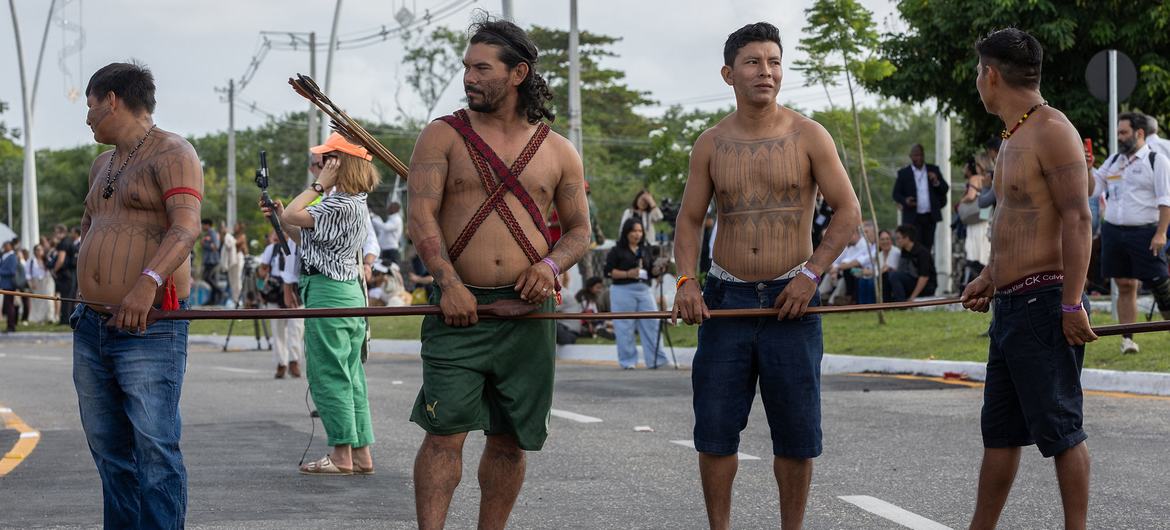
© UNFCCC/Kiara Worth
Indigenous people block access to the UN climate conference in Belém, Brazil.
‘COP in the Amazon aims to hear these voices’
Ana Toni emphasized that holding COP30 in the Amazon allows for broad participation of indigenous peoples, something that would have been more limited if the event had taken place in Rio de Janeiro, São Paulo or Brasilia. She assured that the voices of protesters are being heard and noted that further demonstrations are expected during COP30.
“The purpose of holding a conference in the Amazon is precisely to listen to these demands,” she concluded.
#Indigenous #protesters #block #access #COP30 #demand #action #Brazilian #government