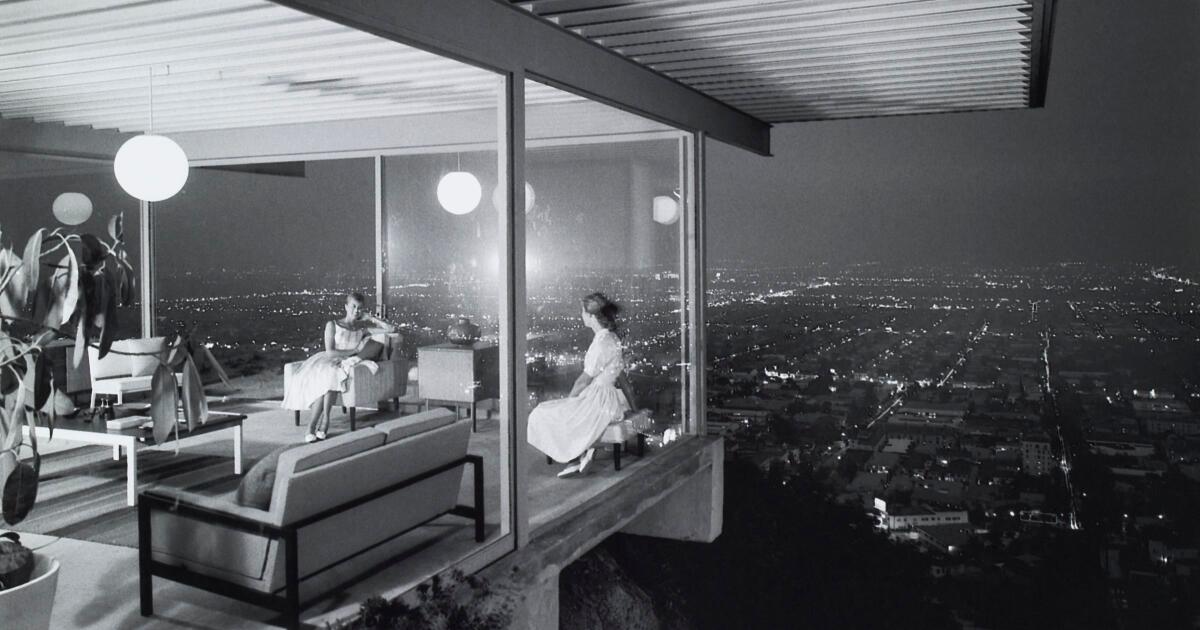

The asking price is $25 million, which may seem like a surprising figure for a 2,300-square-foot, two-bedroom home on a cozy lot. But that figure may not surprise aficionados of modernist architecture, who know it as Case Study House #22.
It was designed for the Stahl family by architect Pierre Koenig, captured on black and white film by photographer Julius Shulman and has since been admired worldwide.
The Architect Newspaper called it ‘one of the most famous buildings in the world’. The Los Angeles magazine called Shulman’s image “perhaps the most famous image once taken from Los Angeles.”
“There are no comps for the Stahl house. It is incomparable,” said William Baker, architectural director of the real estate firm Agency Beverly Hills. The house was incorporated into the company autumn catalog November 12.
By Friday afternoon, Baker said, he had received hundreds of inquiring phone calls. In considering offers, Baker says, the family is open to individuals or institutions — “someone who is going to understand it, honor the house and the story about it.”
The Stahls purchased the lot in 1954 for $13,500 and brought in Koenig to design the house after other architects were put off by the slope of the lot. Koenig’s solution was a cantilevered L-shaped structure with steel and glass walls, a swimming pool and a freestanding stone fireplace between the living and dining areas.
The second bedroom is only accessible through the master bedroom — “an efficient use of space” for a family of five, Baker said. The Stahl family has said the house cost $37,500 to build.
Shortly after the house’s completion, photographer Julius Shulman took a black-and-white photograph that became emblematic of the era. It shows the house at night, with two young women sitting in a cantilevered corner inside, while the floor-to-ceiling windows let the lights of the LA Basin glitter in the background.
To bring out the light, Shulman later told Los Angeles magazine, he used a seven-minute exposure. The resulting image, along with others Shulman took of the house, is now owned by the Getty Research Institute.
In the years since, the house has served as a filming location for many TV and movie productions, including the 1968 pilot episode of “Columbo” and the films “Galaxy Quest” (1999) and “Nurse Betty” (2000).
“This home has been the center of our lives for decades, but as we grow older it becomes increasingly difficult to care for it with the attention and energy it so richly deserves,” the Stahl family announced on its website. Bruce and Shari Stahl, the surviving children of original owners Buck and Carlotta Stahl, added: “[O]Our tour program will remain unchanged for the time being and we will provide you with ample notice before any adjustments are made.”
For the past 17 years, the house has been open for tours, most recently on Wednesdays, Fridays and Saturdays, from $60 per adult during the day, $90 in the evenings, with advance reservations required and strict restrictions on photography. However, the Steel website indicates that all tours are sold out until the end of February.
The property listing notes that the house is “a listed building and the only case study house with original family ownership.”
When nominated for the National Register of Historic Places in 2009, Amanda Stewart of the Los Angeles Conservancy called it “perhaps the most iconic house built in the Case Study House Program.” That program, sponsored by John Entenza’s Arts & Architecture magazine from 1945 to 1966, produced 25 completed houses, which are today considered prime examples of Midcentury residential design.
“There aren’t many of these Case Study houses left. I think there are 19 now,” Baker said. (Baker also said he recently handled the sale of Case Study House #10 in Pasadena to a buyer who lost a home in the Pacific Palisades fire in January.)
Stahl’s home is on Woods Drive, just north of the West Hollywood city limits, about a quarter mile from Chateau Marmont.
Many architecturally significant modern homes in Southern California have ended up in the hands of institutions, including Frank Lloyd Wright’s Hollyhock House (1921), owned by the city of Los Angeles; the Schindler House (1922), owned by the Friends of the Schindler House and managed by the MAK Center for Art and Architecture; and the Eames House (1949), owned by the nonprofit Eames Foundation. The Sheats-Goldstein Residence, designed by John Lautner in 1961-63 and renovated by Lautner in the 1990s, has been promised by owner James Goldstein to the LA County Museum of Art.
#Iconic #Stahl #House #Midcentury #Modern #stunner #sale