

(Photo: Historical Tightrope Walker: Fox Photos | Fulton Archive | Getty; Matte: Canva)
Like many physical skills, balancing is something you use or lose. If you don’t challenge your body regularly, you lose much-needed coordination between the different systems involved in balancing, i.e. your eyes, ears, brain and body. So if you find balancing the most challenging part of a yoga class, you’re not alone. Everyone wobbles. Perform balance exercises.
Unlike complicated arm balancing poses that require a proper warm-up and dedicated practice, the following balance exercises can be tried at any time – no warm-up or mat required. Try one when you’re at your desk, standing in line at the grocery store, even brushing your teeth or doing the dishes. Even better, these simple balance exercises can be practiced in less than a minute.
Balance exercises you can do in 30 seconds (or less).
Remember, just because balancing comes easily one day or on one side of your body doesn’t mean it will be the same the next day or on the other side. Approach these exercises with a sense of humor. Some of these exercises require no yoga experience. Others ask you to incorporate some dynamic movements into the balancing yoga poses you already practice during class.
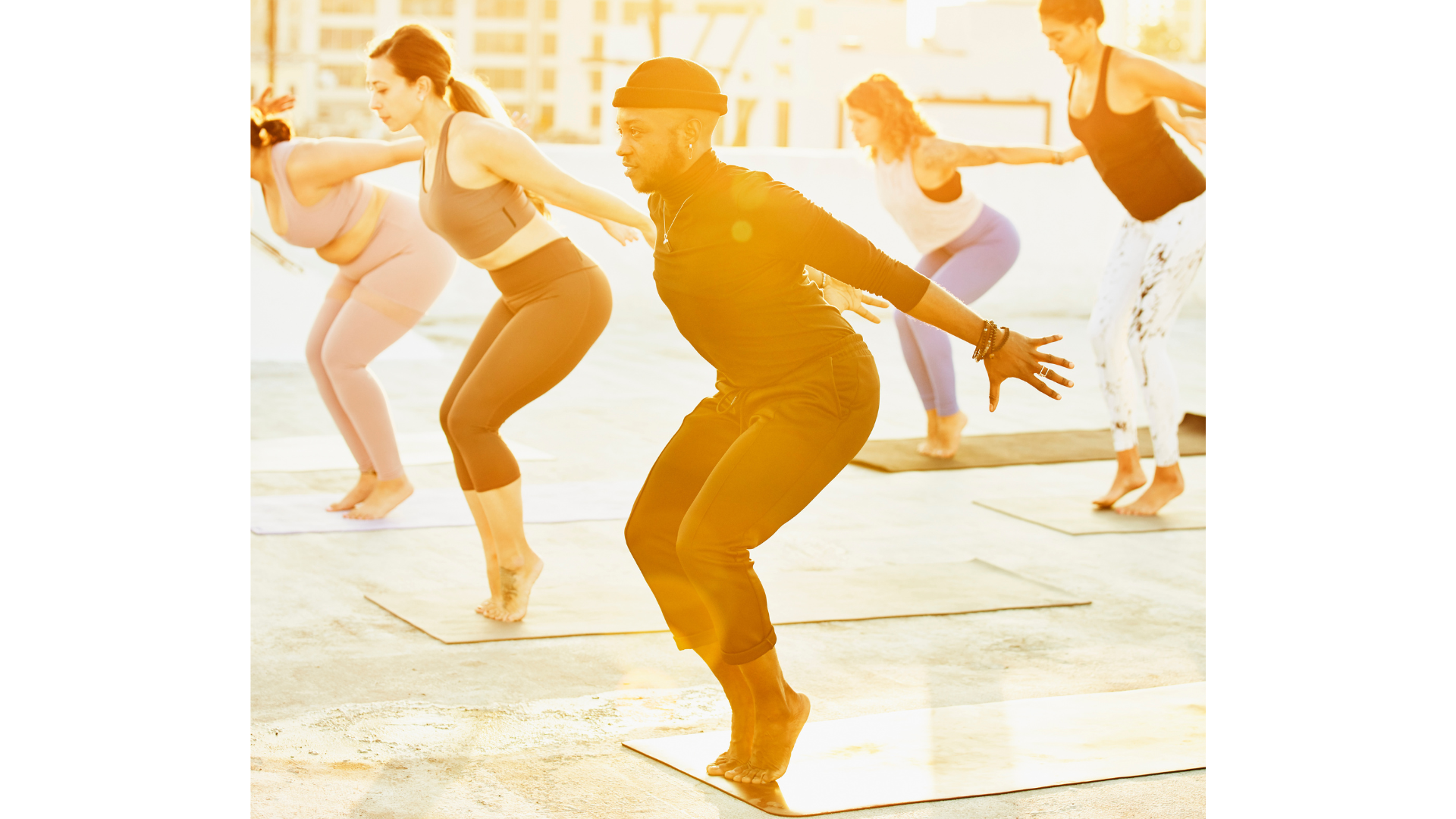
1. Stand with your heels raised
Stand with your feet together and your arms at your sides in mountain pose (Tadasana). Lift your heels off the ground and try not to tip forward. Then increase the balance challenge by trying…
- Raise your arms straight out to the side or above your head
- Lower your heels and lift your toes
- Bend one knee forward and then the other, as if you were running in place
- Adjust the position of your legs by widening your stance or turning your toes slightly outward, as you would do in a squat (Malasana).
- Close your eyes
- Do all of the above while lifting your heels in chair pose (Utkatasana) instead of standing
2. Standing for warrior 3
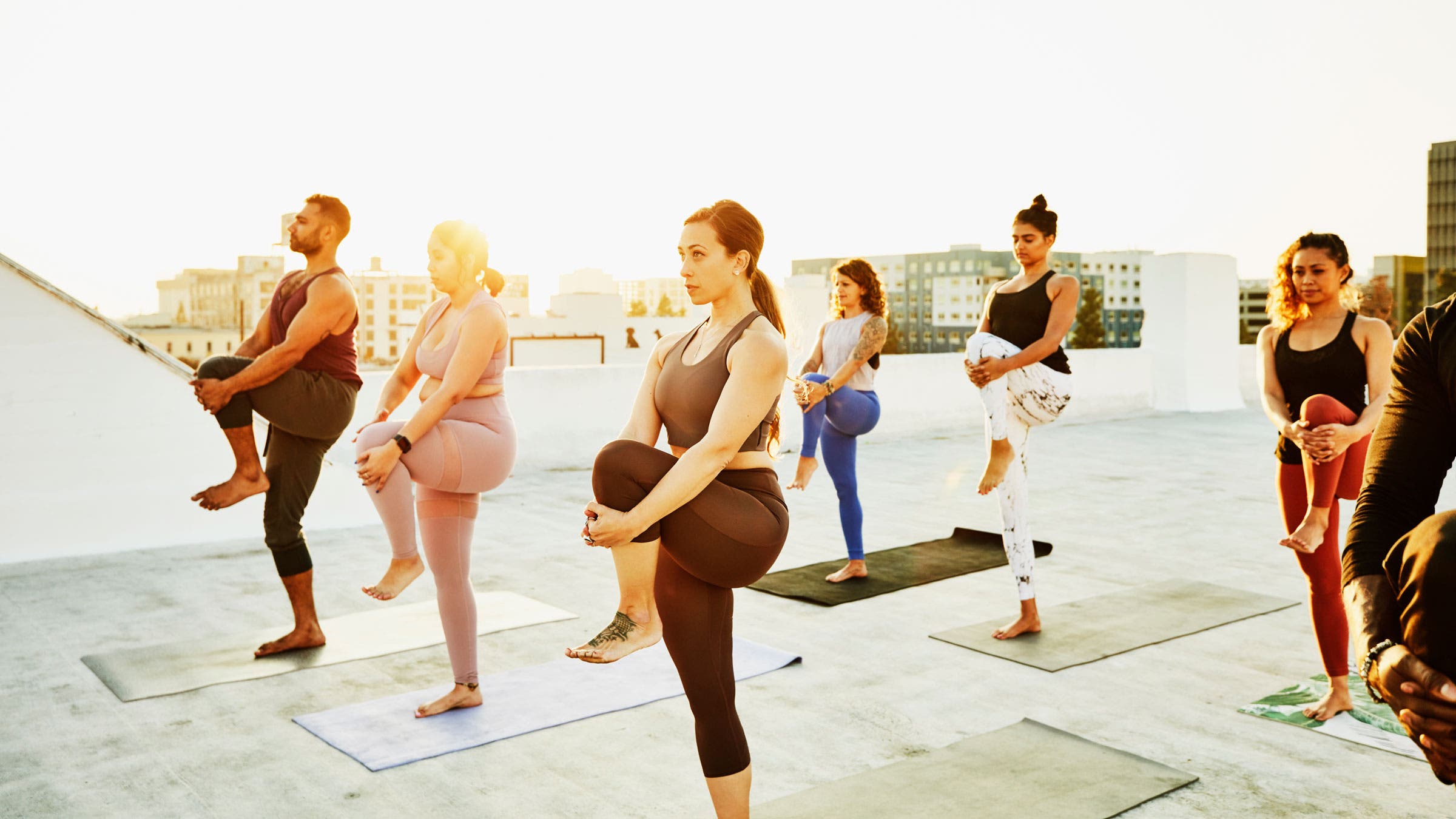
To create dynamic balance in the forward and backward planes, you can alternate between standing with one leg raised and leaning forward in Warrior 3 (Virabhadrasana III). Inhale as you lift one knee. Exhale as you lean forward into Warrior 3. Inhale and return to standing with your knee up. Perform several rounds on one leg before trying the other side. Note any differences between the sides. Increase the challenge by holding each pose for at least one full breath before moving on to the next pose.
3. Warrior 2 against tree
This playful transition begins with a shortened Warrior 2 pose (Virabhadrasana II). Slowly shift your weight to your back foot until you come into Tree Pose (Vrksasana) with your right foot against your left leg. Let your raised leg land on your standing leg wherever it lands, without reaching down to walk it higher. When you’re ready, return to Warrior 2. Play back and forth for a few rounds before deciding to stick with Tree Pose. Then switch sides. This is an opportunity to be with things as they are and practice equanimity.
4. Invert your eagle pose
This transition allows you to adjust the amount of challenge based on what you need on a given day. Bend both knees slightly and wrap one thigh over the other in Eagle Pose (Garudasana). Keep your standing leg steady and slightly bent at the knee as you unwrap your top leg and extend it behind you into a flexion-like lunge position. Your toes can stay up or touch the mat, depending on what feels like the right amount of challenge for you. Perform several rounds on each leg.
5. Provide distractions
Create any balancing yoga pose – including standing on both feet! – more challenging by introducing the unexpected.
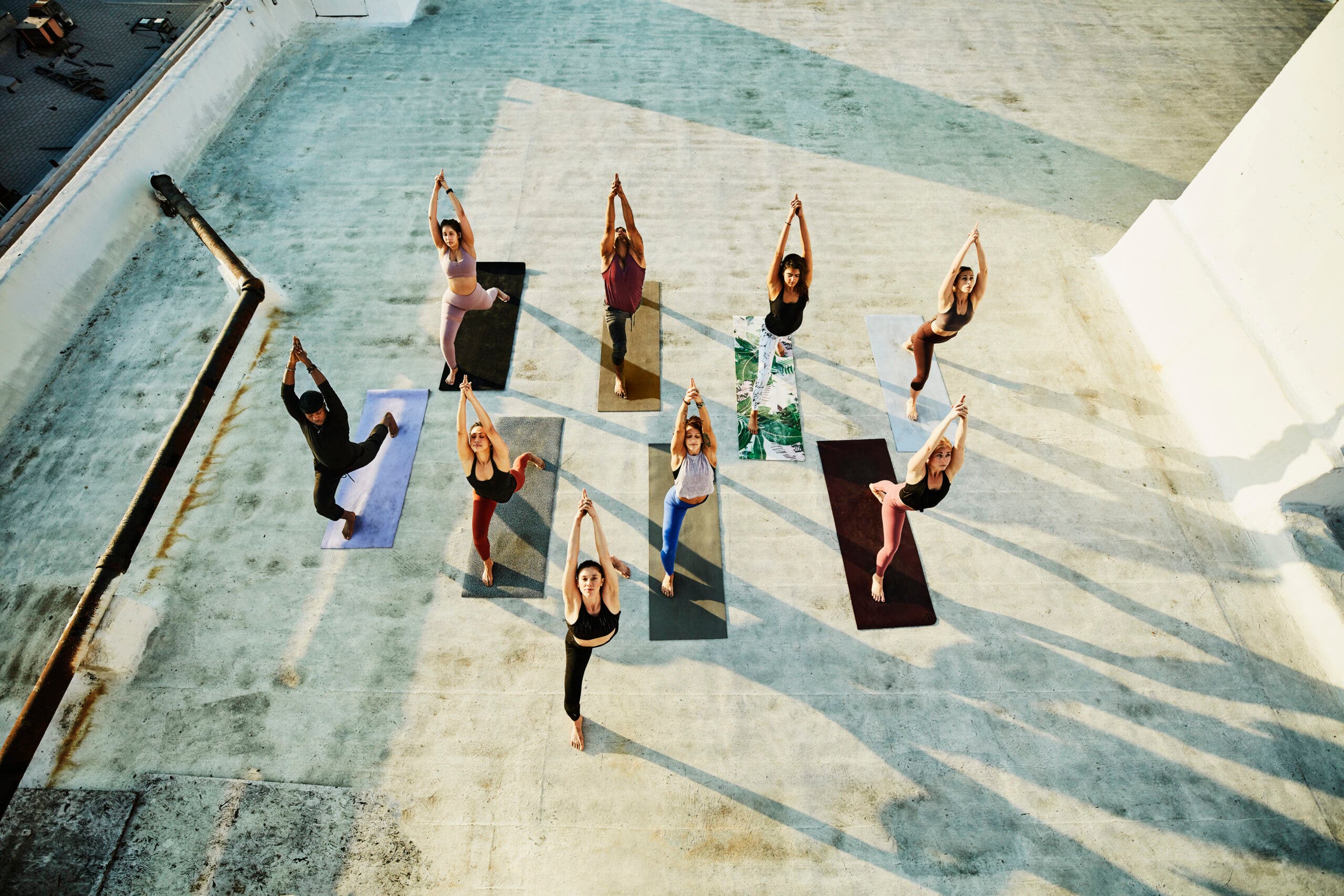
Change your Drishti
Change your point of view. Instead of looking straight ahead…
Look up
Lower your eyelids halfway
Close your eyes completely
Change the surface
Move to a less stable surface, such as…
A yoga mat folded in half or in four layers
A blanket or yoga bolster
A yoga block or two
A balance training ball or stand-up paddle board
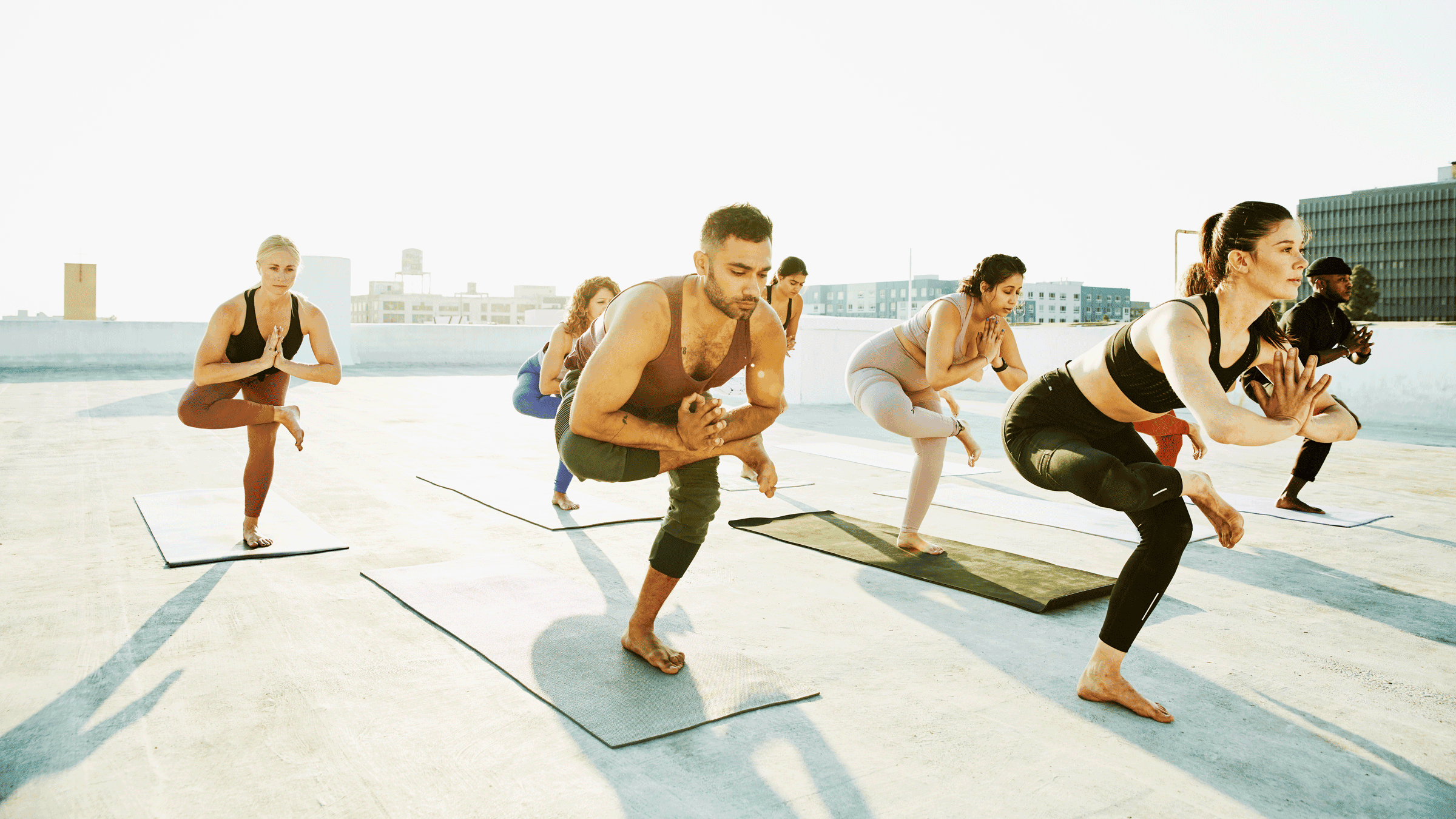
Provide more distractions
Challenge your balance further by trying…
Turn your head back and forth
Wave your arms around
Introduce visual disruption by doing jazz hands and moving them in front of you, looking around the room or focusing on your dog with the zoomies
Move your raised leg around
Add a Figure-4 to Chair Pose or Downward Facing Dog (Adho Mukha Svanasana)
Don’t stop here. Follow your instincts or play with your creativity as you explore more variations on the approaches above. But remember that yoga is also about balancing many non-physical things, including exercise (sthira) and convenience (sukha). The work takes place over time, not in 30 seconds.
#Improve #Balance #Seconds