

If you want to fight back, you need to have your data deleted. It’s a time-consuming process, so you can pay for a service or treat it as a “fun” weekend project that you can tackle slowly.
Here is my guide to deleting your personal information from data brokers.
⚠️ I have removed myself from all these sites (not the super big one at the end) and you are welcome to search for me. It’s an arduous process that I don’t recommend doing it all in one weekend unless you like this kind of thing. I’ll be honest: I like this kind of thing. The challenge is that the data always comes back somehow because some other services report it and so you have to check periodically – so if you see my name, let me know!
Table of contents
😀 What is a data broker? These are companies that collect, analyze and sell your personal information to marketers, background checkers and sometimes scammers.
The approach
There are different types of data brokers and we have divided them into groups based on priority. We’ve prioritized sites that let you look up people for data or background checks (such as criminal records).
We then focused on consumer marketing sites that collect information about your purchasing behavior for marketing purposes.
Finally, we have financial and credit sites.
We do not list every site that collects and sells your data. There are simply too many. But we list the high-priority sites that contain the most data and appear most often in search engines.
And yes, this will feel like a blow. Your data comes back, which is why some people prefer to pay a service for this.
The process
- Go to the unsubscribe page below.
- Find your data.
- If necessary, copy your profile URL (many don’t need this).
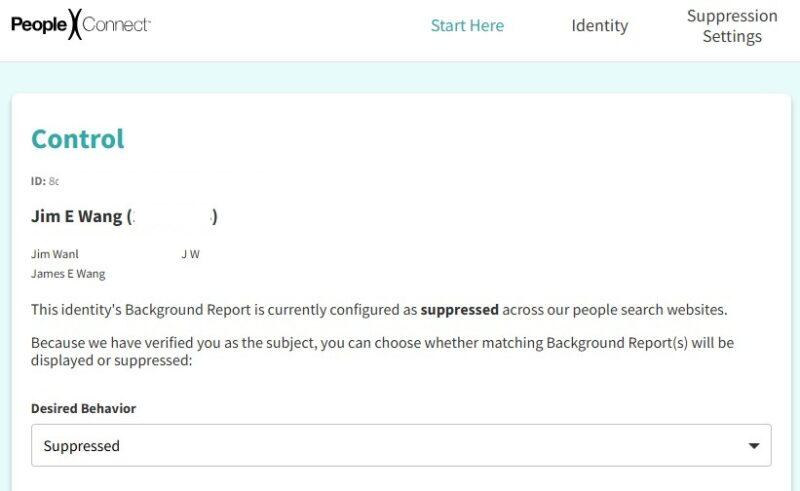
- Complete their opt-out form.
- Confirm by email.
In the lists below I have included a link to the opt-out page to start the process. In some cases, they need you to find your record on their site and get the URL for your profile. To find yourself, search for your name plus your city and state combination. If you’ve recently moved, also look for your previous city and state combination.
But they don’t need all of this or the unsubscribe form will contain a search query, so first go to the unsubscribe page and see what that site’s prices are.
⏰ Unfortunately, during this search process there is often a fake waiting screen while they pretend to look you up. Open multiple tabs at once to save time.
Then you fill out that form, enter your email address and they will take you through an email confirmation process. Once you confirm your request, they will send you an email stating that they are removing the request.
I’ll snooze this email in Gmail and come back in a week. Many sites promise to remove it within a few business days. A week later I check to see if it was actually completed.
🔥People search and background checking sites
Unless you’re well known on the Internet, these are the sites that usually come up when you search for your name and the city you live in. Their entire business model is to sell your information to people who are curious and in many cases include your home address and phone number.
Now do a quick search and remove yourself from any sites that appear on the first page. Then run the list below. If you’re on a site, copy the URL and go to the footer and look for a link that says something along the lines of “Delete my information” or “Do not sell my personal information.” That’s the opt-out page.
Day 1
Quick Tip: I recommend using a separate email for this, in case it leads to spam. You know the type of companies you are dealing with here. I wouldn’t be surprised if that email ended up on some list. I use my spam email for this.
Day 2
📕Large consumer and marketing data brokers
This list of companies usually doesn’t appear in search engines, but they do sell your information to other companies and do a lot of marketing. It’s a lower priority because scammers are less likely to buy this data to scam you… but it helps to remove it.
Leaving these lists will remove spam calls, but will (usually) not affect scam calls.
Day 3
💳 Aggregators of credit and financial data
This last group is the lowest priority because scammers certainly don’t get this data, but companies like to use it to target you for ads. Again, addressing this will reduce spam, but not necessarily reduce scam attempts (sadly).
Day 4
Quick Tip: To stop pre-screened credit and insurance offers (and reduce the risk of mailbox theft, which is admittedly quite small), you can use this OptOutPrescreen.com.
🗂️ Maintenance plan
Your data will reappear on some sites after you delete it. I don’t know why, but it does happen.
So every six months, check sites like Whitepages, Spokeo, TruePeopleSearch, and FastPeopleSearch (the first two groups) again to see if your name has reappeared.
If you want to be super diligent, you can use a spreadsheet to keep track, but I don’t. “Remember” to look at it and interact with it the next time I see it (which happens more often than I would like).
Be sure to share this post with your friends and family, especially family. You will appear in their listings as family members or ‘known associates’ and therefore it is also important that they remove their information.
Good luck and have fun blasting!
Super list of data brokers (for the really ambitious)
This is roughly ranked by how much useful data the scam requires and how often it appears, and then by overall size. This list does not include sites we shared above.
#delete #personal #data #Data #Brokers