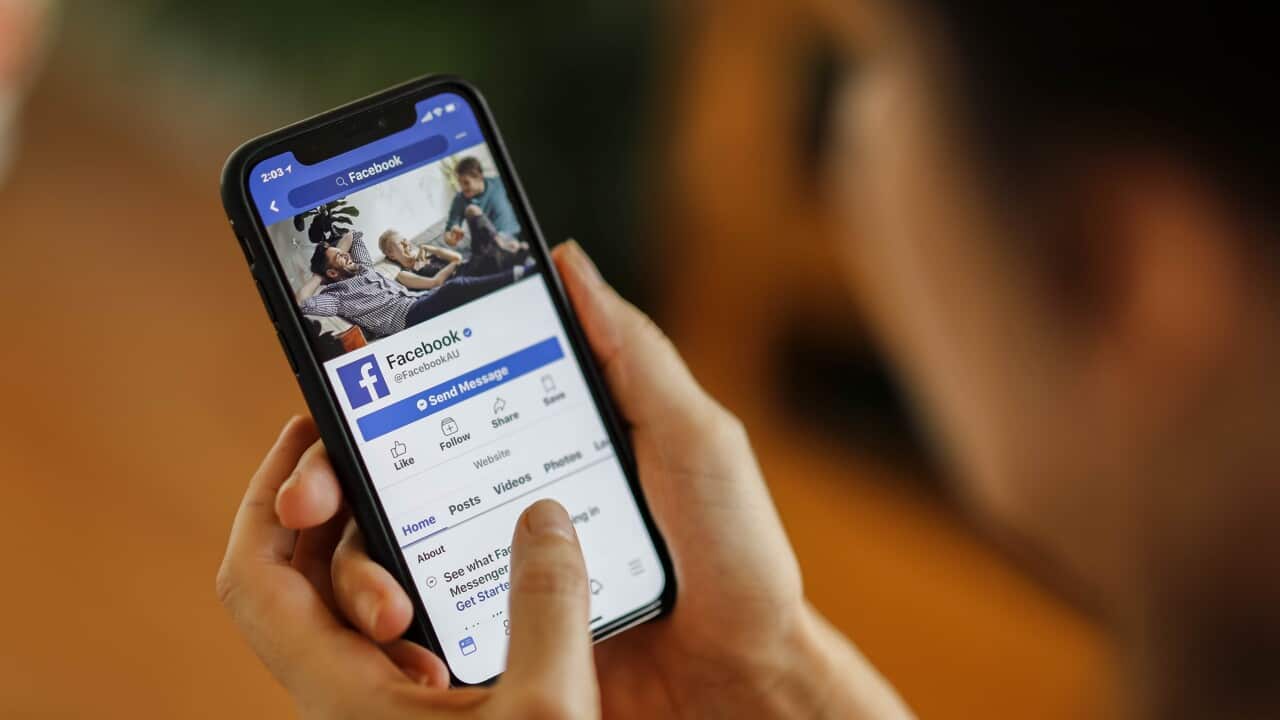
How to Check If You’re Eligible to Claim a Share of This  Million Payout from Facebook

How to Check If You’re Eligible to Claim a Share of This $50 Million Payout from Facebook

4 minutes, 45 seconds Read

More than 311,000 Australian Facebook users can apply for a share of a $50 million compensation fund from tech giant Meta – the largest ever payment for a breach of Australians’ privacy.
But the clock is ticking. Even if you qualify, you only have until December 31 to file your claim. Similar payouts have already begun in the United States.

From who is eligible, how to make a claim and how much the final payout could be: here’s what you need to know.

Why are so many Australians able to sign up?

The historic settlement stemmed from Meta’s involvement in the Cambridge Analytica scandal, a major data breach in the 2010s in which a British data company collected private information from 87 million Facebook profiles worldwide.

It led to a record fine of $5 billion in the US against Meta as the parent company of Facebook, and to the creation of a compensation scheme of $725 million for the affected Americans.

Here in Australia, an investigation by the nation’s privacy regulator – the Office of the Australian Information Commissioner – found that Cambridge Analytica used the This Is Your Digital Life personality quiz app to extract personal information.
That study found that only 53 Australian Facebook users had installed the app. But another 311,074 Australian Facebook users were friends of those 53 people, meaning the app could have requested their information too.
In December 2024, the Information Commissioner announced that she had settled a lawsuit with Meta in exchange for an “enforceable undertaking”, including a record $50 million payment program.

Claims opened on June 30 and close on December 31.

Who can submit an application?

You can submit an application if you:

  • had a Facebook account between November 2, 2013 and December 17, 2015 (the Entry Period);
  • was in Australia for more than 30 days during that period, and
  • either installed the Life app or were Facebook friends with someone who did.

How to sign up – but beware of scams

The Facebook Payments Program is managed by consultancy firm KPMG. Meta has to pay KPMG to run it; that doesn’t come from the $50 million fund.
That website is where you need to go to ask or to make a claim.
Meta has sent this “token” notice on Facebook to all Australians it knows are eligible: You may be entitled to payment from a recently settled lawsuit in Australia. More information.
Attempt this link to see if the company has data about you or your friends logging into the Digital Life app. If so, you should select the option “fast track” application.

If you have not received this notification but believe you have been affected, you can make a claim using the standard procedure by providing proof of the following:

  • your identity, such as a passport or driver’s license
  • you had a Facebook account and were in Australia during the entry period.

But beware of scammers pretending to be from Facebook or helping with claims.

What benefits may you be eligible for?

You must choose to claim compensation under one of two “classes”, which require different types of evidence.
Class 1: the more difficult option, which is expected to yield higher payouts
To make a claim for ‘specific loss or damage’, you must provide documentary evidence of economic and/or non-economic loss or damage. This may include, for example, your own medical or consultancy costs, or having to move if your personal information is made public.

You must also prove that the damage was caused by the Cambridge Analytica data breach. For many people, proving extensive loss or damage can be difficult.

Class 1 claims are decided first. There are no predetermined payout amounts; each will be decided separately.
If your Class 1 claim is unsuccessful but you are otherwise eligible for a payout, you may receive a Class 2 payout instead.
Class 2: The easier option, which is likely to receive smaller payouts
Alternatively, you may choose to only claim loss or damage based on ‘a general concern or embarrassment’ caused by the data breach.

It’s a much simpler process, but it also likely requires a much smaller payment.

All Class 2 claimants will receive the same amount, after the Class 1 payouts.
These claimants only need to make a statutory declaration that they honestly believe the breach has caused them concern or embarrassment.
Meta’s enforceable undertaking with the information commissioner states that KPMG can place a limit on payments to claimants. It also states that if any money remains after all payouts, KPMG will pay that amount to the Australian Government’s Consolidated Revenue Fund.
Meta told The Conversation: “There is no predetermined limit on payments.”
“The appropriate time to determine whether there should be a limit on payments to claimants is after the end of the registration period [December 31].”
So it’s not yet clear how much of the $50 million fund will go to Australian claimants, and how much could ultimately go to the federal government.

Payment is expected to take place from approximately August 2026.

How much are the payouts likely to be?

Payouts from similar settlements by Meta elsewhere were very small. For example, US Facebook users eligible for its $725 million ($1,100 million) compensation scheme have expressed surprise at the size of their payouts. One report suggests that the average American payment is about US$30 ($45) per piece.
Here in Australia, a lot will depend on how many people bother to register between now and December 31st.
Graham Greenleaf is an honorary professor at Macquarie Law School, Macquarie University. Greenleaf is a board member of the Australian Privacy Foundation, a voluntary, non-governmental organisation.
Katharine Kemp is an Associate Professor in the Faculty of Law and Justice and leads the UNSW Public Interest Law & Tech Initiative, UNSW Sydney. Kemp is a member of the research committee of the Consumer Policy Research Center, an independent, nonprofit consumer think tank.

#Check #Youre #Eligible #Claim #Share #Million #Payout #Facebook

Similar Posts

Leave a Reply

Your email address will not be published. Required fields are marked *