

This summer, Ryan Reynolds and Hugh Jackman became co-owners of Australia’s three-time champions SailingGP team. Days earlier, Anne Hathaway joined a female-led consortium that bought the Italian team for approximately $45 million. Kylian Mbappe has joined the France squad, while Sebastian Vettel, Deontay Wilder and DeAndre Hopkins have each acquired shares in teams.
So what’s drawing A-list celebrities away from traditional sporting venues and towards a sailing competition that’s only been around for six years?
The answer lies in how SailGP has cracked a code that has eluded the sport for centuries. What Russell Coutts, the league’s CEO and co-founder, described as once “white triangles on a blue background racing far away from the coast” now looks more like Formula 1 on the water.
[Photo: SailGP]Flying boats, record speeds
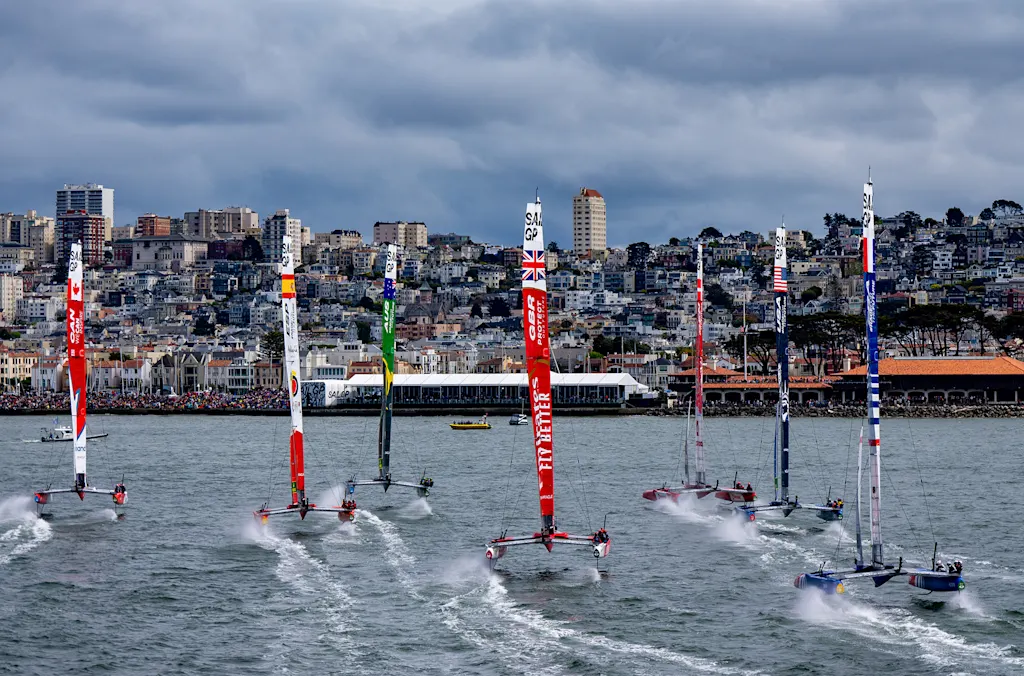
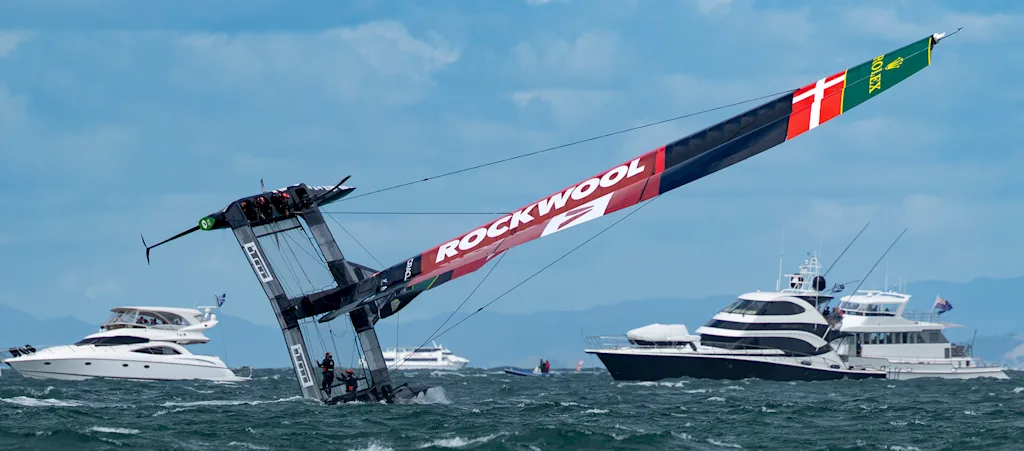
Forget everything you think you know about sailboats. SailGP’s F50 catamarans fly above the water on hydrofoils – underwater wings that lift the hull completely out of the water – at speeds of more than 100 kilometers per hour.
That’s 62 km/h. On water. Powered only by wind.
Most powerboats can’t even keep up.
The boats do not use traditional sails. Instead, the 50-foot boats have rigid wings that are built like vertically twisted airplane wings and can reach heights of up to 80 feet. “This provides what we call, in technical terms, a lift coefficient that is three times higher than that of a thin membrane sail,” Coutts explains.
Translation: They catch the wind more efficiently than conventional sails and generate enormous thrust even in light conditions.
When a boat moves forward, it creates its own wind, just like your hand feels resistance when you extend it out of the car window. By properly tilting these highly efficient wings, F50s use both the actual wind and the wind they create through their own speed to travel more than three times faster than the wind itself.
 [Photo: SailGP]Nine-minute races and $80 tickets
Traditional sailing races lasted for hours with boats barely visible from the shore. SailGP races last nine to 12 minutes and consist of four races per day: short, intense bursts with enough time between heats for a toilet break and a cocktail.
The shorter race format allows for something that traditional sailing would never allow: close-shore competition in iconic ports. Events take place in places like Sydney Harbour, New York Harbor and San Francisco Bay. Stadium seats sell out weeks in advance. Auckland and Portsmouth each attracted 25,000 ticketed fans.
Tickets start at $80 for waterfront seating; accessible prices that bring the sport to a much wider audience than the yacht club exclusivity of traditional sailing. Fans can watch from stands or rent a boat and watch from the water. It’s part race, part festival on the water.
The spectacle also translates to screens. Augmented reality graphics on the water create a visible playing field with boundaries, like the yard markings on a football field. Before that, even dedicated sailing fans had difficulty following races on TV. Now even the most casual fan can understand who wins and why.
Since its launch in 2019, it has reached viewership numbers 200 million per season in 212 areas worldwide. CBS attracted 1.78 million viewers for the broadcast of the Spain Sail Grand Prix – the largest audience for a US sailing event in 30 years – which is larger than what some regular-season NHL games attract. More recently, on November 23, the CBS broadcast of The Race to Abu Dhabi drew 3.47 million viewers, breaking the previous US viewership record for a sailing event set in 1992 during the America’s Cup on ABC.
“We were pleasantly surprised to find that the appeal to the racing fan was identical to the appeal to the avid sailing fan,” Coutts recalls. “We are confident that the product will survive.”
 [Photo: SailGP]From money pit to money maker
In 2019, Coutts and Oracle co-founder Larry Ellison launched SailGP with one deceptively simple innovation: a regular season.
For decades, professional sailing meant wealthy enthusiasts financing expensive hobbies for no return. The America’s Cup – sailing’s premier event for 174 years – was an example of the broken model.
Imagine if the Super Bowl happened once every four years, with no regular season in between. No predictable schedule. There is no way for athletes to plan or build a career. That was the America’s Cup. Sponsors could not justify the investment. Broadcasters couldn’t build programming around it. Teams couldn’t make it profitable.
“It sounds so simple, doesn’t it?” says Jimmy Spithill, CEO and co-owner of the Red Bull Italy SailGP Team. “But whether you’re an athlete, sponsor or broadcaster, if it wasn’t a regular season, how could you make plans?”
At its inception, Ellison pledged to fund the league for five years. But the transformation happened faster than anyone expected. Teams that couldn’t be sold in 2019 now have a valuation of $60 to $70 million. Four of the league’s 12 teams are already profitable, a milestone achieved by the WNBA 13 years and that Wrexham, Reynolds’ football team, still not achieved.
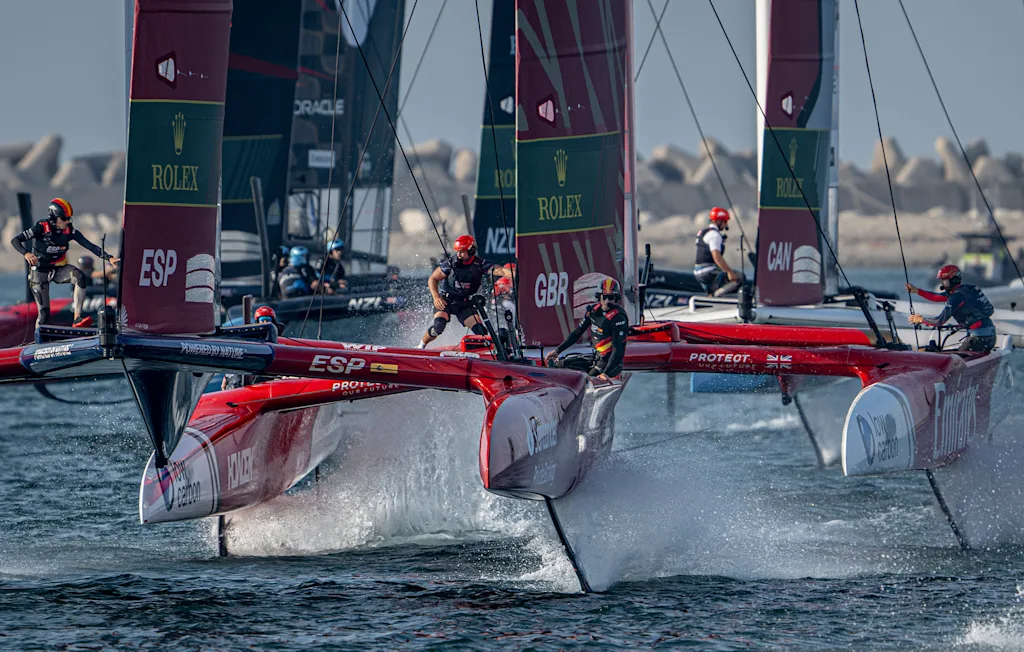
In traditional sailing, teams burned millions in secret boat development that never stopped. That game is over. The business model avoids this money pit problem. All teams race identical boats. All performance data is fully shared: boat telemetry, racing strategies and even technical insights. When the league develops an upgrade – new hydrofoils, better control systems – every team gets it at the same time. There is no purchase profit.
“Everyone uses the same equipment,” says Spithill. “So no one has a technical advantage.”
 [Photo: SailGP]The investment thesis that sold Hollywood
When Gian Luca Passi de Preposulo evaluated investing in the Red Bull Italy team, he saw something bigger than sailing. The Italian luxury brand manager who worked for years at Giorgio Armani and Moncler recognized a familiar pattern.
“I saw a growing sport with an incredible heritage thanks to the America’s Cup,” he says. “Millions of fans have been following this for generations, but no competition on a weekly or monthly basis.”
Passi de Preposulo recognized the pattern: an old sport with millions of fans, but no consistent competition to follow – exactly the gap that SailGP’s regular season format filled.
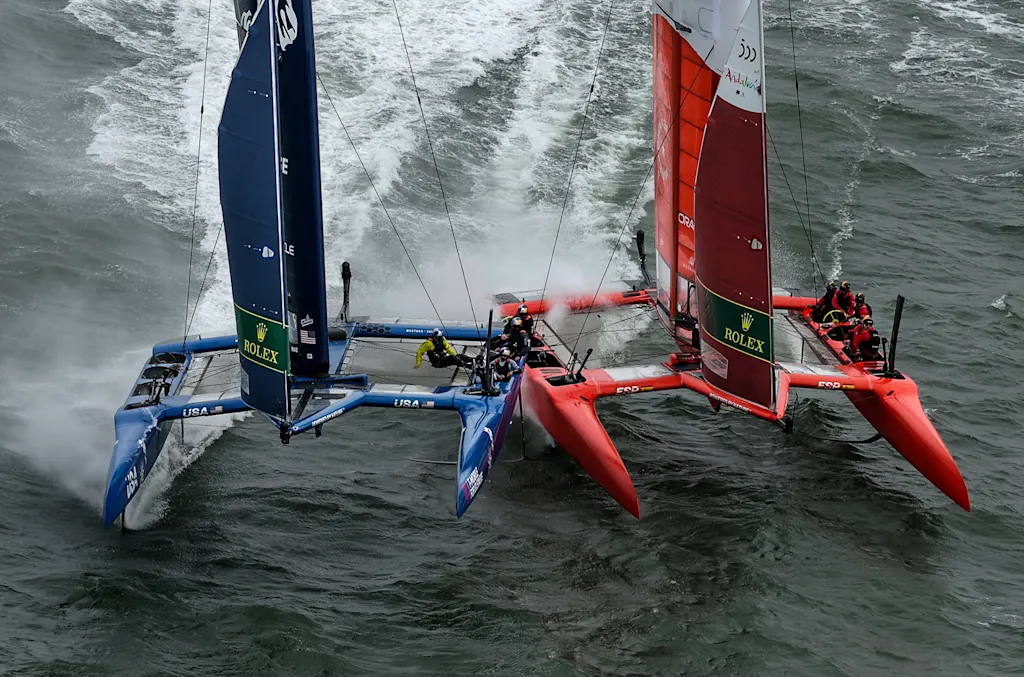
But he also saw that the business model offers investment advantages that are impossible in more mature leagues. The scarcity of national teams – one per country, with a maximum of about twenty teams in total – creates inherent value. Buying a $60 million SailGP team gives you a significantly larger ownership stake and more management rights than putting that same money into a $5 billion NFL franchise. Men and women race together on the same boats – unusual in professional sports – doubling the target group and appealing to the growing group of investors who support women’s sports.
Teams operate on standard sports economics: sponsorship, shares of broadcast revenue and licensing. But just six years later, most revenue streams are still undeveloped. The four profitable teams achieved this only through sponsorship. Cash cows such as broadcast rights and licenses represent pure benefit. Team ratings reflect this journey.
“In season three you could have bought a team for $20 million,” Coutts says. “Now you’re not going to buy a team for less than $70.”
 [Photo: SailGP]SailGP scaling
From six teams and five events in 2019, SailGP now has twelve teams spread across twelve events. The goal: more than twenty events per year, equivalent to Formula 1’s 24. Teams 13 and 14 have already been sold for the 2026 and 2027 seasons, and the league expects more than $200 million in annual revenues by the end of the season, culminating this weekend in the grand final in Abu Dhabi, where the top three teams will compete for a $2 million prize.
Rolex signed a 10-year title sponsorship, with the race renamed the Rolex SailGP Championship. “It is by far the largest partnership in sailing,” says Coutts. Amazon, Tommy Hilfiger and T-Mobile have also joined as team sponsors.
Events now generate an average of $26.2 million in economic impact for host cities – a fourfold increase from the $6.8 million from Season 1, according to SailGP. For context, Formula 1 racing generates $200 to $400 million.
The impact of celebrity investments is measurable. Market research agency YouGov traces ‘buzz scores’: a measure of whether people hear positive or negative things about a brand. In Australia, SailGP scores have risen from 22.0 to 26.3 in two weeks following Reynolds and Jackman’s announcement. France saw similar increases after Mbappé’s investment.
For Reynolds, SailGP means a new portfolio expansion. His Maximum Effort Investments backs Wrexham AFC, Club Necaxa, La Equidad and Alpine F1. His success at Wrexham – transforming an obscure Welsh football club through marketing genius and storytelling – provides a template for SailGP as it looks to continue its growth, both in investment and in global audiences.
“The fact that we can get things like that [celebrity] The involvement in one of the teams is great,” says Coutts. “And they will have fun doing it too, which is what it’s all about.”
#SailGP #turned #niche #sport #million #celebrity #investment #magnet